
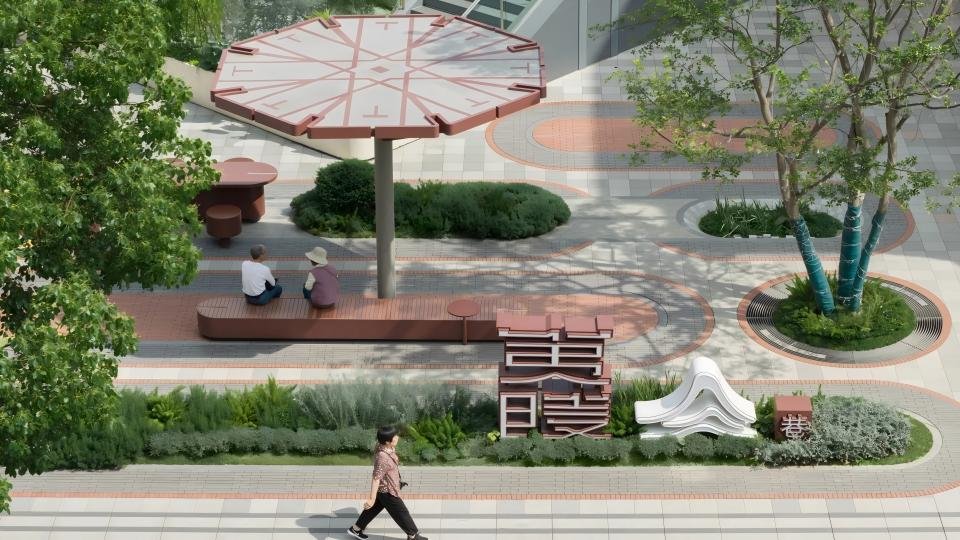
Xing’an Plaza is situated on the south side of the core old town of Yiling Third Lane, adjacent to Yixing Avenue, the city’s main arterial road. It serves as a key node in the urban renewal project of Yiling Third Lane. In Homo Deus, Yuval Harari reflects on the influence of the past:”The past is a hand reaching out from the ancestral shrine, fixing our gaze and limiting our vision to certain future directions. We feel this force from the moment we are born, and thus perceive it as natural—an inseparable part of ourselves.”In urban renewal projects focused on transforming historic city centers, we often sense this same force—persistent and inertial, pulling urban life toward entropy. The ongoing process of urban renewal aims to break this trajectory, transforming the city’s development into an ascending spiral rather than a consistent decline.
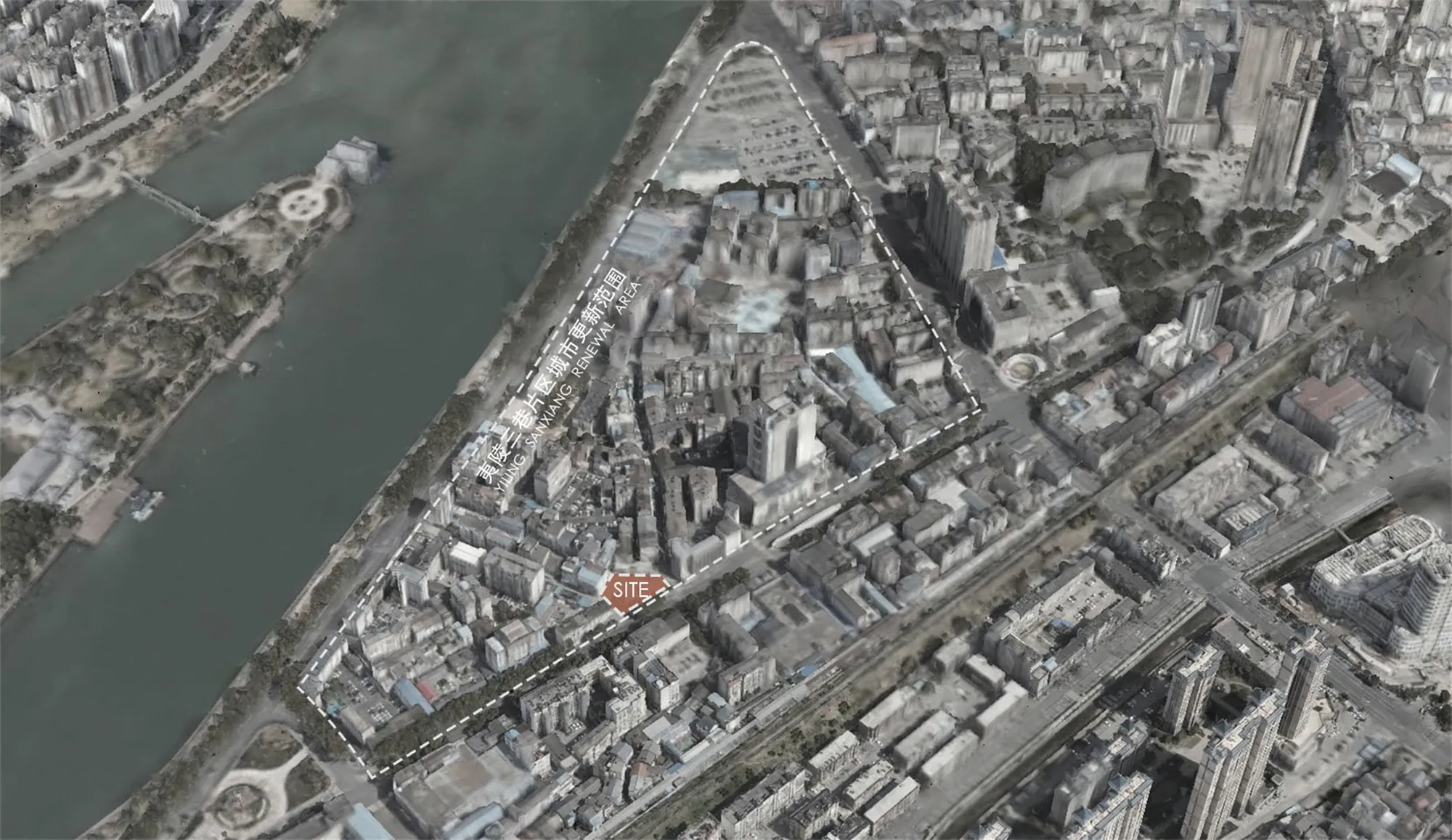
Location Analysis and Site Project Overview
Urban renewal is not an overnight achievement but an iterative and evolving process, often accompanied by years of growing pains. As the pilot project of the Yiling Third Lane urban regeneration initiative, Xing’an Plaza has been undergoing renovations since 2023. By the time it was handed over to our team, it had already been transformed into a multifunctional space combining several roles: a gathering and distribution point at the entrance of Yiling Third Lane, a visual frontage along Yixing Avenue, a shaded rest and activity area under tree canopy, and a zone for outdoor dining and café operations.Here, multiple demands converge on this site of less than 3,000 square meters—the need for outdoor leisure among long-term residents, new spatial requirements brought by business transformation, and the role assigned to this space within the overall streetscape renewal of the Yiling Third Lane district. The current state of the plaza clearly falls short of meeting these complex and layered expectations.
Site Analysis
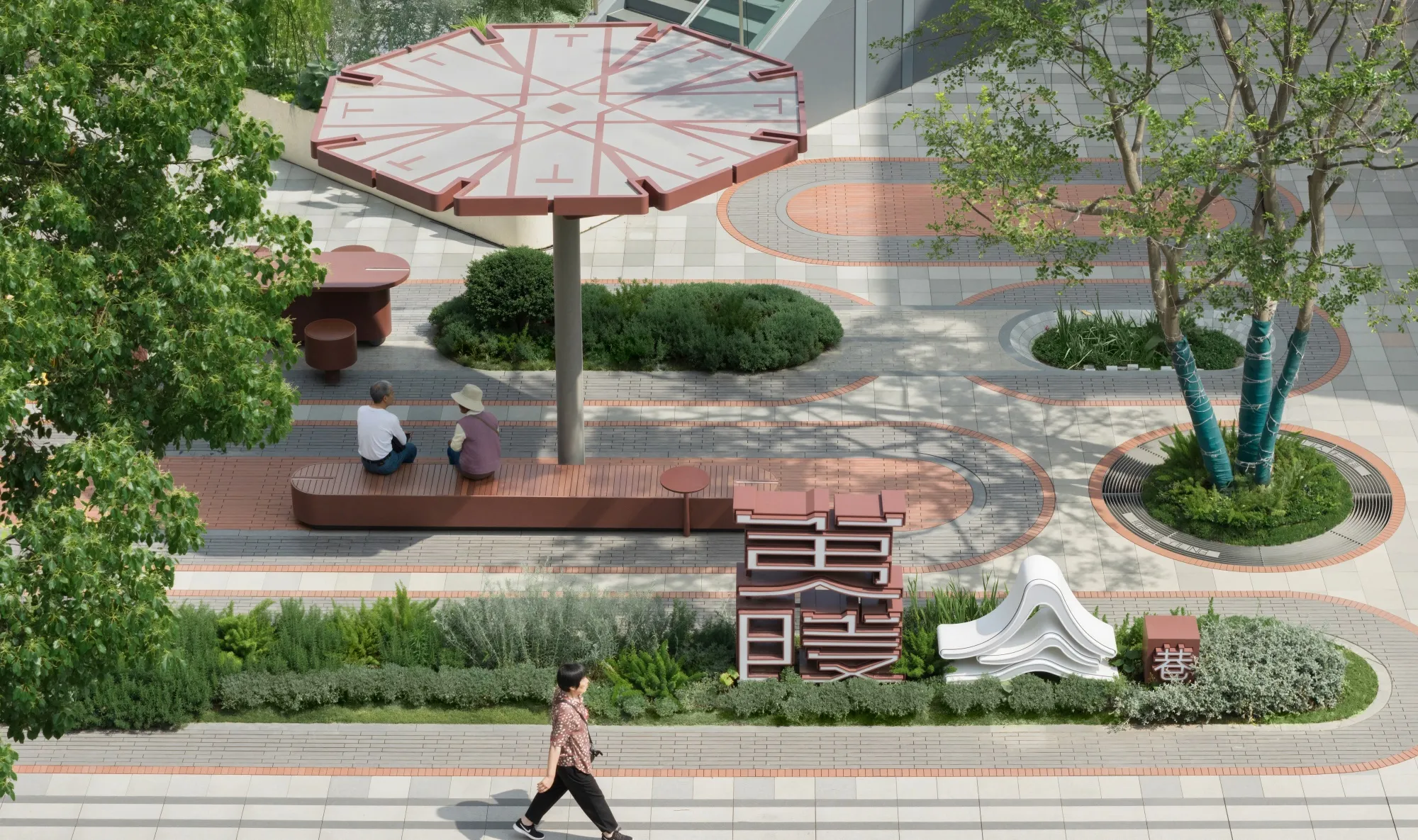
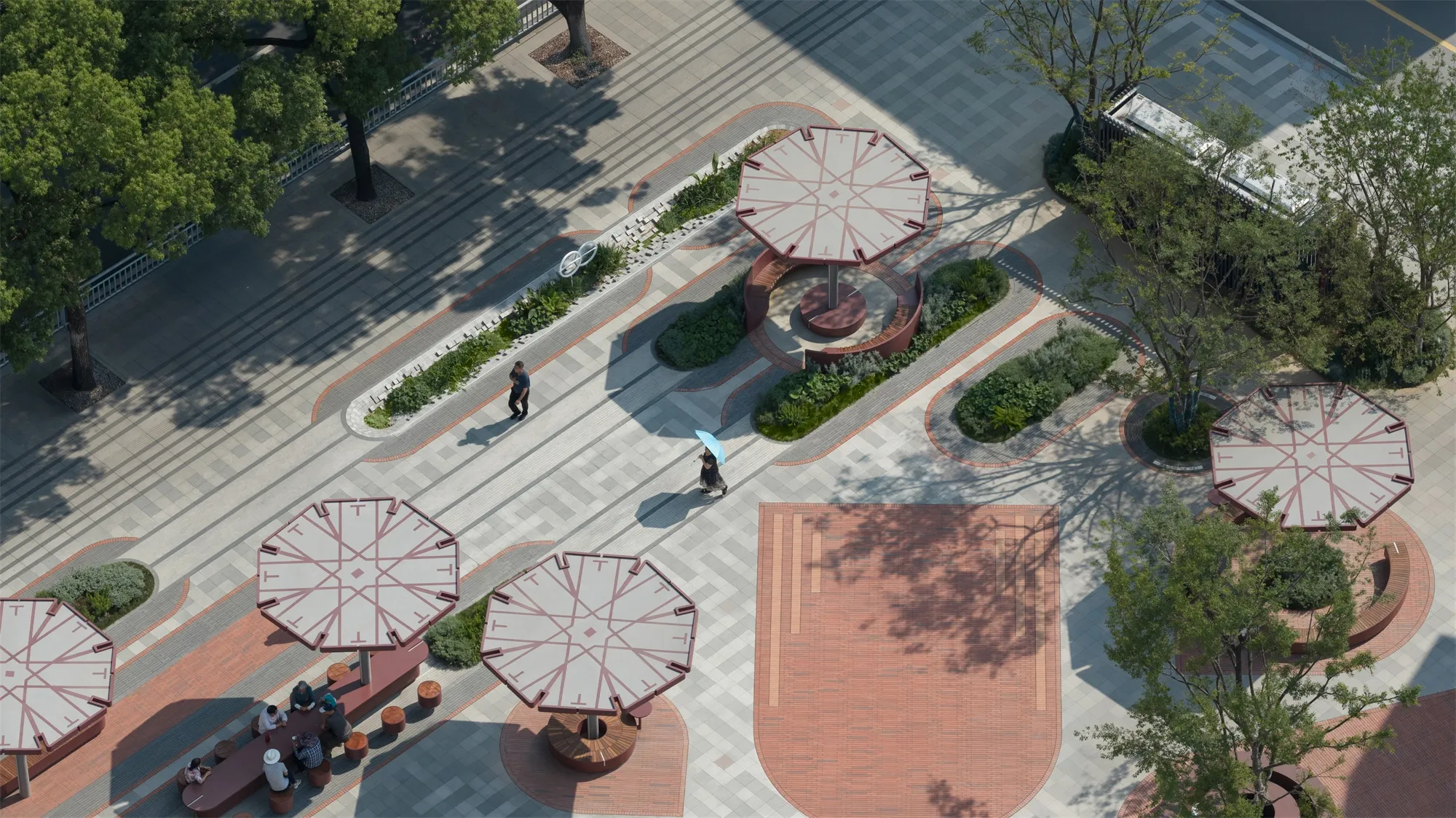
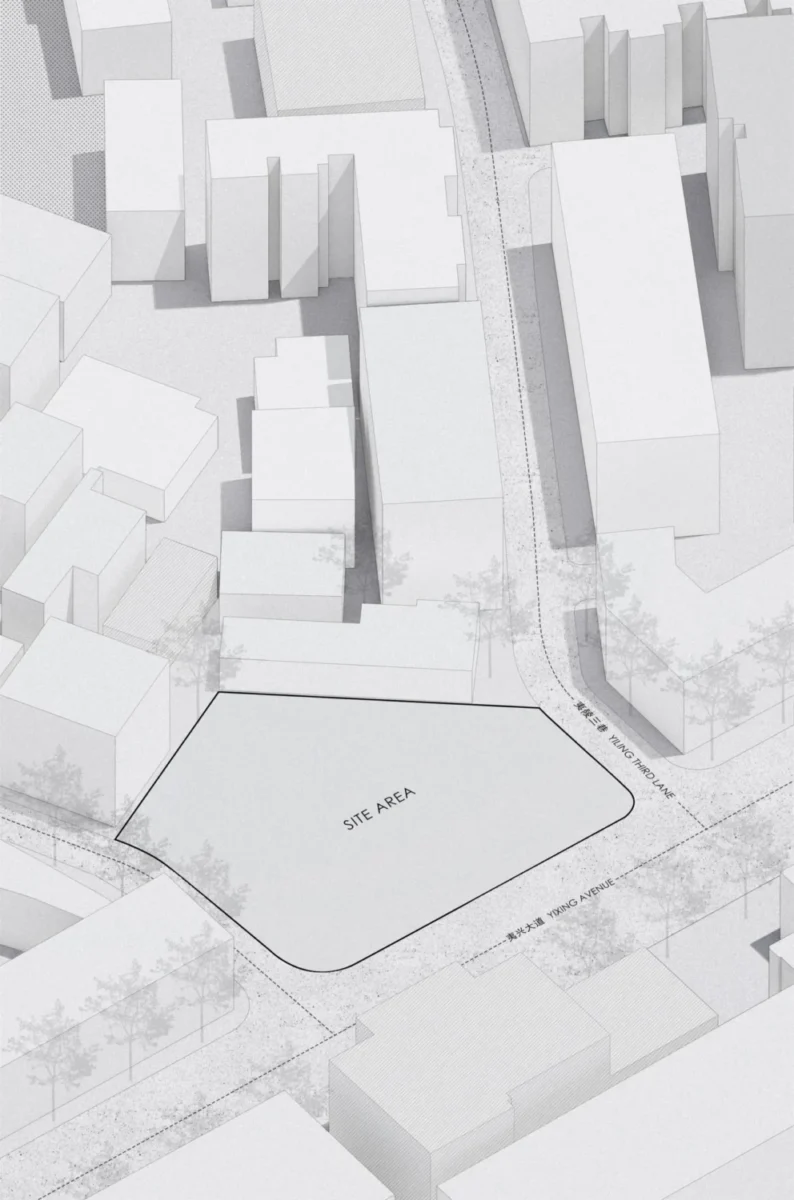
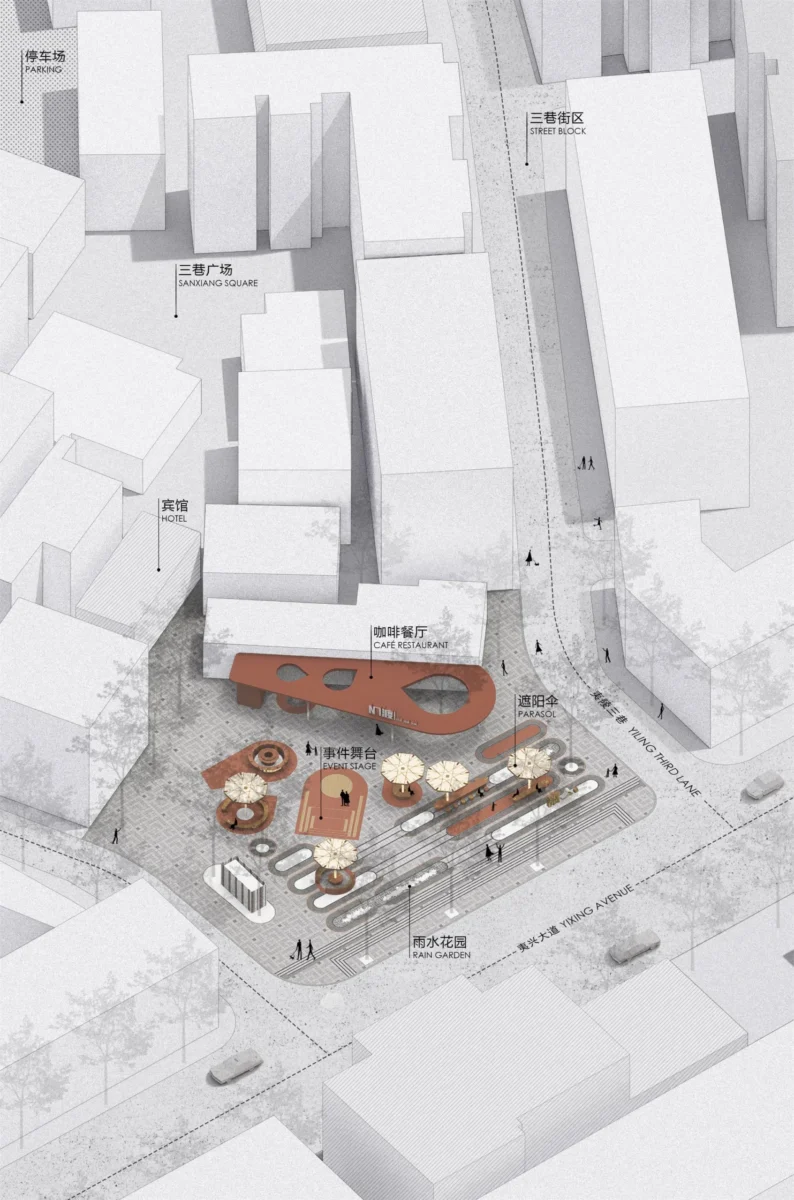
The site is bordered by Yixing Avenue, the core arterial road of Yiling District, to the south. To the east lies the Old Street, an important commercial district of the old town, while to the west runs Yiling Second Lane, a major thoroughfare in the historic urban area. The complex flows of vehicles and pedestrians, together with the diverse business activities in the vicinity, generate multifaceted and integrated functional demands for the space.
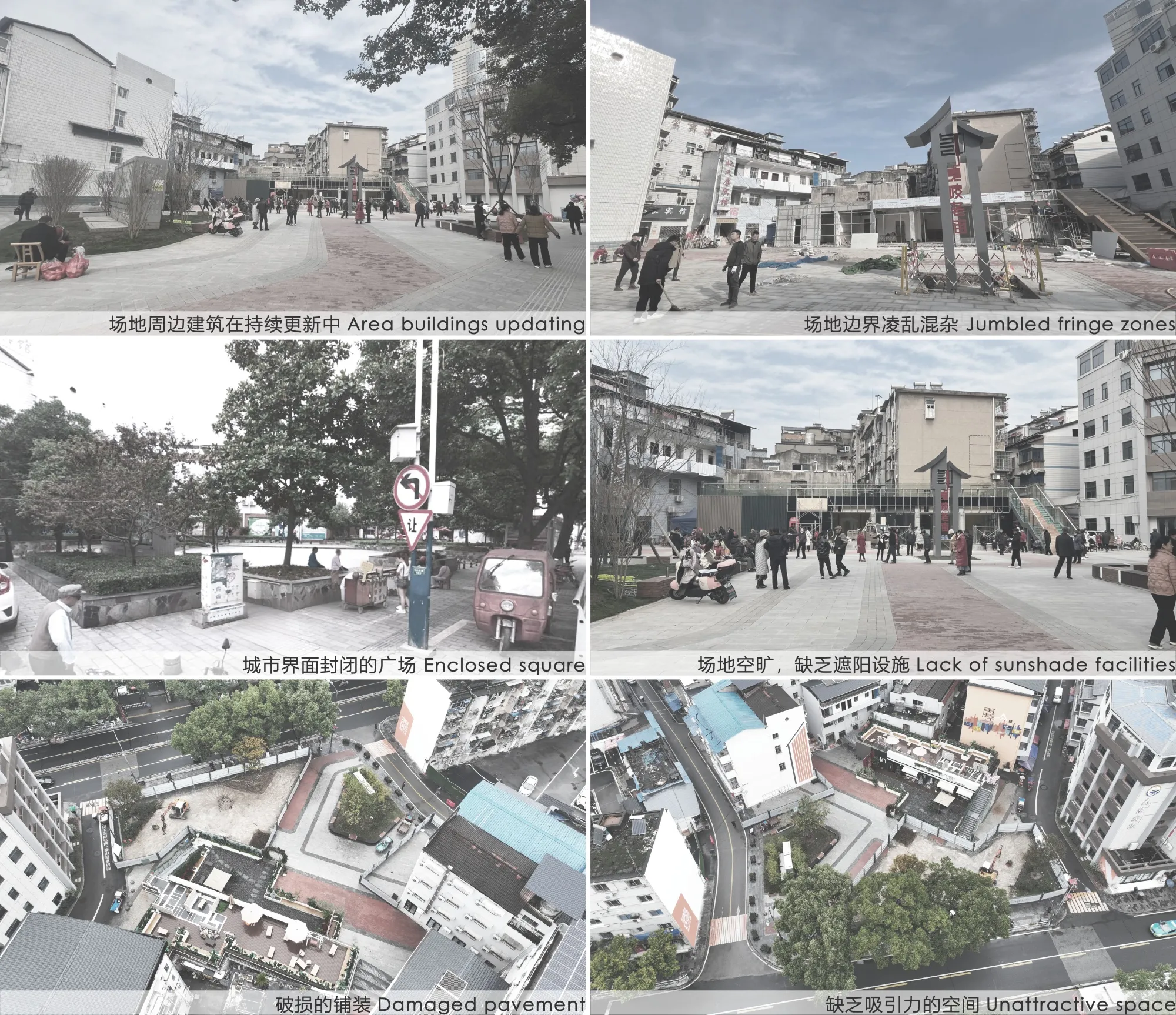
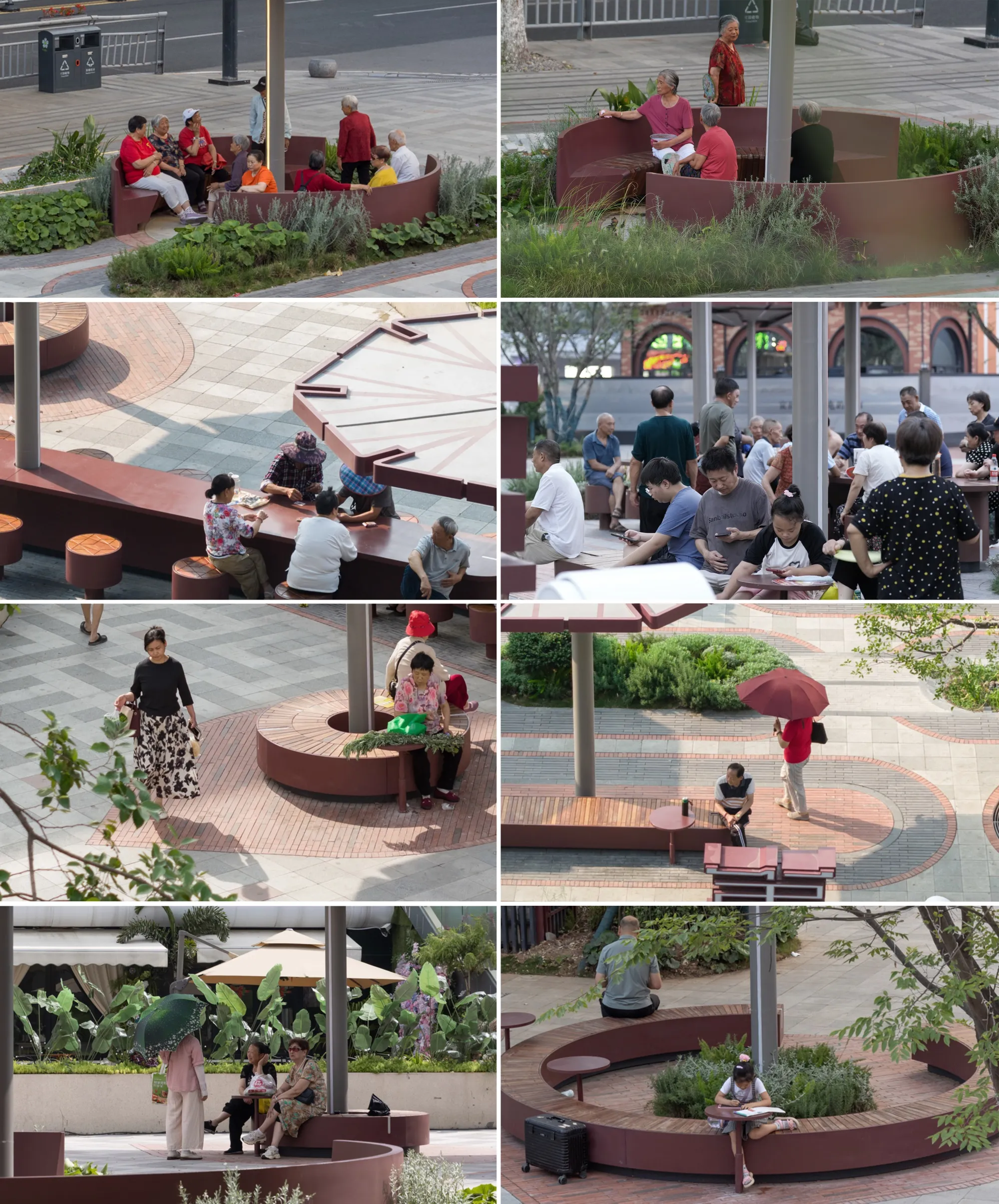
We must take into account the essential needs of the long-term residents in the old neighborhood. For instance, the small inn nearby hopes to maintain an undisturbed and independent space in front of its premises, as it has always had. Likewise, this area serves as a favorite leisure spot for the elderly in the community—even in the absence of formal seating, they bring their own stools and chairs to relax under the limited shade of the plaza’s trees. As for the vegetable vendors, while their need for space might seem negligible now, it will be addressed as part of the broader renewal of Yiling Third Lane, where improved vending areas will be provided.
We must also integrate the spatial demands arising from localized commercial renewal. The northern edge of the plaza is lined with residential buildings dating back to the last century. In order to make the old neighborhood more appealing to young people—turning it into a future lifestyle destination—and to align with the upcoming youth apartment complex next door, the space has been repurposed into a “morning coffee, evening alcohol” café and restaurant. This functional shift naturally introduces new requirements for the site.However, it has also led to spatial conflicts during the transitional phase of renovation. The café operator desires an upscale and vibrant exterior atmosphere, while the presence of elderly residents gathering at the entrance clearly contradicts this vision. As a temporary solution, the café has delineated a makeshift outdoor dining area in front of its premises.Additionally, the operator has strongly requested dedicated parking spaces within the plaza—a contentious demand, as it would encroach upon the public functionality of the space for the broader community.
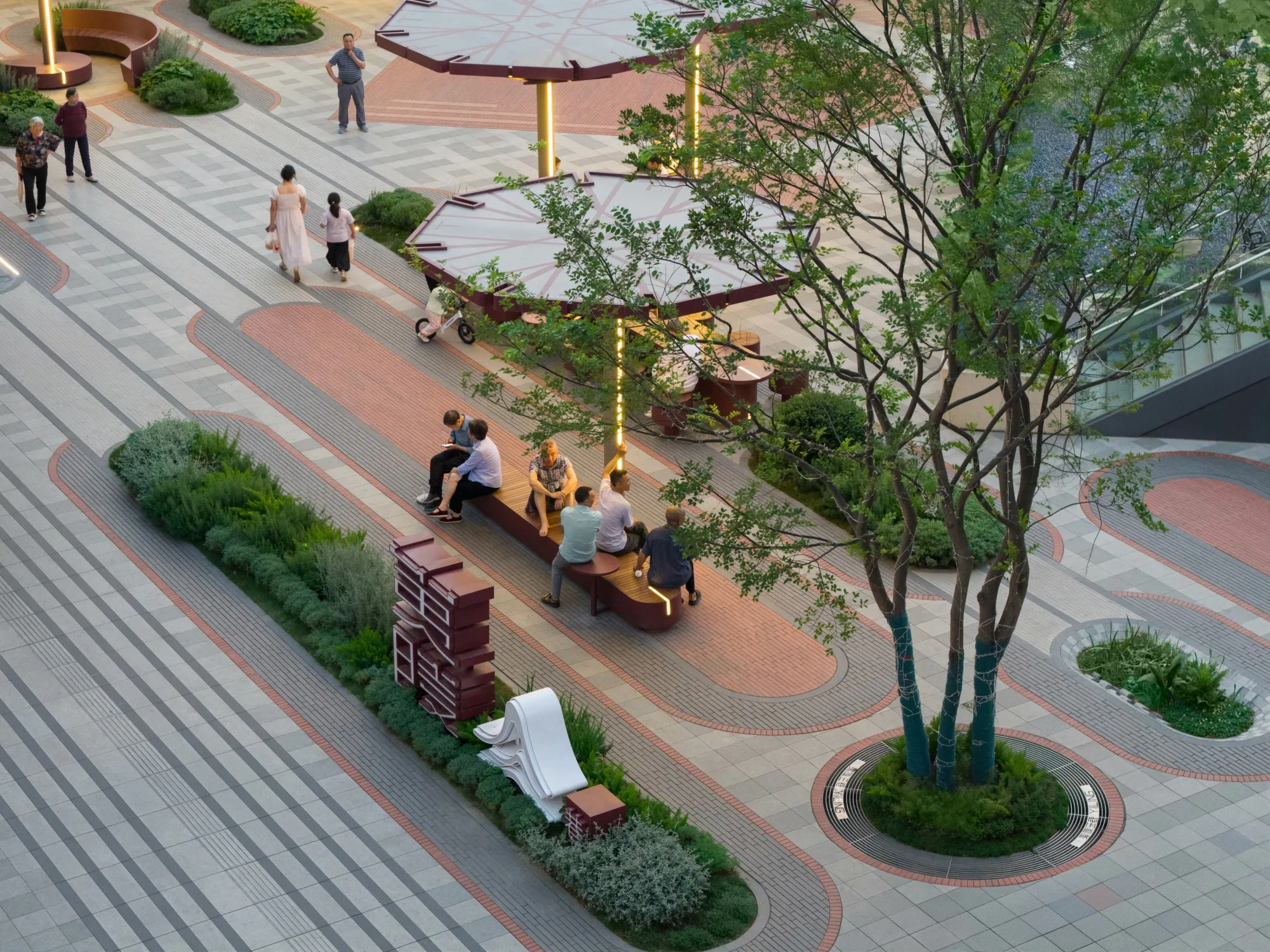
As Jane Jacobs articulated in The Economy of Cities,“What makes cities diverse? It is the gathering of people with different tastes and needs, employing varied skills to offer distinct services, and holding diverse dreams—this is what creates the rich and vibrant tapestry of urban life.”Through years of urban regeneration, individuals of varying tastes, needs, skills, and aspirations have been drawn by the city into this plaza, each unfolding their own form of public life. Our task now is to identify the common threads within these diverse patterns of life, and to shape a space where they willingly choose to unfold their stories—right here, at this urban street corner.
Design Strategy
1) An Inclusive Urban Living Room: A Non-Zero-Sum Game Between Public Use and Commercial Activity
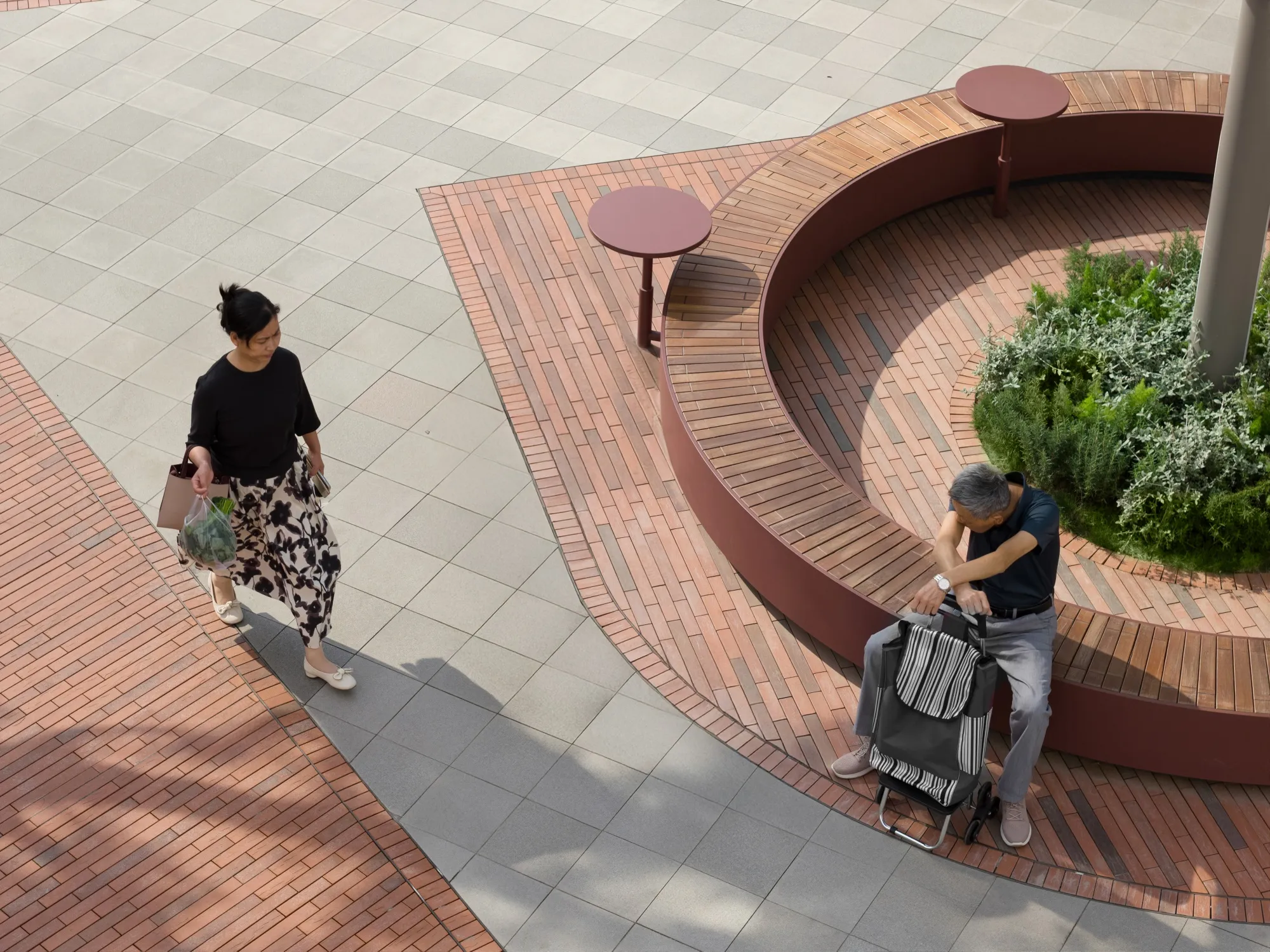
Young visitors and elderly residents should not compete for the use of urban space—they can and should complement one another in a well-designed environment. The design introduces a spatial gradient ranging from fully public areas to commercial zones, deliberately blurring the boundaries between the two. As a result, young café-goers can enjoy their coffee under the arcade while watching the world go by, and longtime residents can play cards or chat at seating along the street.The design is grounded in a key insight: when public space is inviting and commercial space is open and permeable, the tension between the two naturally dissolves. To this end, the arcade—a semi-outdoor architectural “gray space”—must blend seamlessly with the street-side seating areas. The café is encouraged to extend its service zone out to the sidewalk, while public seating is designed to reach into the building’s edge. The arcade, in particular, lends a natural sense of enclosure to the café’s outdoor area.In the initial phase, cautious operators might place flower boxes to delineate their territory. But as the commercial environment matures and new youth apartments open nearby, we believe those self-imposed barriers will gradually come down.
2) Diverse and Versatile Urban Living Room Furnishings: Tables, Chairs, Bar Counters, Booths, Umbrellas, “Red Carpets,” and Gardens
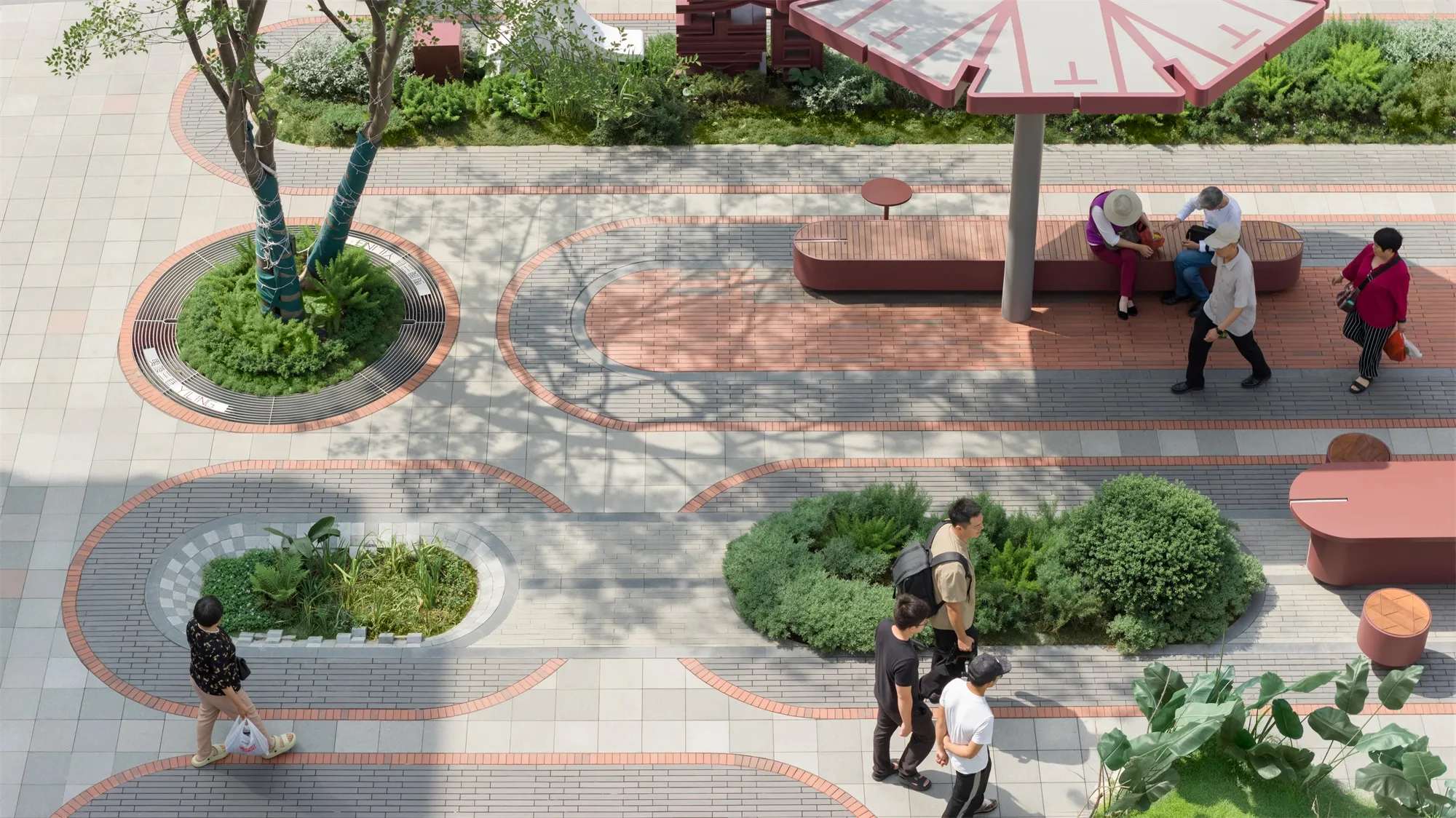
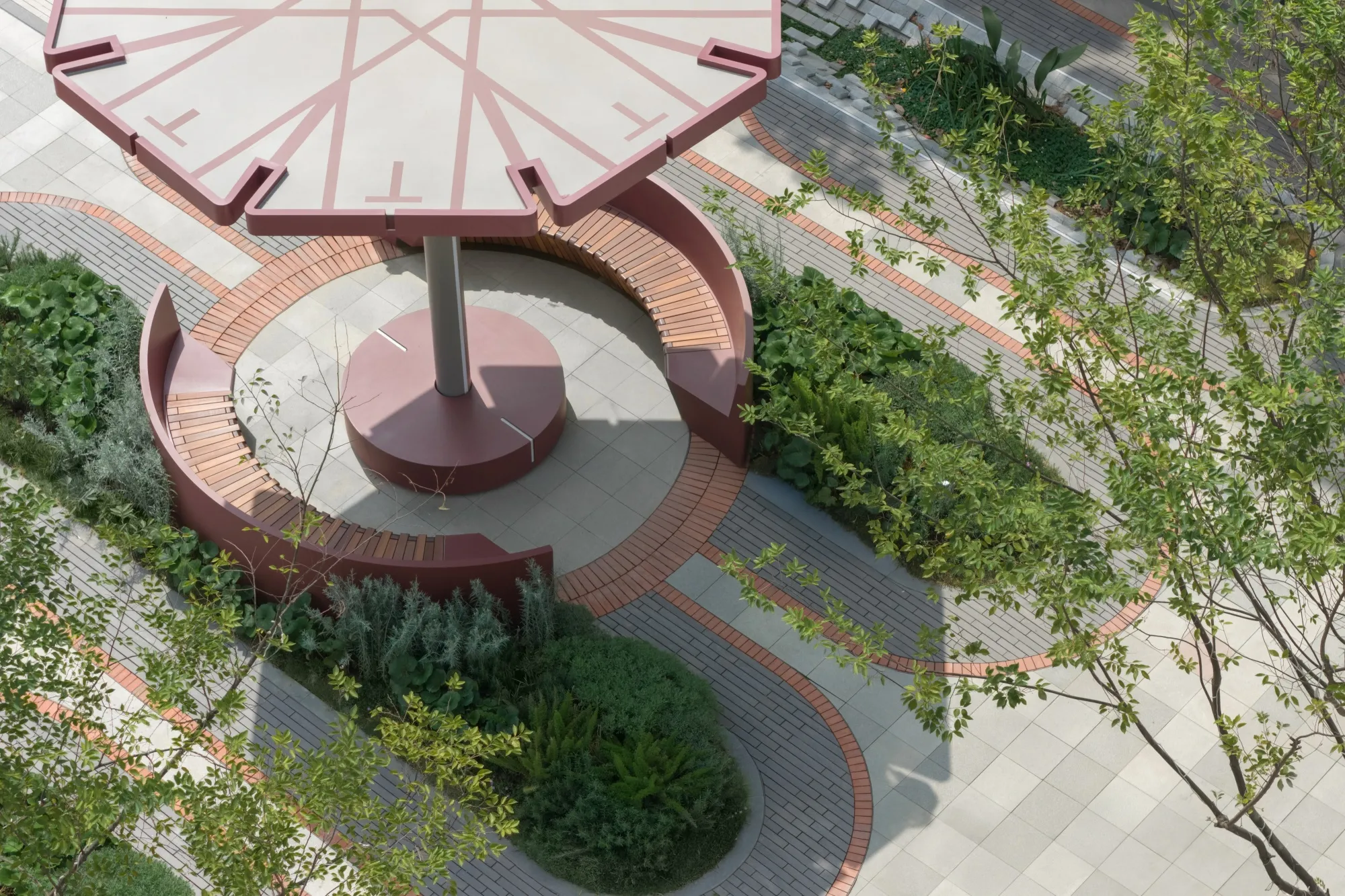
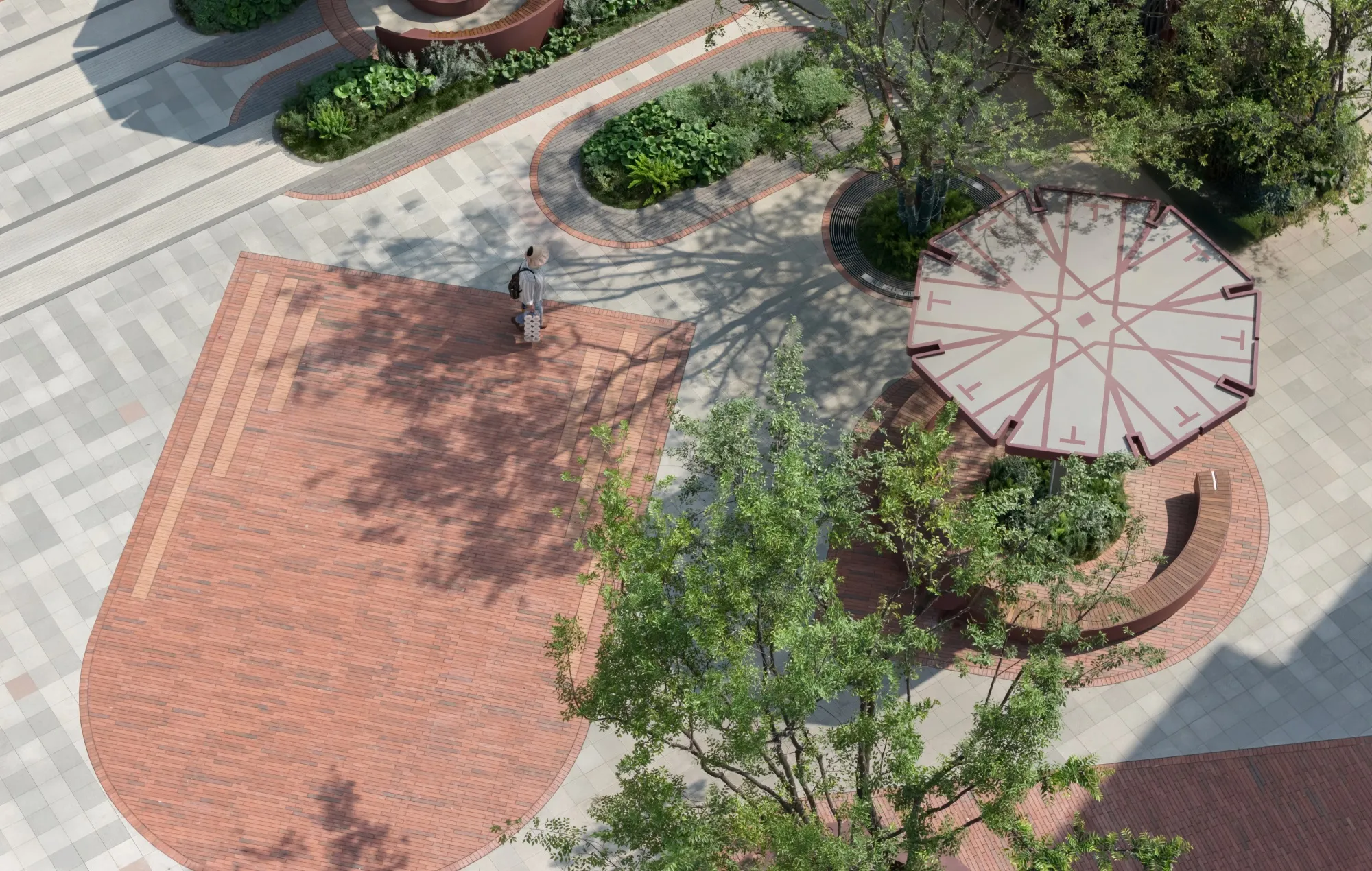
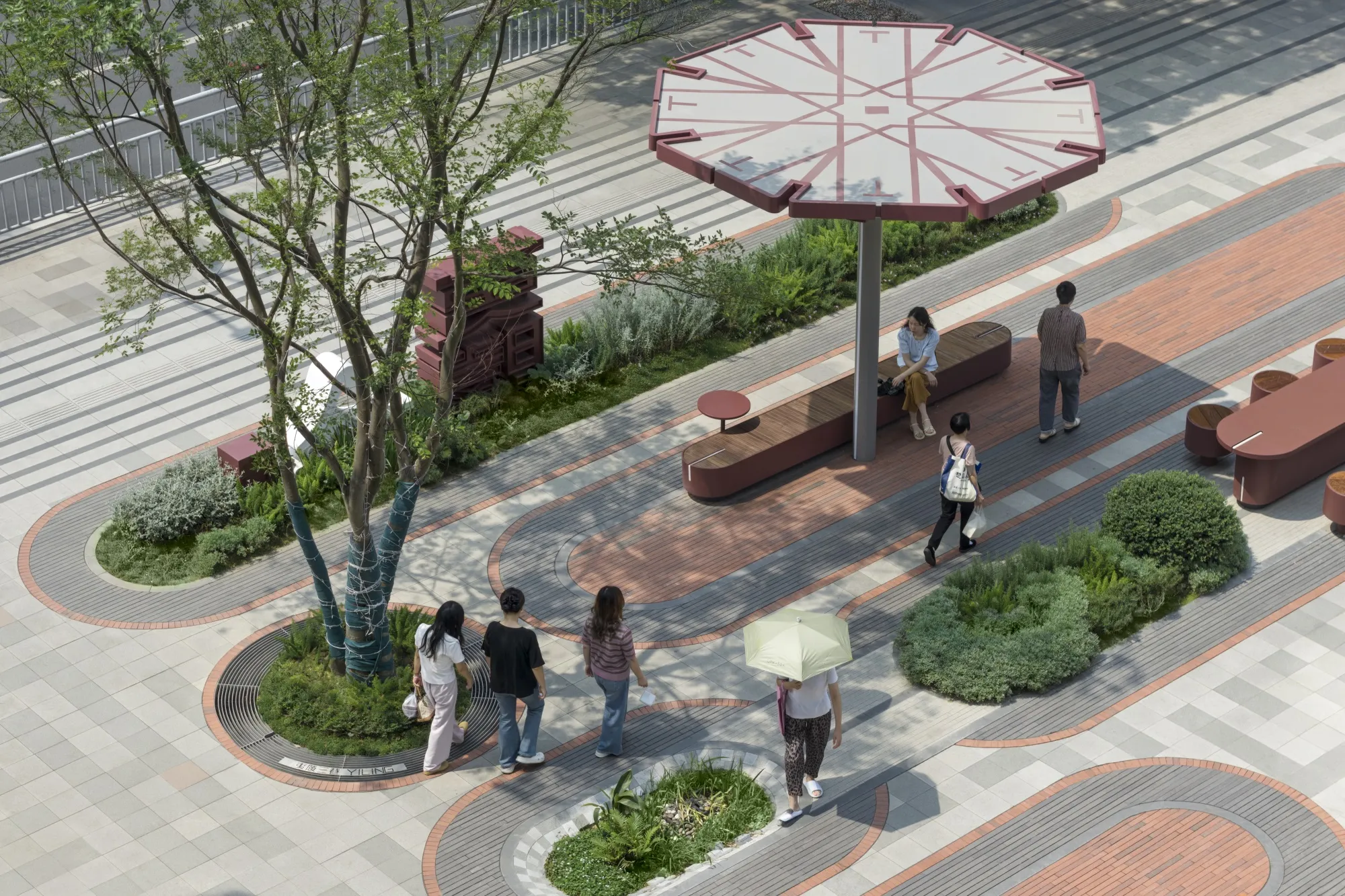
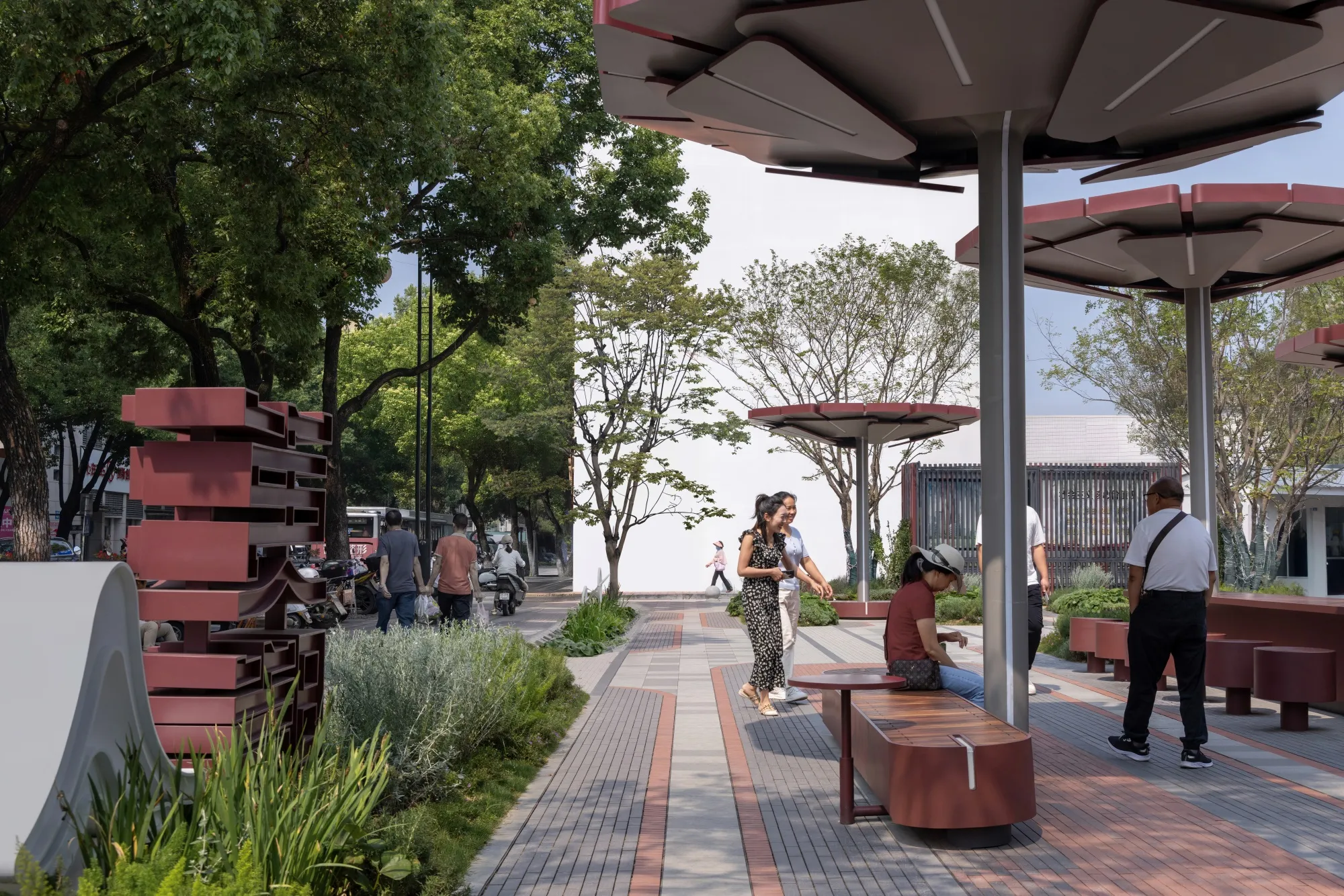
An inclusive urban living room should be equipped with “the seating of a living room, the red carpet of a living room, the garden of a living room, and the umbrellas of a living room.” It must offer spaces where the elderly can sit, rest, chat, or even play cards, as well as elegant coffee counters where young people can settle down, take photos, lean back, and enjoy refreshments. These resting areas should also provide ample shade, ensuring they remain inviting whether under the scorching summer sun or during cold, rainy winters.The ground surface incorporates distinctive textured paving that turns certain spots into unique zones—even stages—for activity and gathering.
3)Red and Gray Tones: Continuing the Memory of Xiajiang Culture
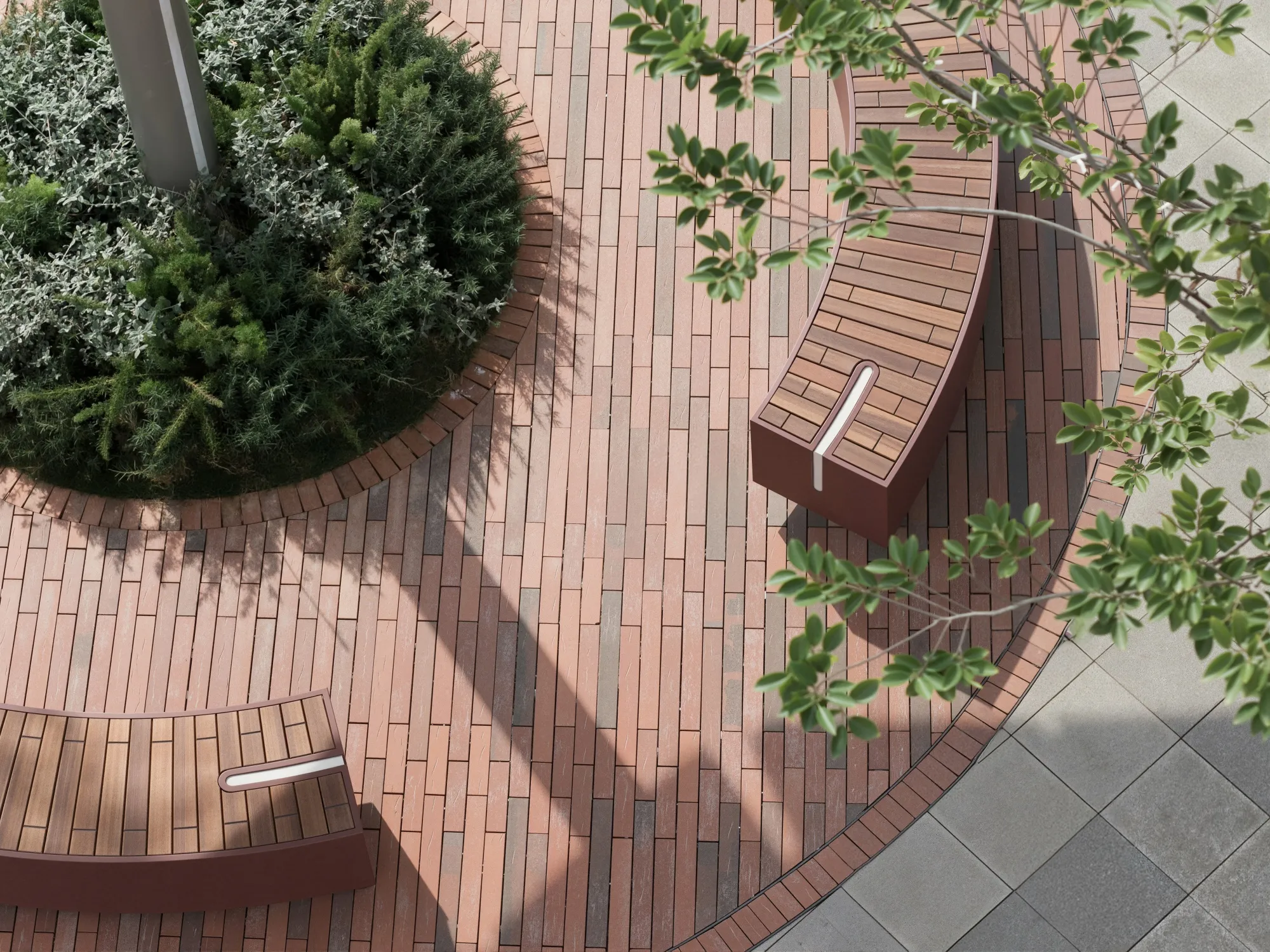
In line with the overall design direction of Yiling Third Lane, Xing’an Plaza adopts an integrated style inspired by Xiajiang culture—a inherently diverse and composite cultural gene. In 1970, to facilitate the construction of the Gezhou Dam project, Yichang relocated its county seat to a location ten kilometers northwest of the urban center, now known as Xiaoxita.The blue bricks, red bricks, and distinctive architectural symbols of the Xiajiang region form a unique visual and textural memory deeply etched in people’s minds. We have distilled this palette into a foundational red and gray color scheme that unifies the atmosphere, materiality, and decorative language of the entire space. This approach also sets a stylistic precedent and template for the ongoing renewal of Yiling Third Lane.
Space Design
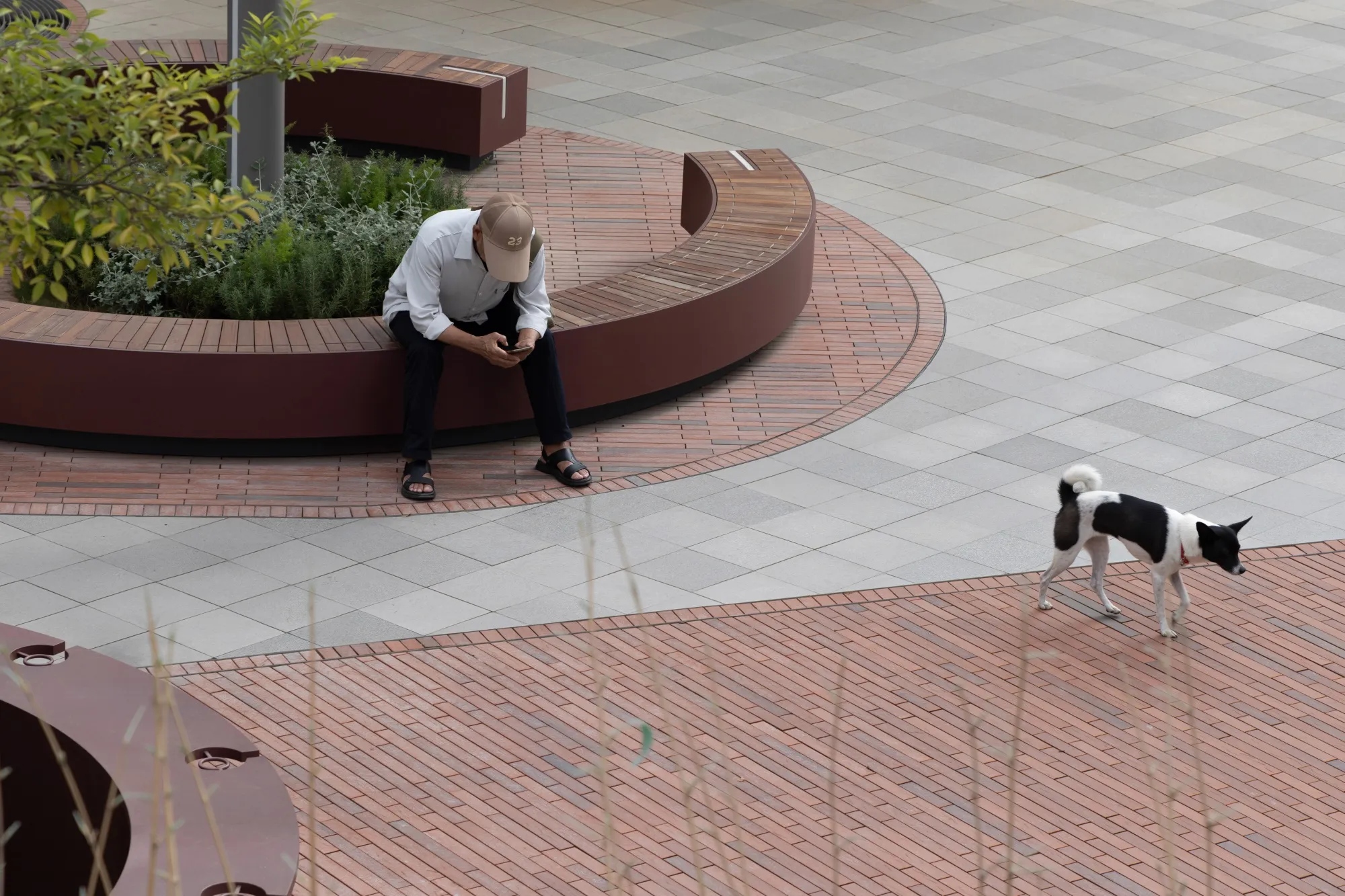
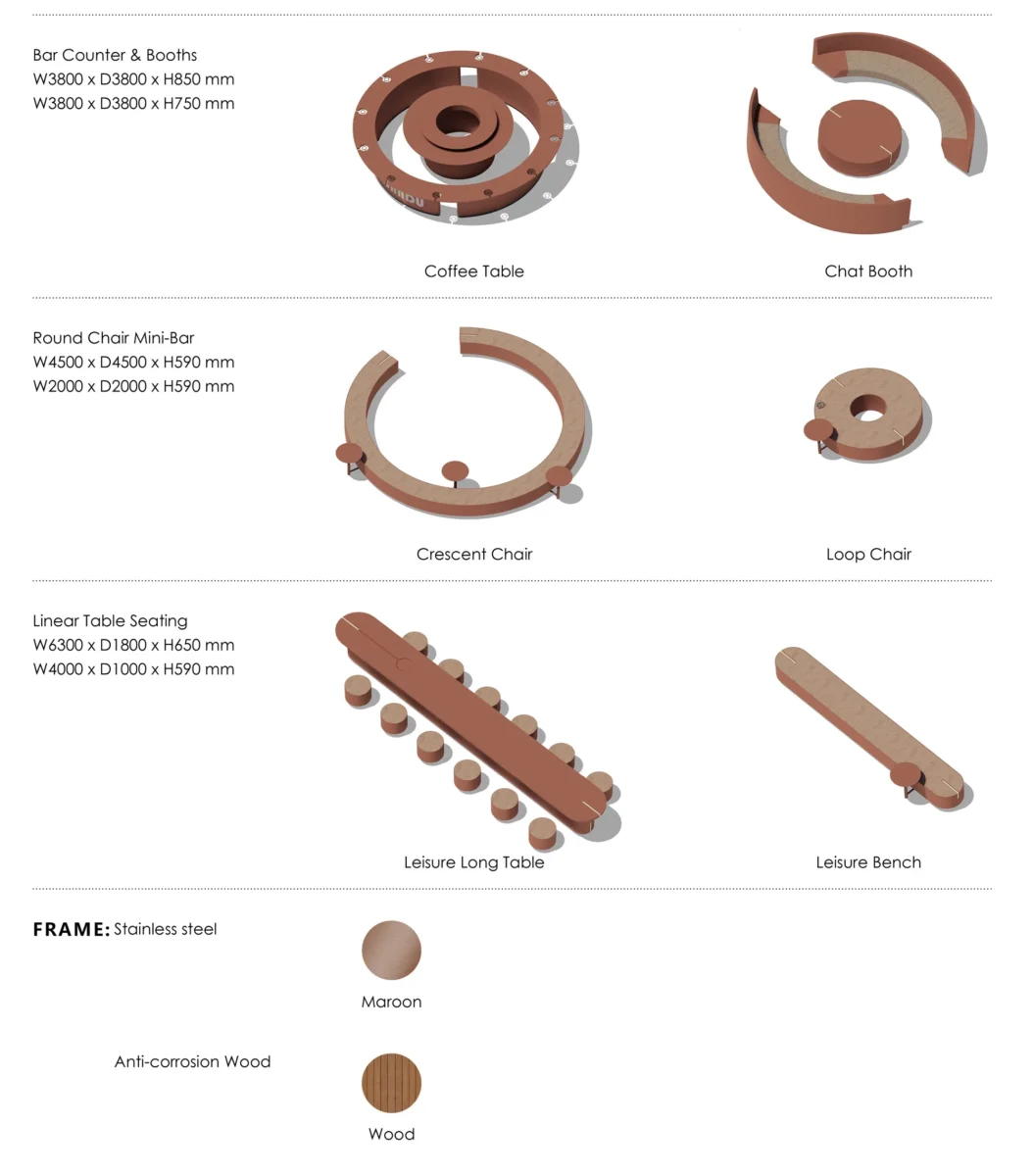
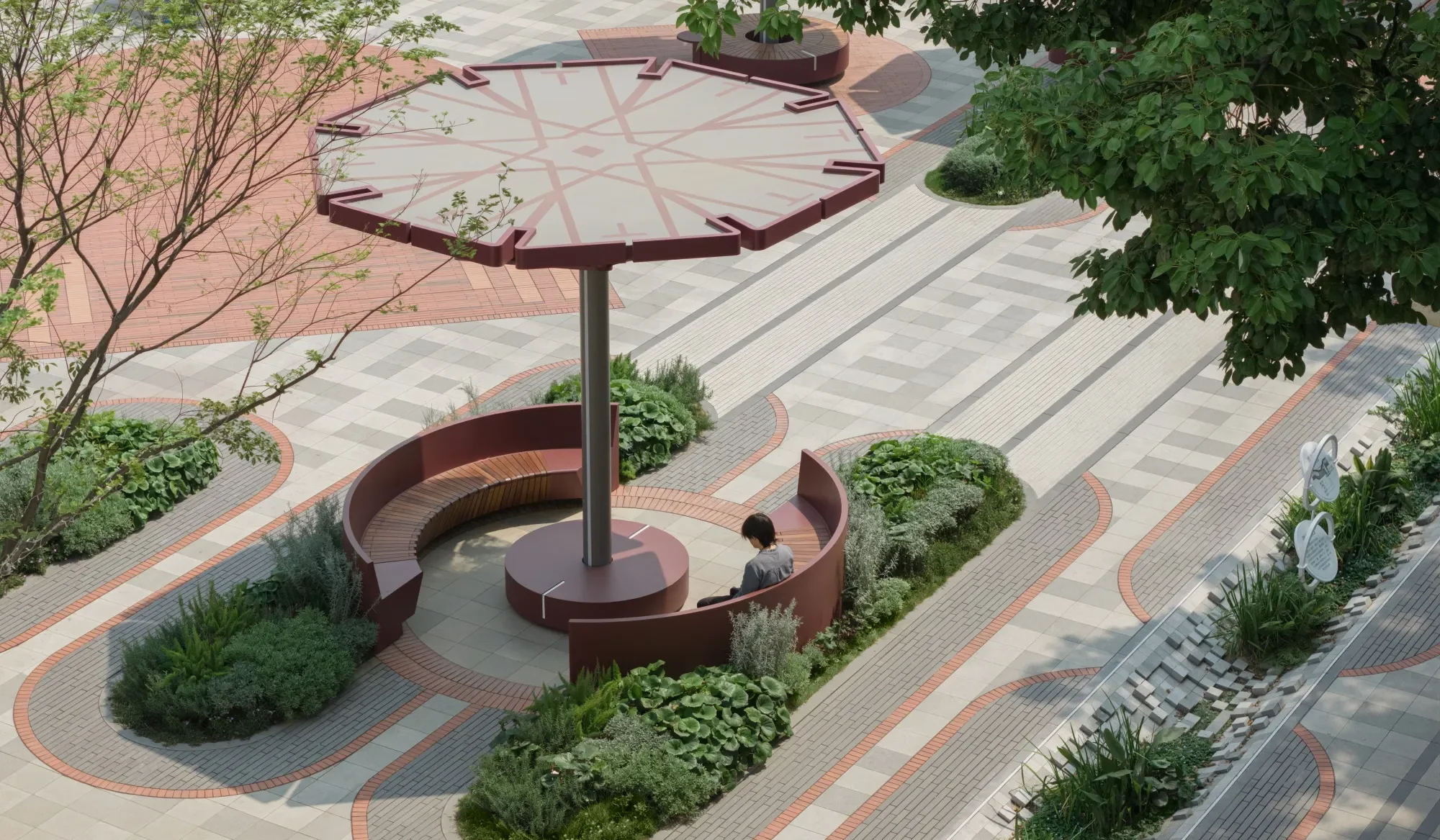
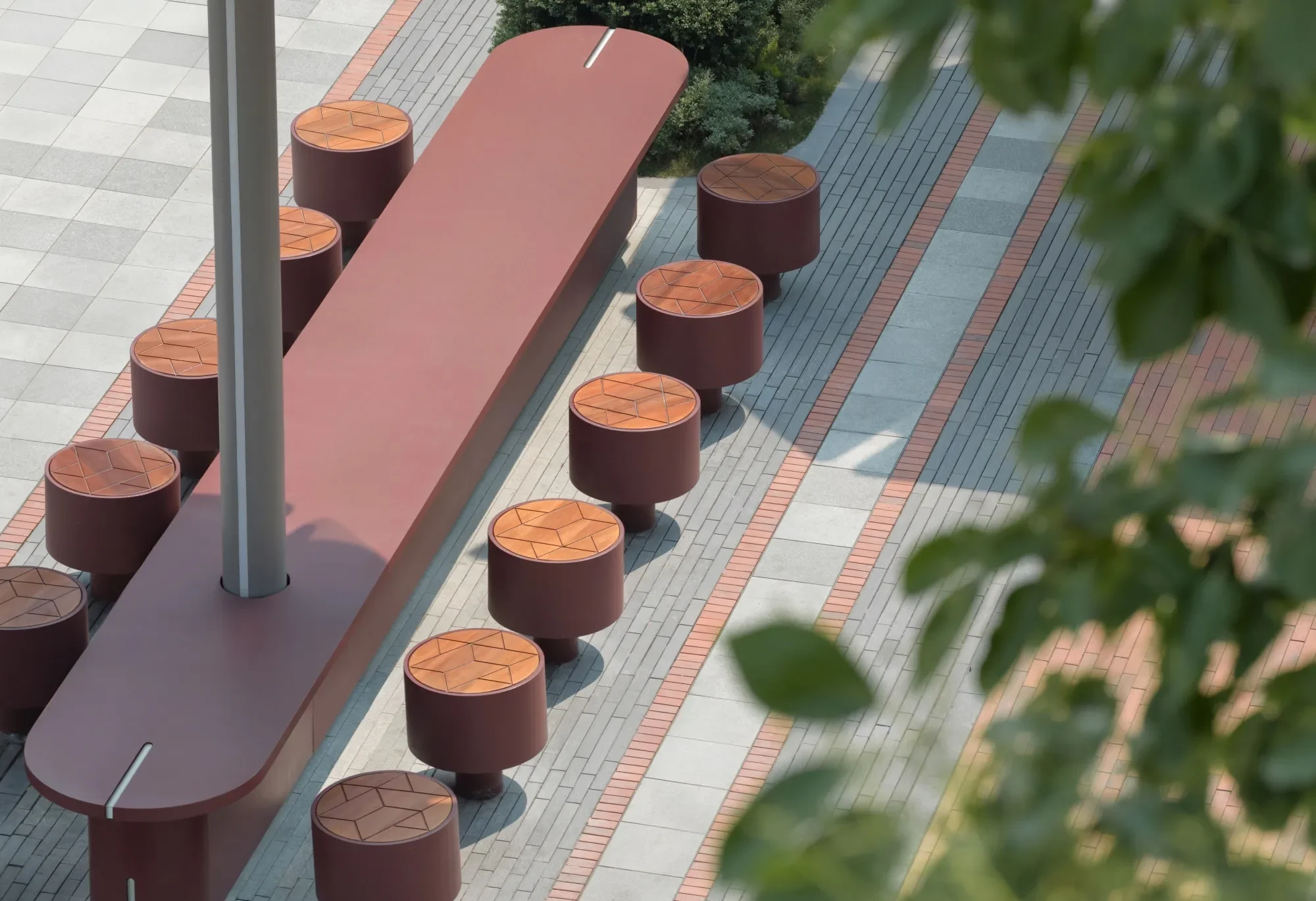
Rather than dividing the site with conventional functional zoning, the design distinguishes areas based on types of rest and socialization. Each seating arrangement enables a different way of pausing and engaging—multiple configurations create multiple possibilities.Seating beneath trees can function both as a counter space or as circular benches paired with side tables. The event plaza is designed to accommodate a variety of future activities. Chatting booths offer an ideal spot for groups of friends, while long communal tables encourage strangers to play cards or converse together. Shade umbrellas featuring decorative motifs inspired by Xiajiang culture enhance the stayability of the entire space.
Civic Lounge Furnishings
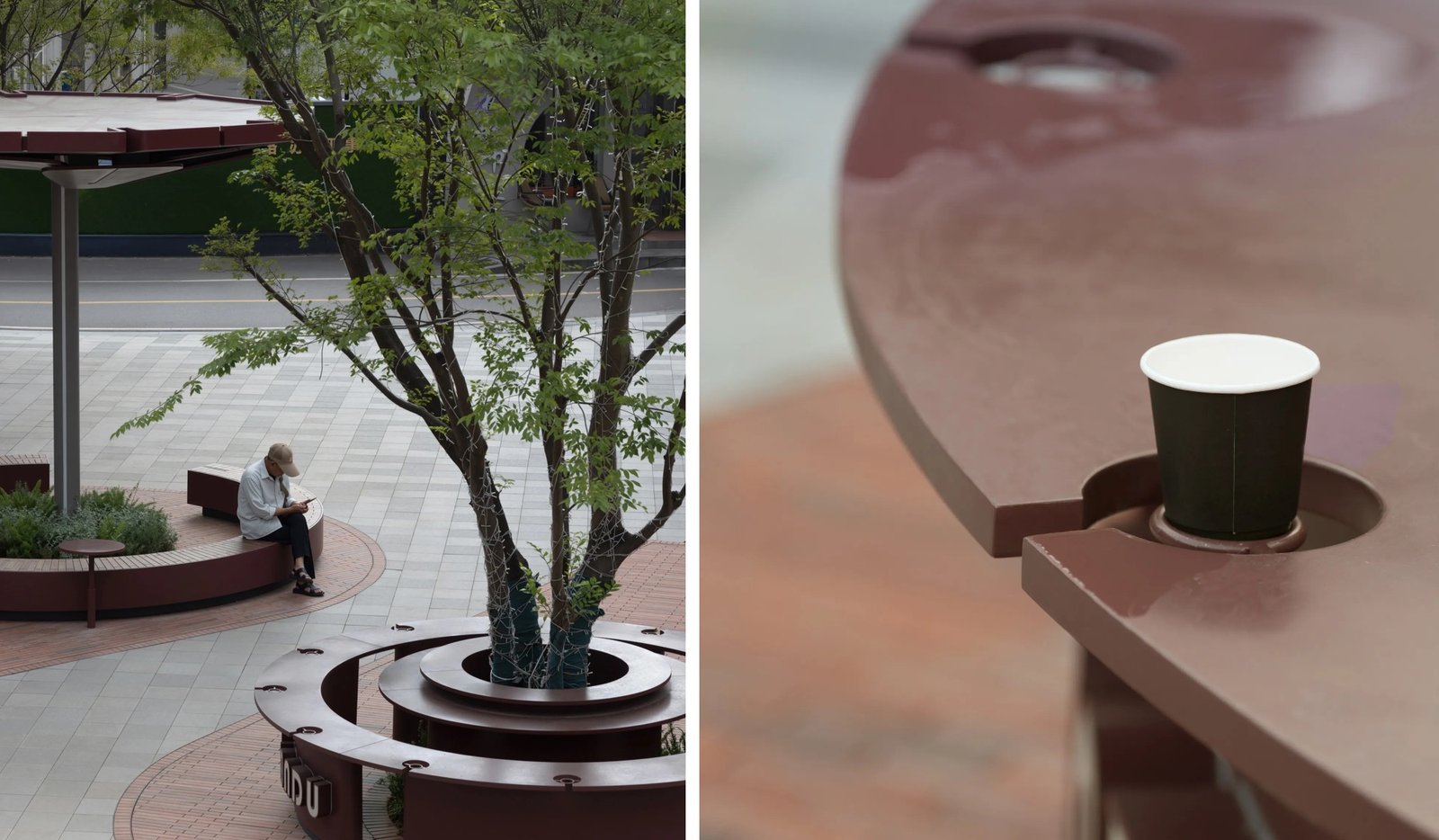
The furnishings of this “Civic Lounge Furnishings” create diverse opportunities for leisure: booths accommodate group conversations, communal tables invite face-to-face games, and the counter encourages spontaneous pauses—even featuring dedicated coffee cup holders designed for convenience.
Civic Floor Tapestry
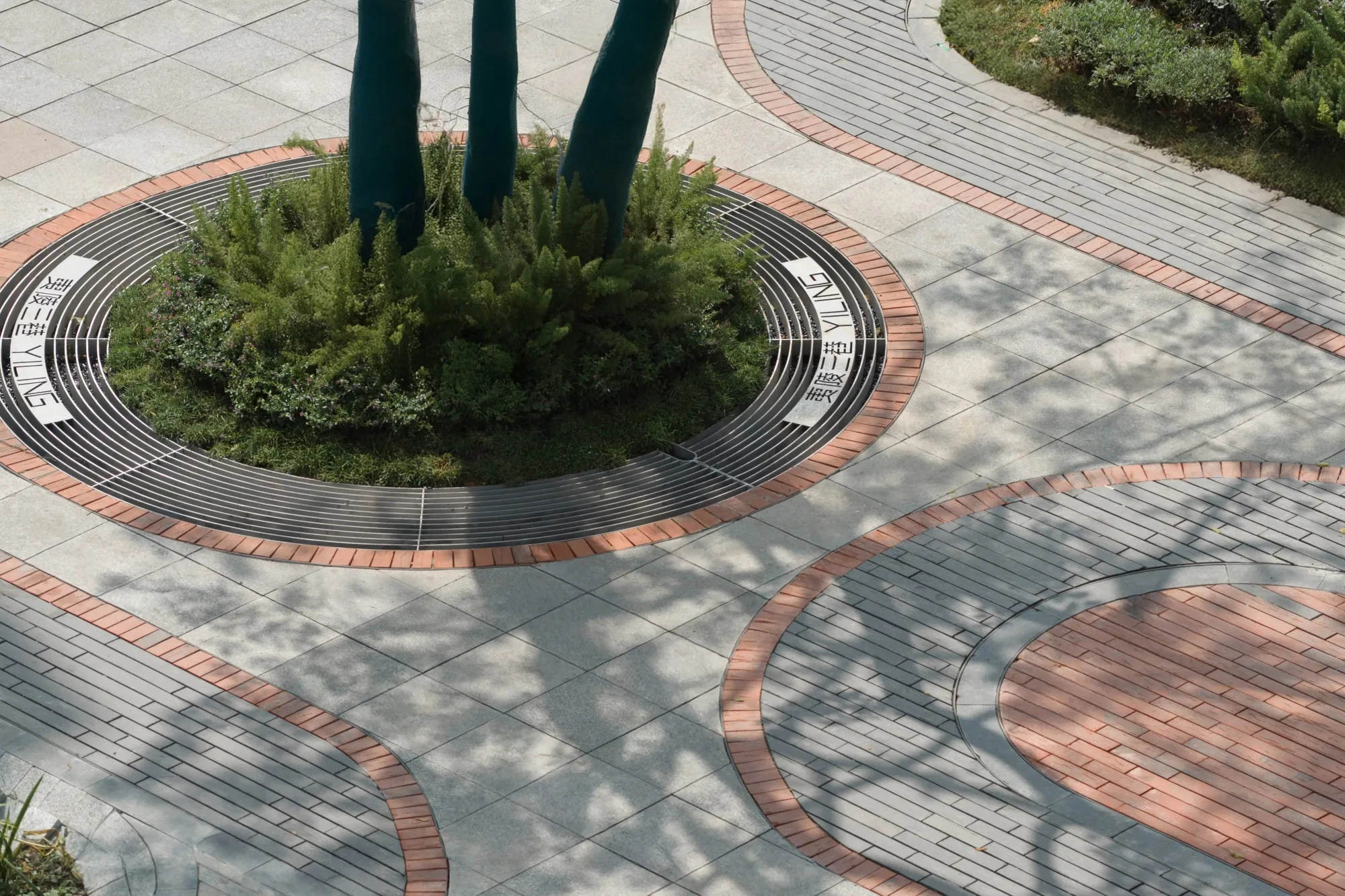
“The ‘Civic Floor Tapestry’” represents both a continuation and reinterpretation of the old street’s textured paving, while also defining the functional potential of the space. Its defined form allows it to transform, when needed, into an independent stage—ready to host moments of gathering and performance.
Civic Garden
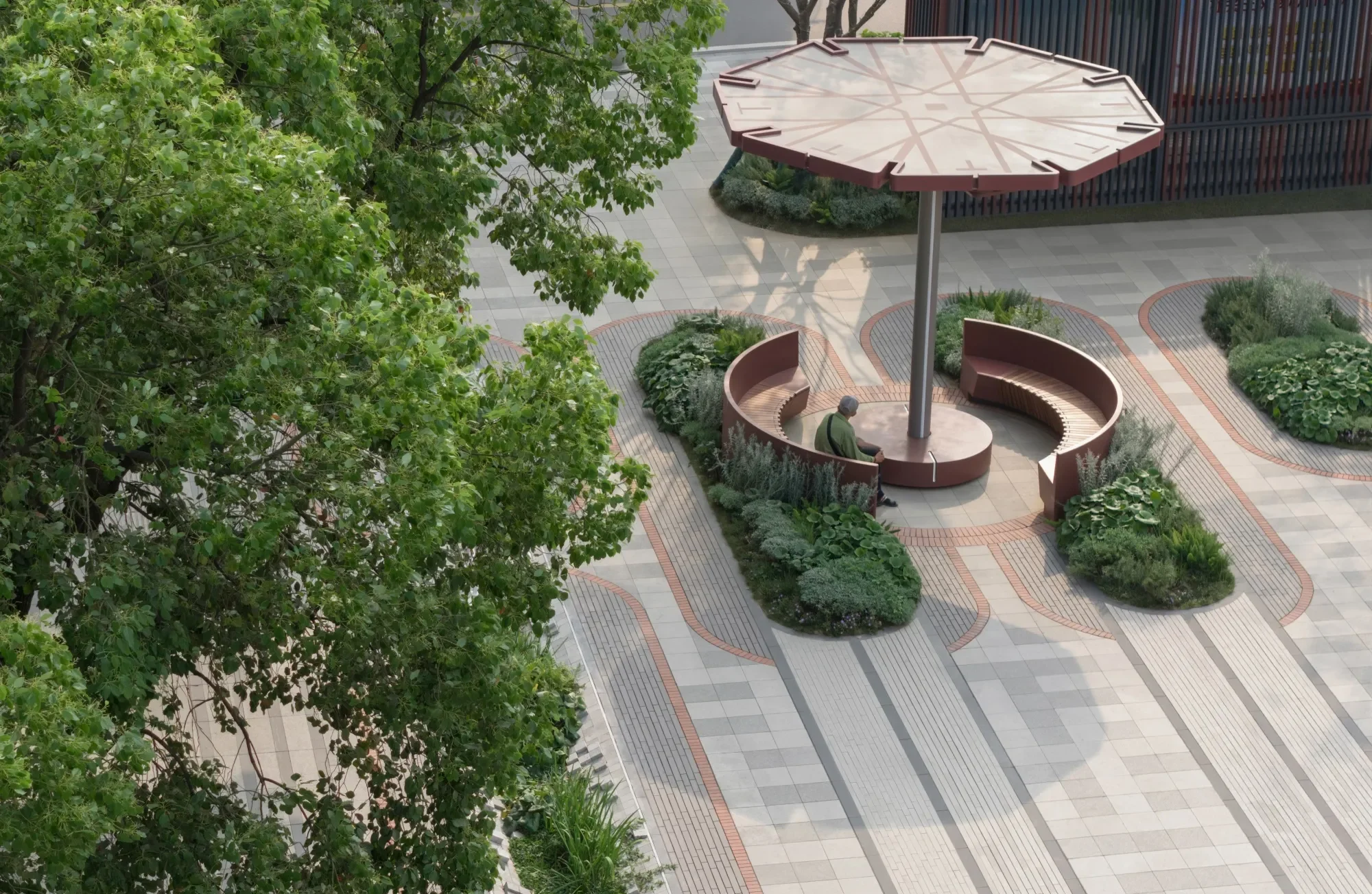
“The ‘Civic Garden’” is a spatial experience unachievable in indoor settings, and represents the unique charm of an outdoor urban living room. Through more than two years of hands-on landscape practice in the region, we have continuously explored planting strategies tailored to different environmental contexts.We adopted naturalistic planting designs to create a rich garden atmosphere. A silvery-gray thematic palette was introduced—using species such as Crossostephium chinense, Salix ‘Star River’, and Rosmarinus officinalis, which were rarely seen locally before. To our delight, after being implemented in several projects, these plants have begun to appear in local nurseries. Other accents like Asparagus densiflorus ‘Myersii’ add distinctive texture, while Brachyscome iberidifolia offers subtle yet enriching color. Based on the vigorous performance of Farfugium japonicum in previous projects, we reduced its proportion in this design—though it remains one of the foundational species.
Rain Garden
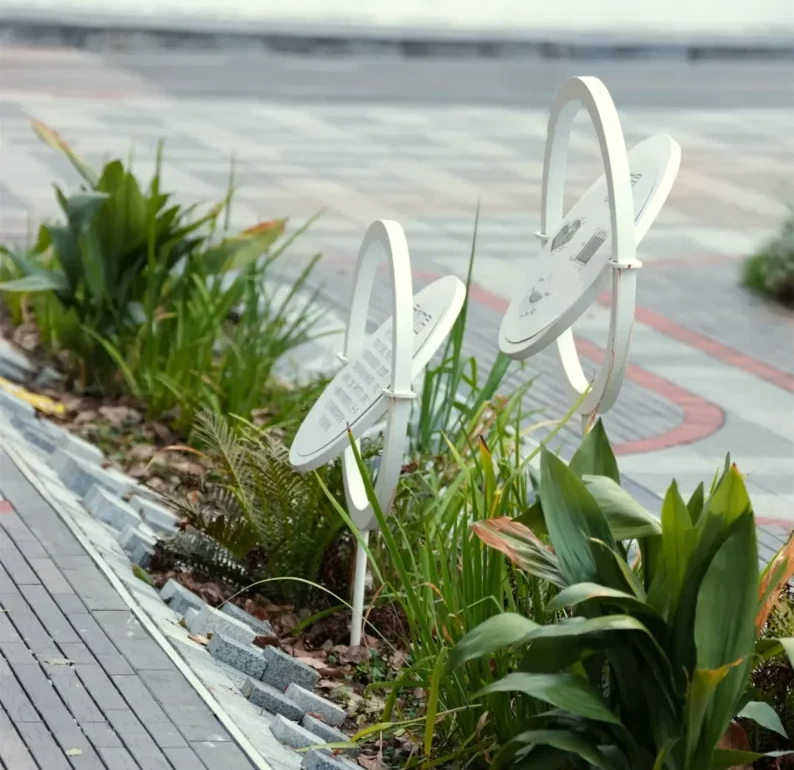
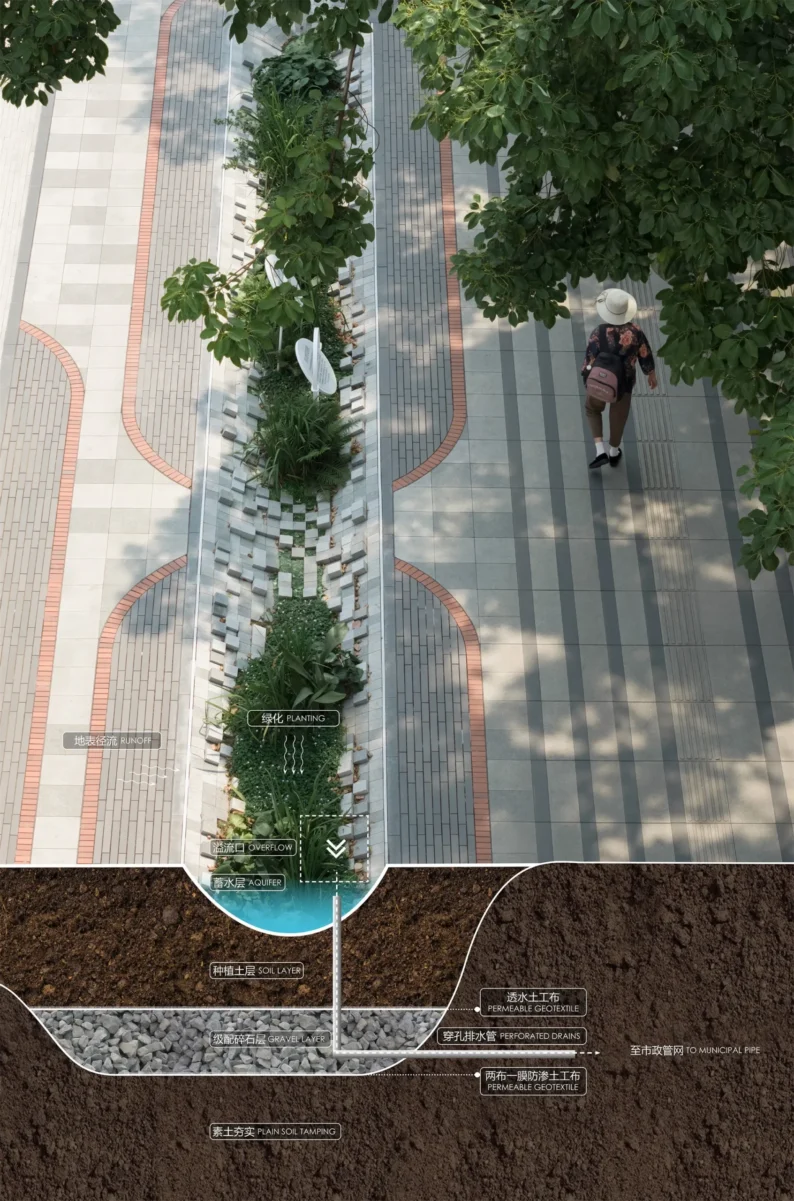
The Xing’an Plaza Rain Garden is a small-scale experiment in urban stormwater management. It captures rainwater, which is then filtered through layers of storage soil and planting media before being diverted via drainage pipes or allowed to infiltrate into the native soil, helping to replenish groundwater.For planting, a combination of various iris species was selected. The use of plants such as Aspidistra elatior and Cyrtomium fortunei reflects a comprehensive consideration of functionality, aesthetics, and cost-effectiveness. Additionally, Viola banksii, which has proven successful in multiple previous projects, continues to be incorporated due to its strong adaptability and reliable ornamental performance.
Building on a foundation of planting aesthetics, we have consistently sought out plant varieties and combinations that are well-adapted to the local environment, require minimal maintenance, and deliver reliable performance. If these ongoing efforts can offer new insights and inspiration for the local planting landscape, we would take great pride in contributing to its evolution.
Civic Pavilion
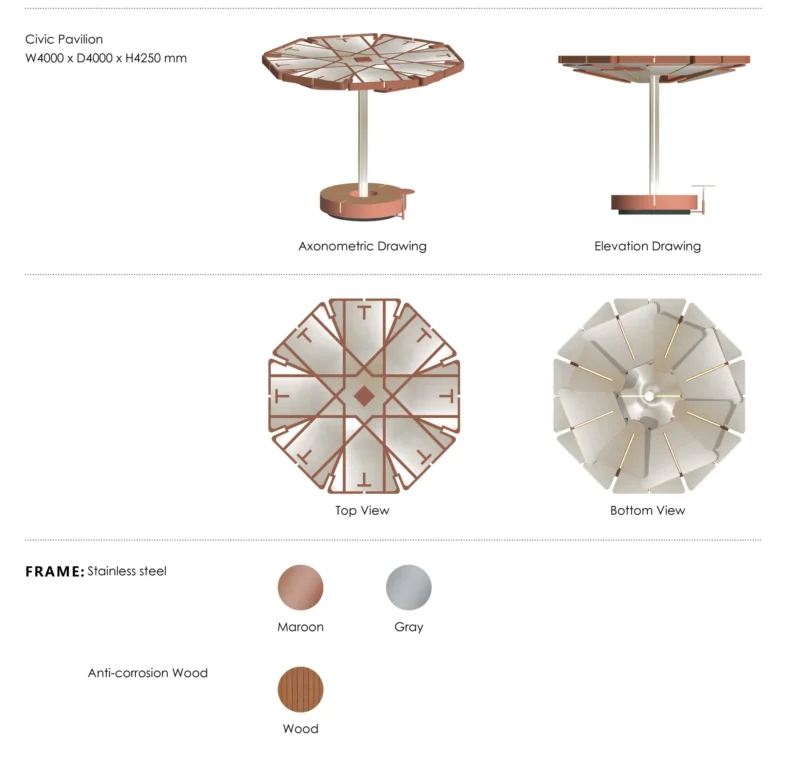
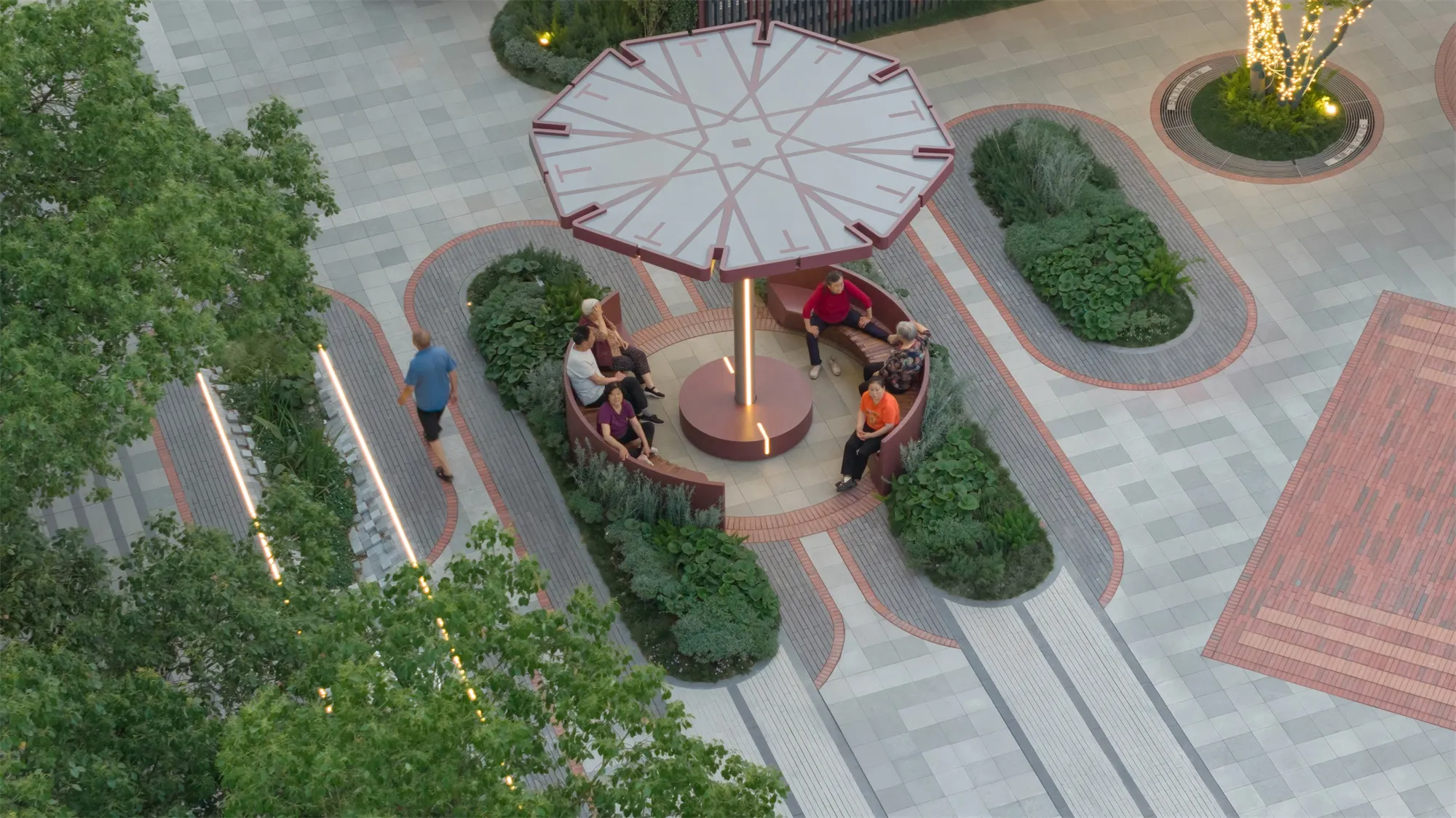
“The ‘Civic Pavilion’” provides essential shade for seating and garden areas through its aesthetically considered form, enhancing the appeal and comfort of the outdoor space.
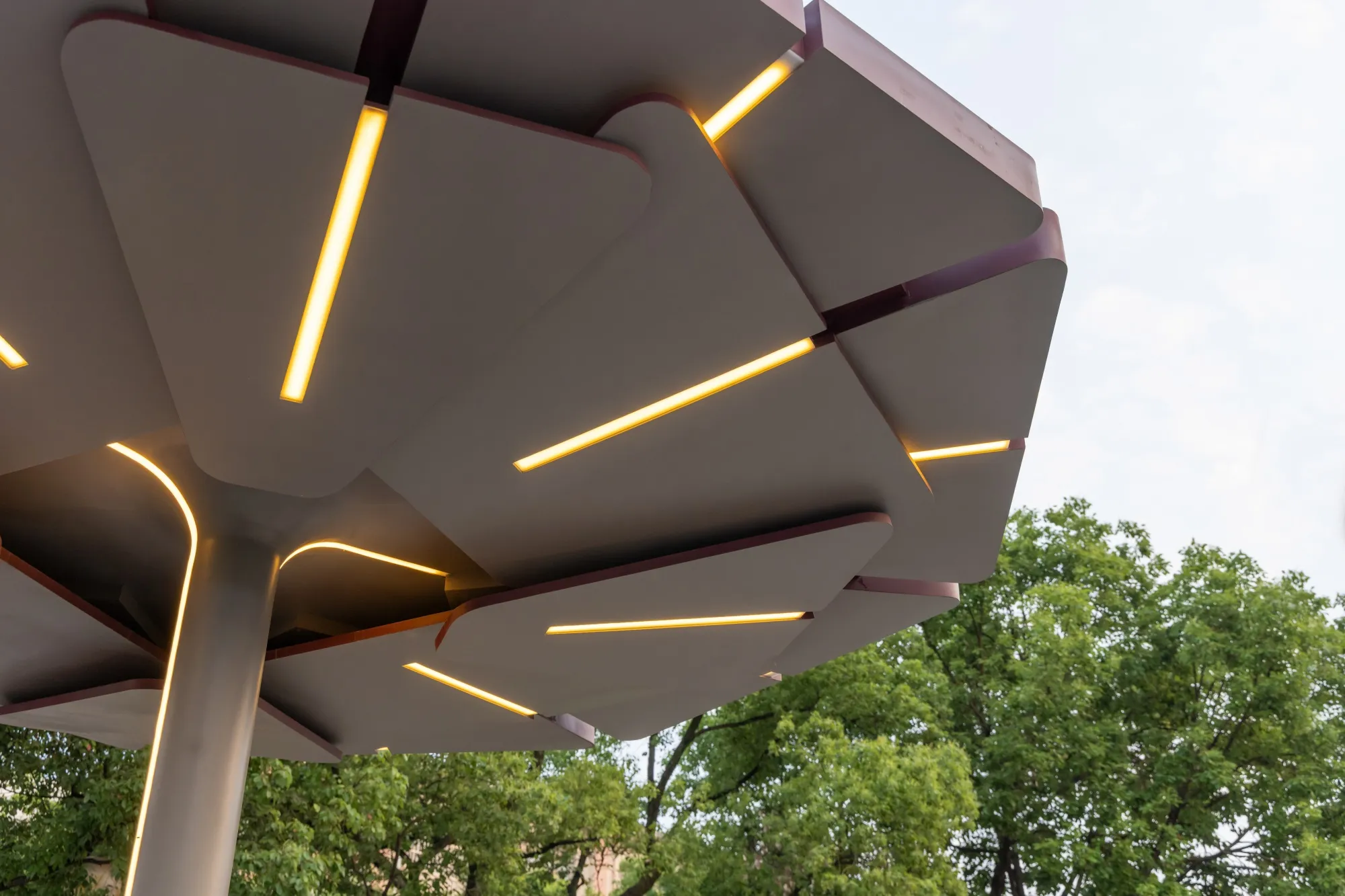
Construction
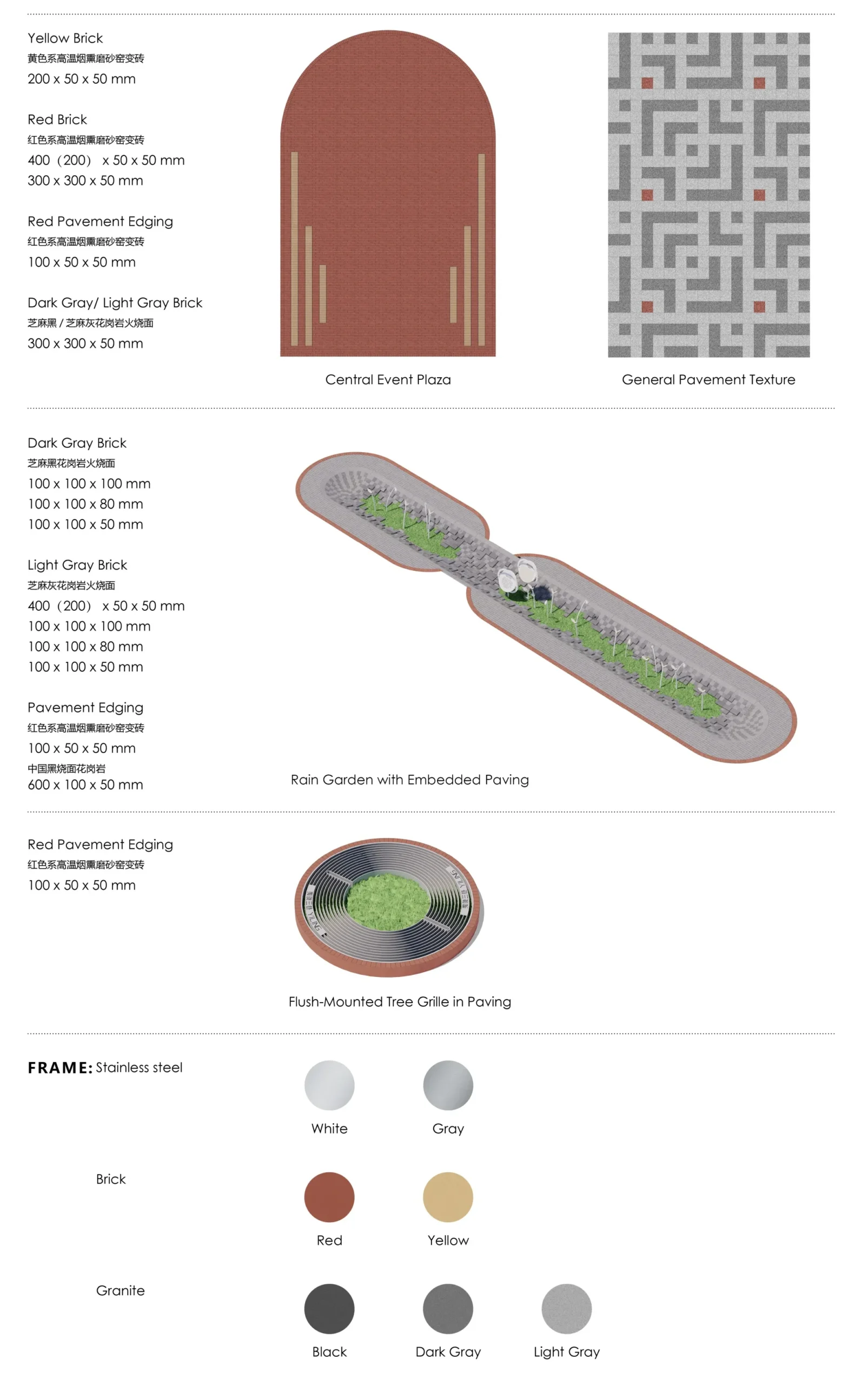
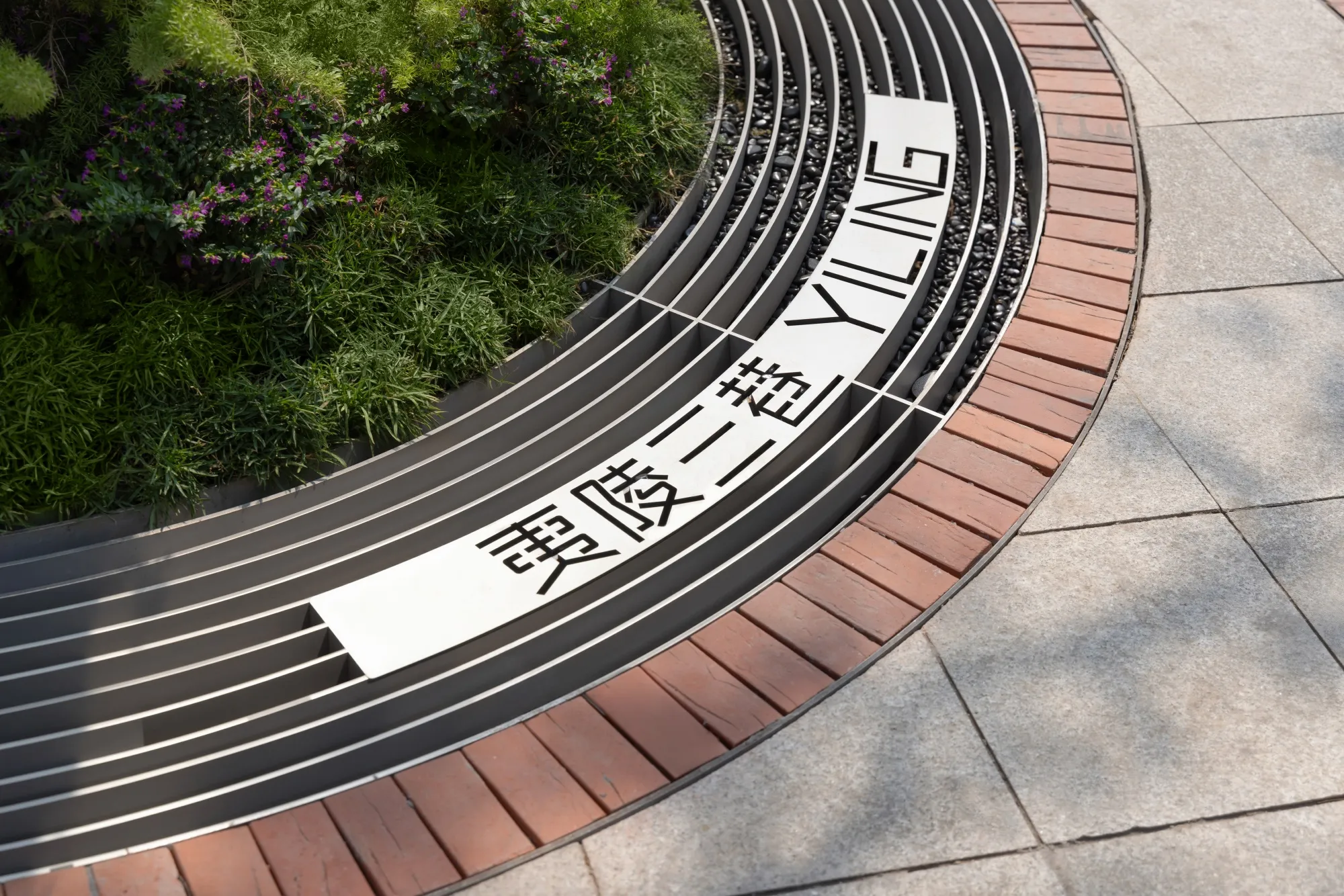
During the construction of this site, a significant number of non-standard, custom-designed elements were implemented—including but not limited to shade umbrellas, planter boxes, seating, and paving.The design process involved meticulous study and refinement using physical white models to analyze spatial scale and compositional relationships. Furthermore, we maintained deep involvement in the selection of every primary material and the detailing of construction joints.
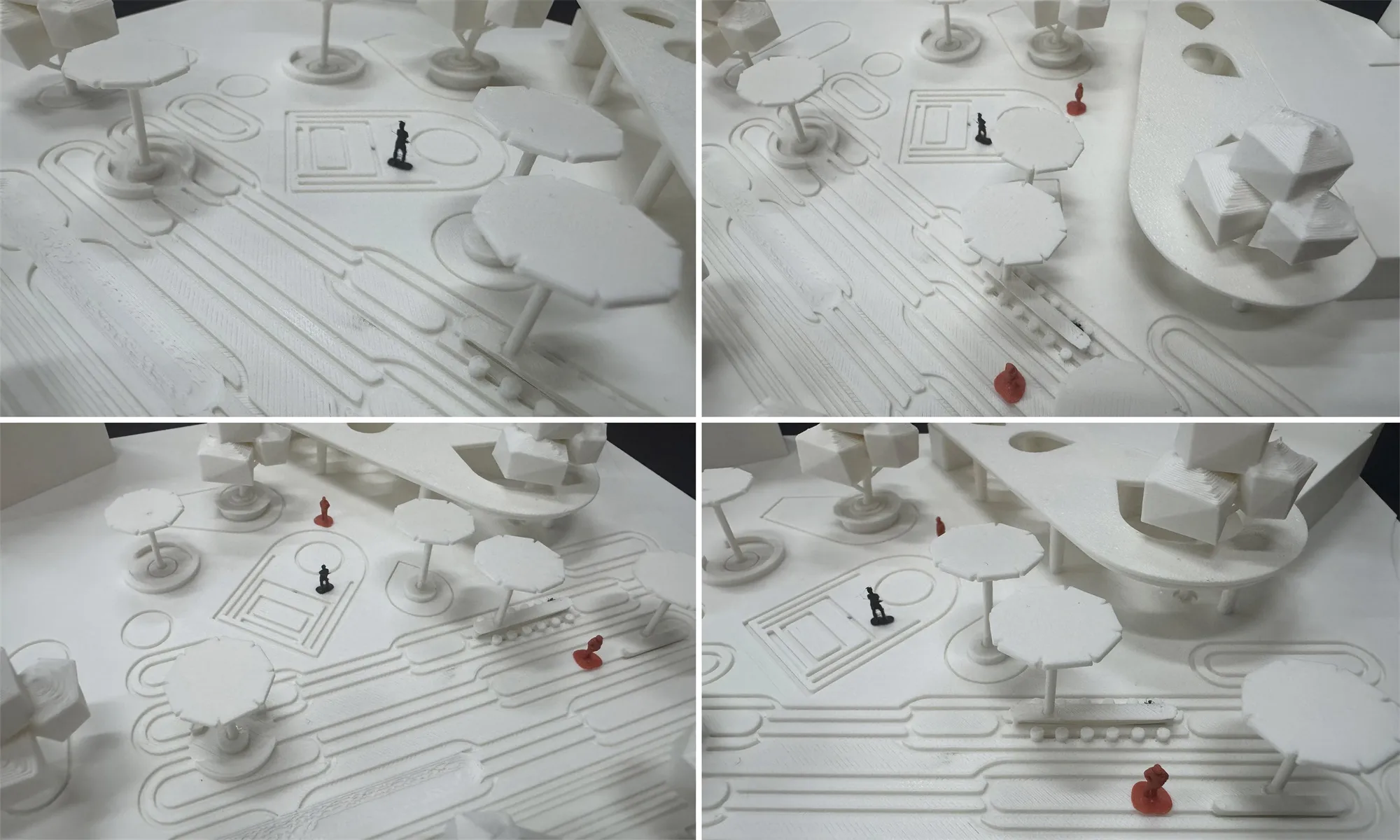 3D Printed Site Exploration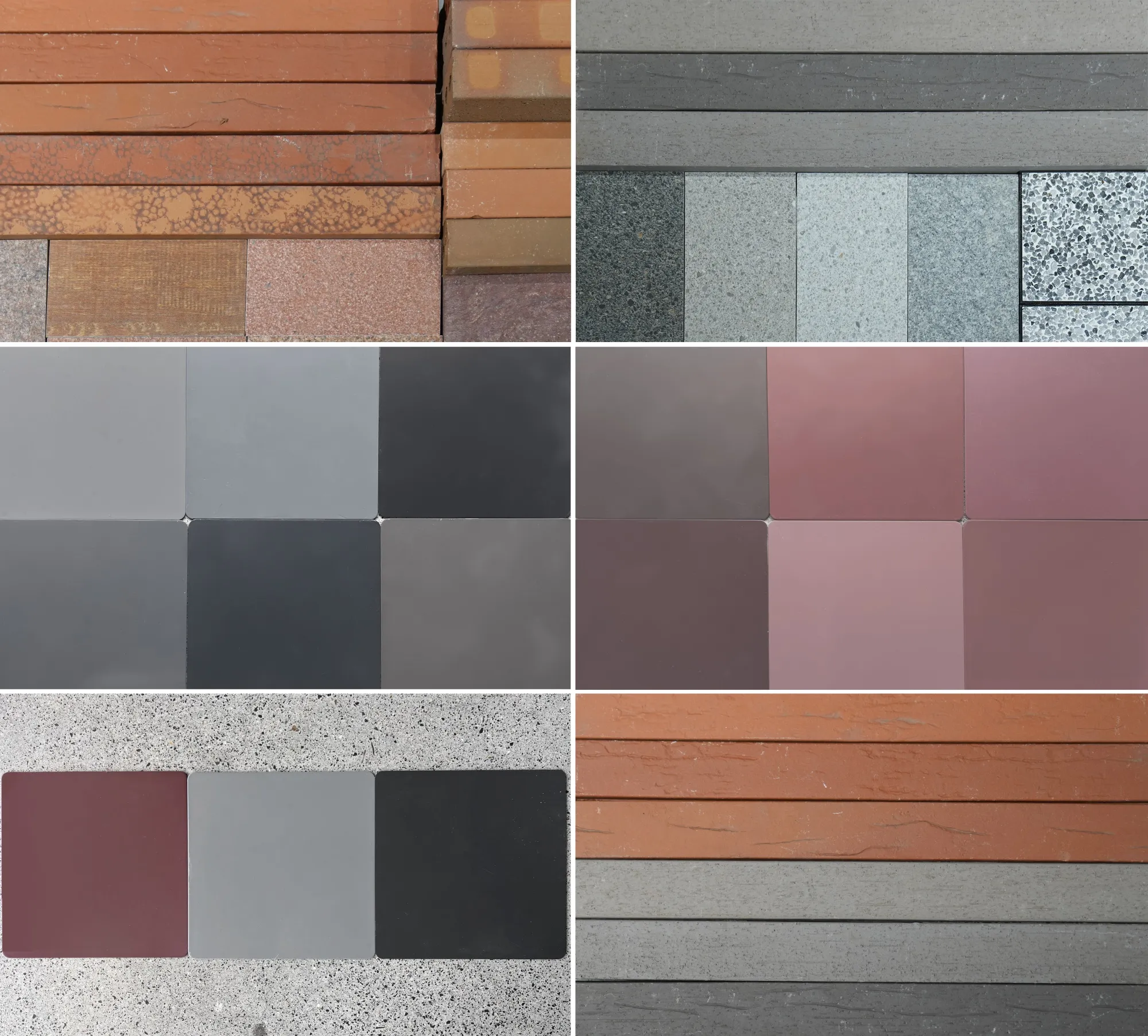
Material Comparison and Selection
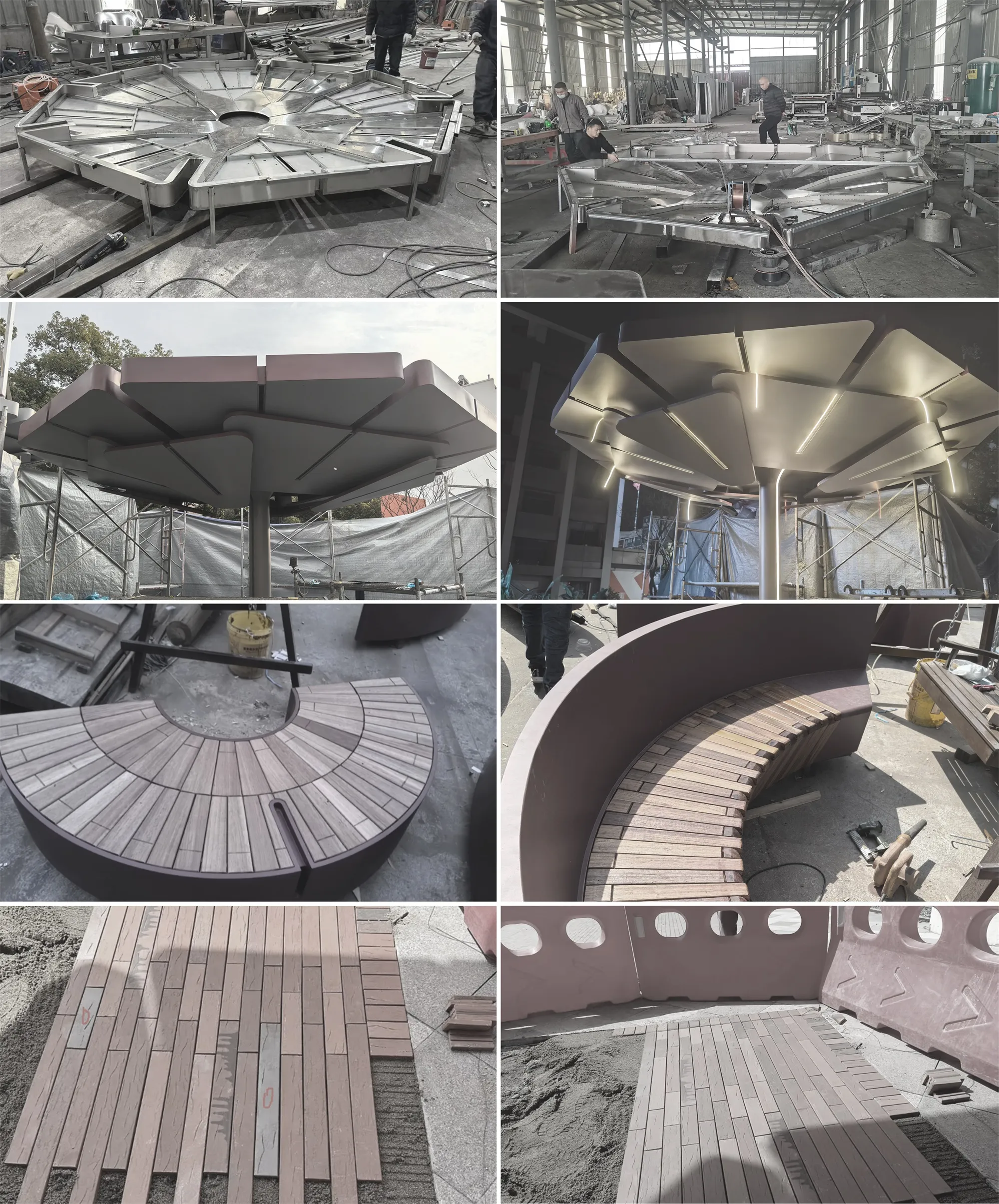
Comprehensive Control of Key Material Processes
Afterword
The transformation of Xing’an Plaza embodies our understanding of the diversity and inclusivity of urban space, as well as an ongoing effort to balance the public welfare nature of shared spaces with the need for commercial vitality.
Indeed, a city, as a vast natural phenomenon, transcends human design capabilities. What designers can do is analyze present needs, acknowledge existing patterns of use, and anticipate future urban development—enabling the space to unfold across time, across communities, and throughout its physical layers with rich possibilities.
By blurring the boundaries between public and commercial use through design, we aim to achieve a space where vibrancy and elegance highly integrate and coexist.
Lifestyle of Xing’an Square


