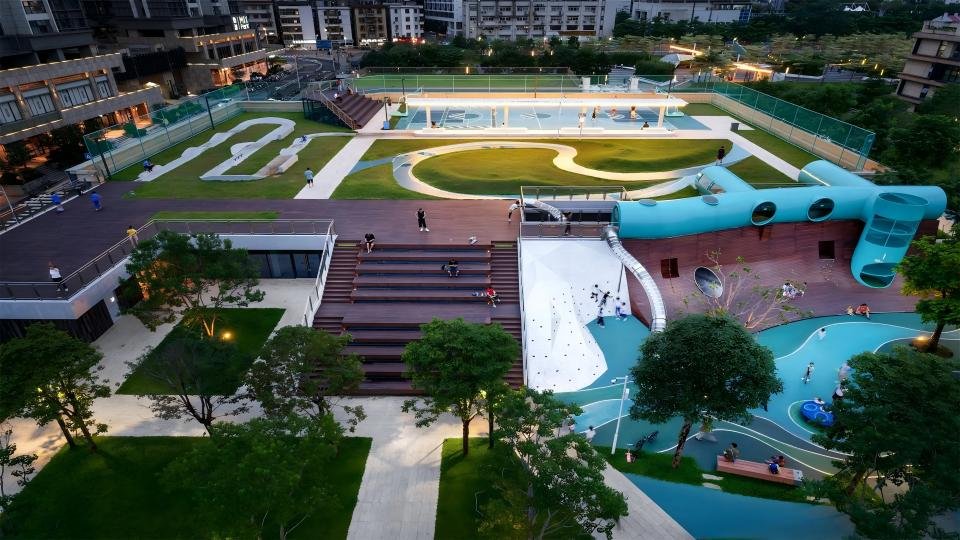
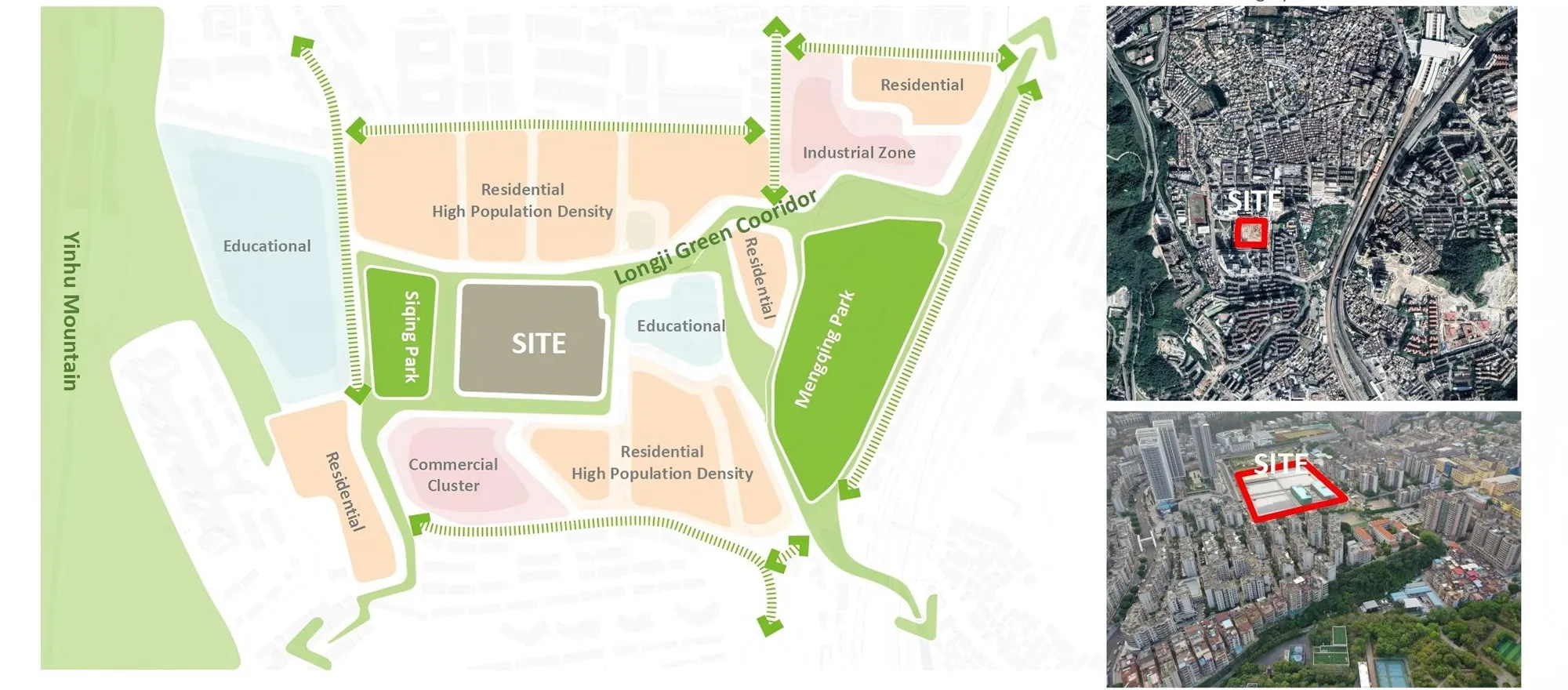
Shenzhen’s Longgang Buji district, once a vibrant landmark as the commercial gateway to the Special Economic Zone, now grapples with the substantial challenge of housing over 40,000 residents per square kilometer. This intense population density has placed considerable strain on traffic, environmental resources, and infrastructure facilities, rendering urban renewal essential to alleviating spatial constraints. How can this densely packed land simultaneously meet the essential needs of civil system operations and cater to residents’ aspirations for a better life? The Yueqing Park provides a unique answer through the practice of “vertical symbiosis.”
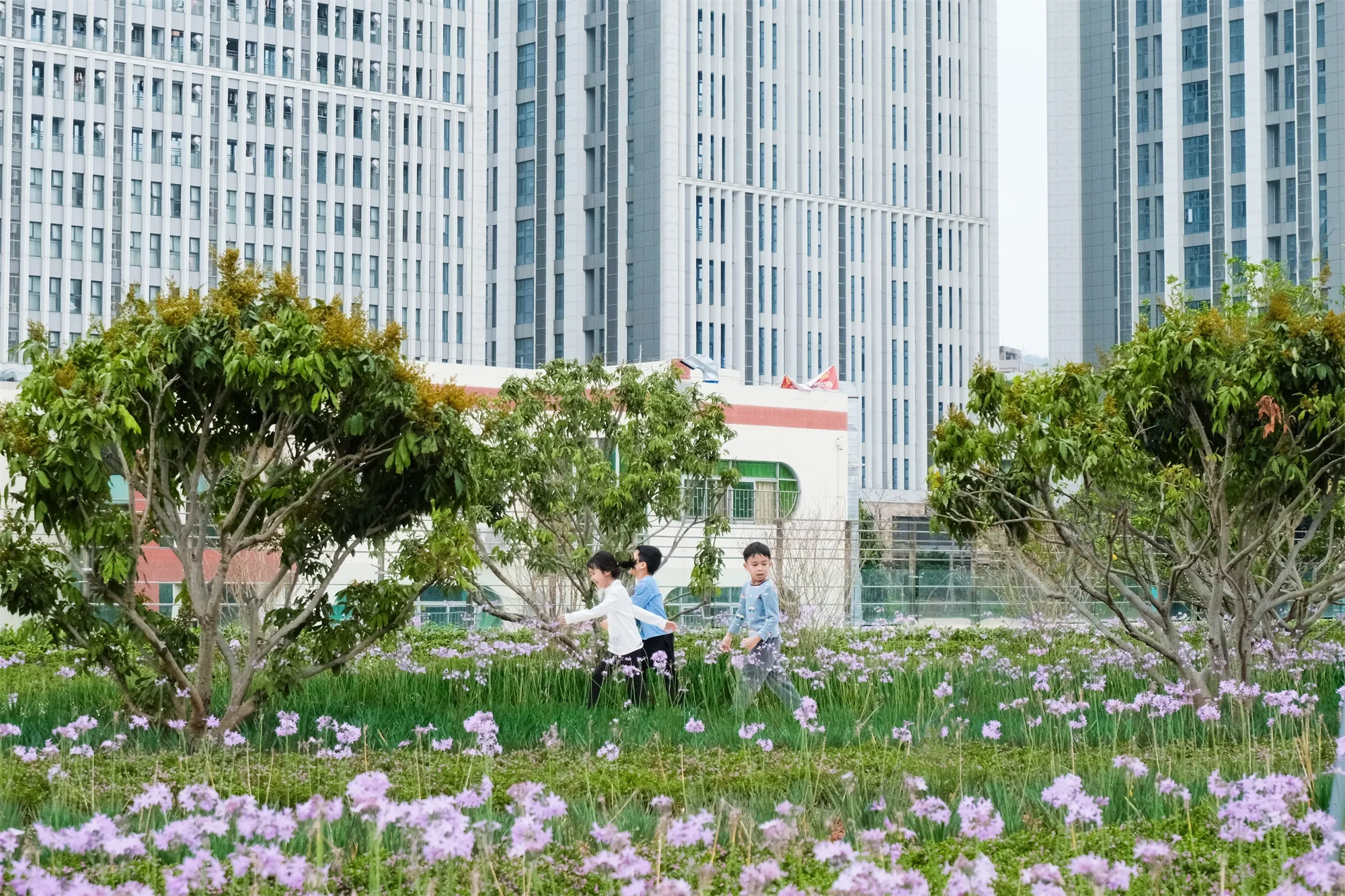
At the start of the project, nearly 1,000 survey responses flooded in within a single day for the public rooftop park proposal. Families aged 30-45, as the community backbone, voiced clear demands: sports facilities for basketball, running and workouts; safe play zones for children; and vibrant spaces for community events like sports festivals, outdoor movies, and markets. These authentic community aspirations became the central inspiration for Yueqing Park’s design.
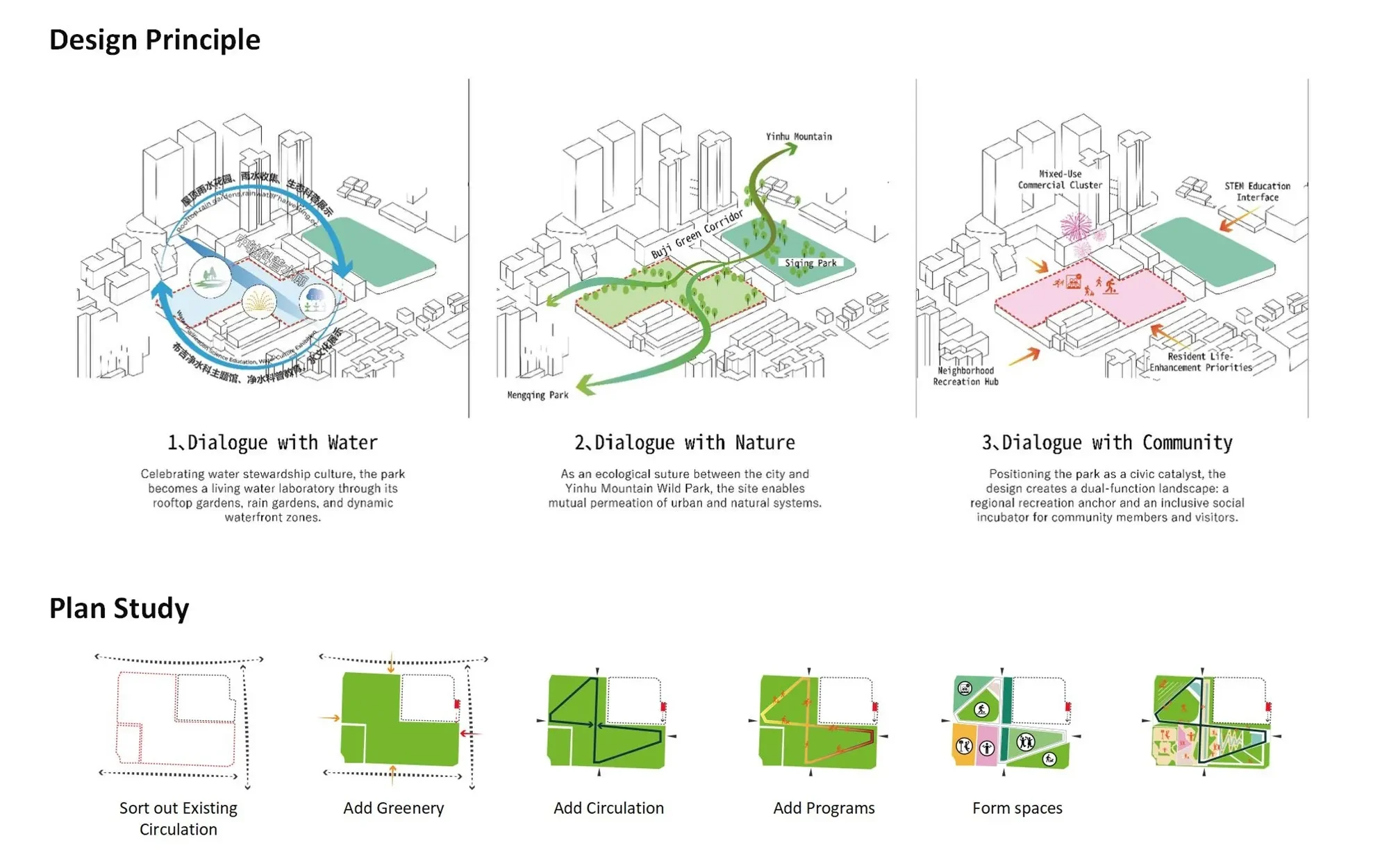
As the third phase of the Buji Water Purification Plant Rooftop Park series, the Yueqing Park advances the narrative of water from a state of contemplation to one of coexistence. Guided by three foundational design principles— Dialogues with Clean Water, Dialogues with Nature, and Dialogues with the City—this park addresses the diverse needs of the community while simultaneously mitigating the operational impacts of the plant on the surrounding neighborhood. It also seeks to deepen public understanding of the water purification process. Furthermore, the park transforms this densely populated urban area into a miniature ecological green heart, cultivating habitats that support local flora and fauna.
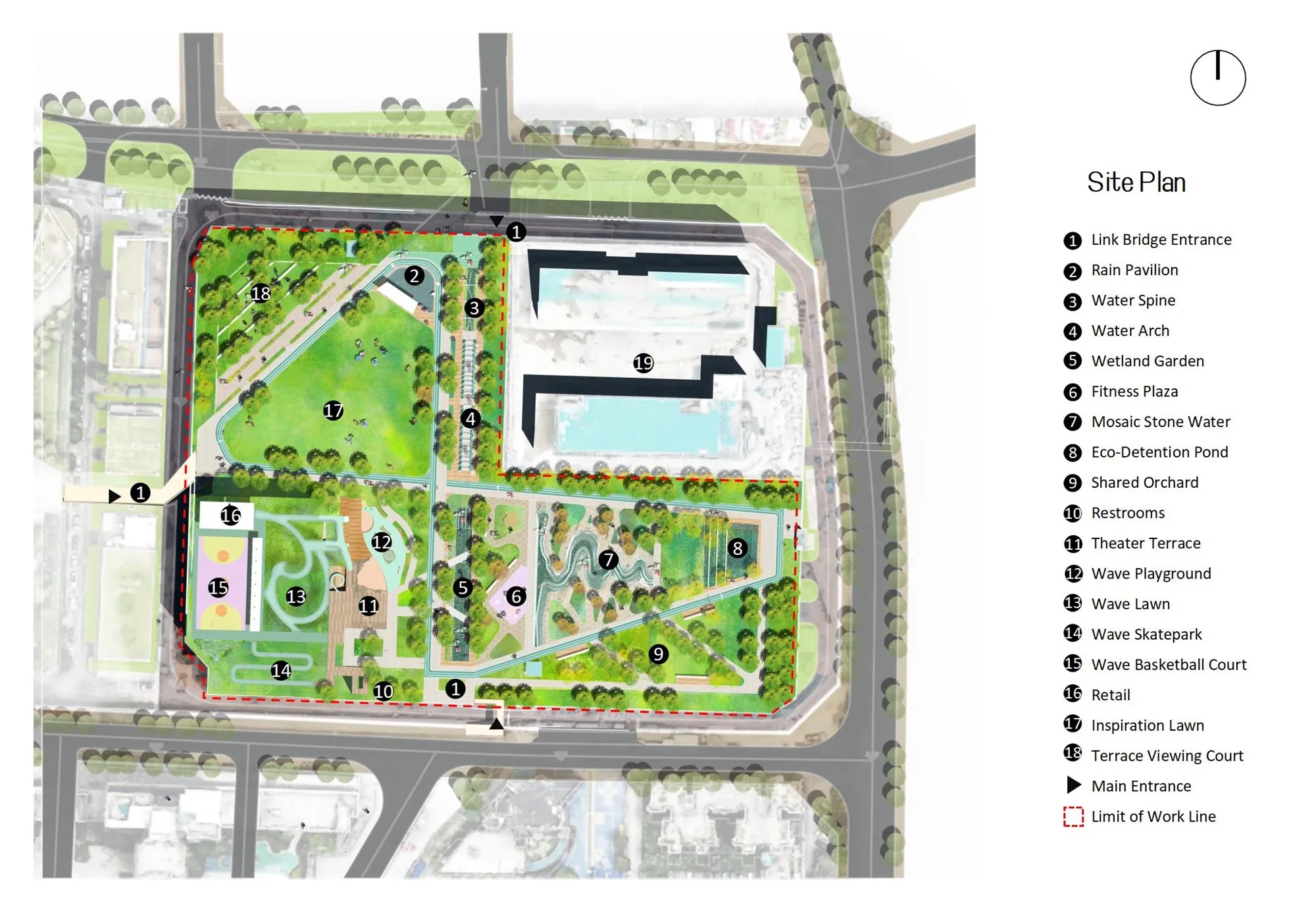
Inspired by water’s lifecycle, five landscape nodes are established along a thoughtfully curated thematic water axis: the Raindrop Pavilion, Fountain Archway, Splash Garden, Meandering Watercourse, and Ecological Wetland. Each of these nodes serves as a profound representation of the natural hydrological stages—precipitation, rainfall, infiltration, runoff, and purification—thereby transforming the abstract concept of water cycles into tangible and interactive landscapes that engage the senses and foster a deeper connection with the environment.
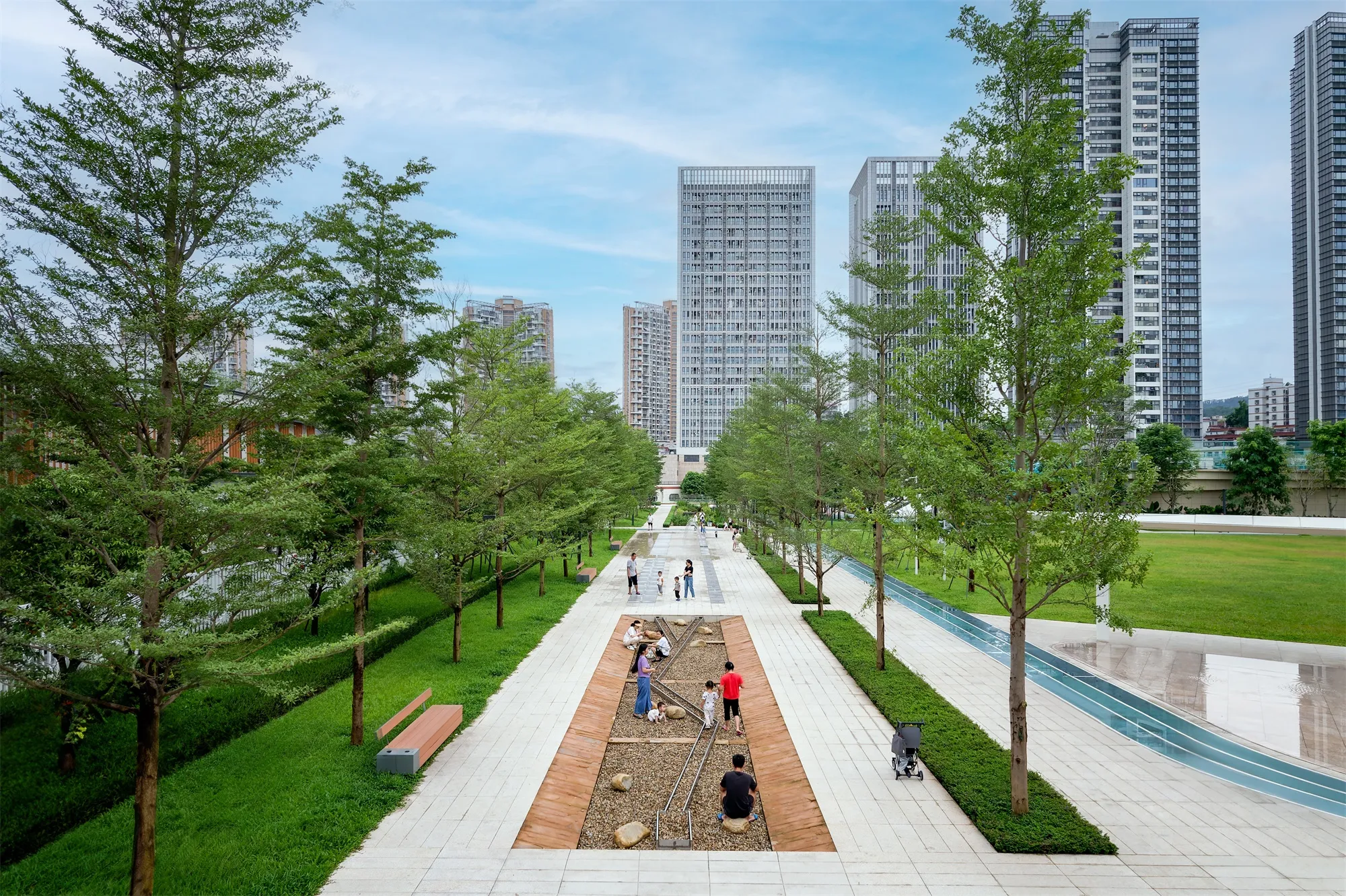
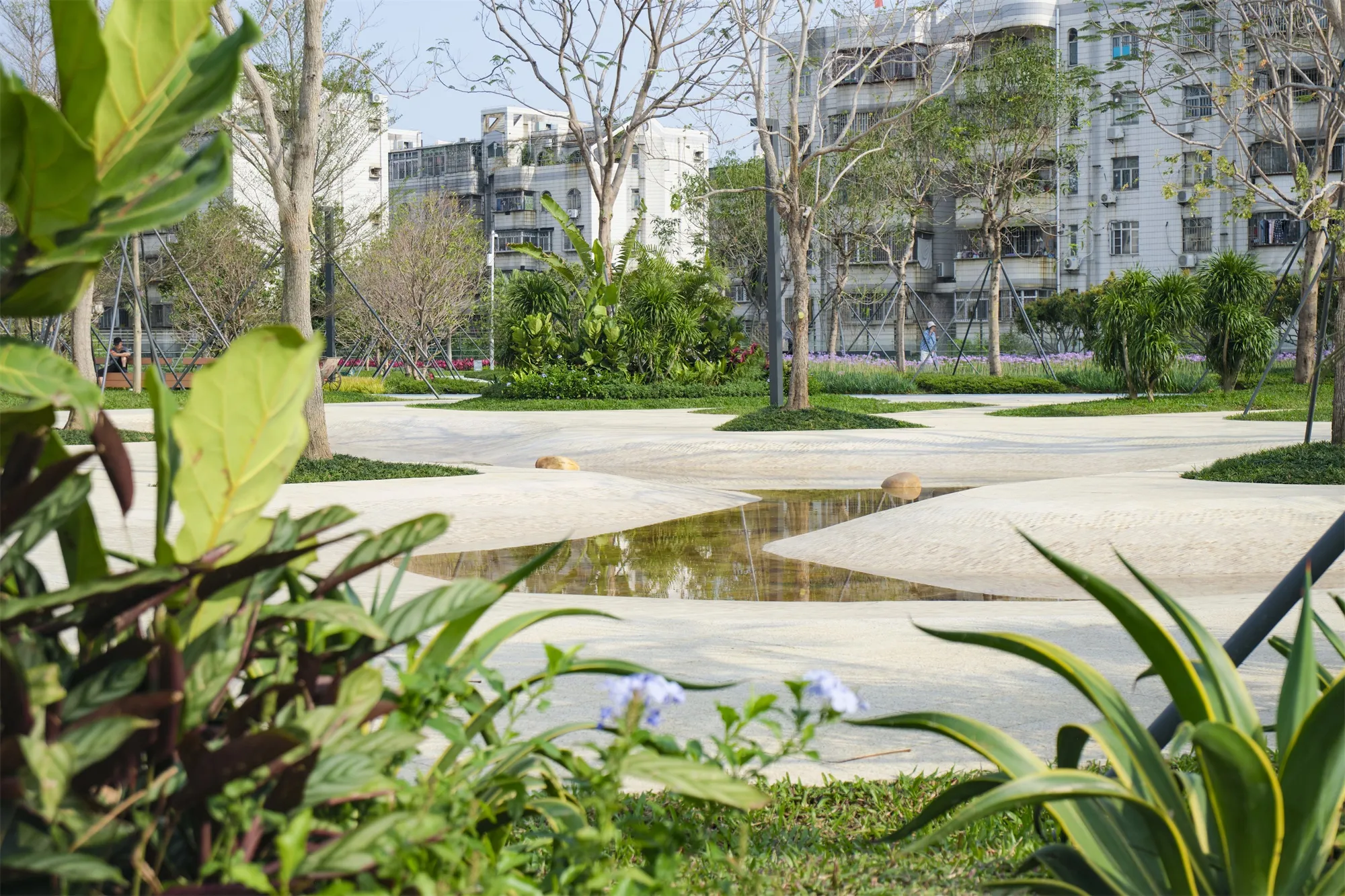
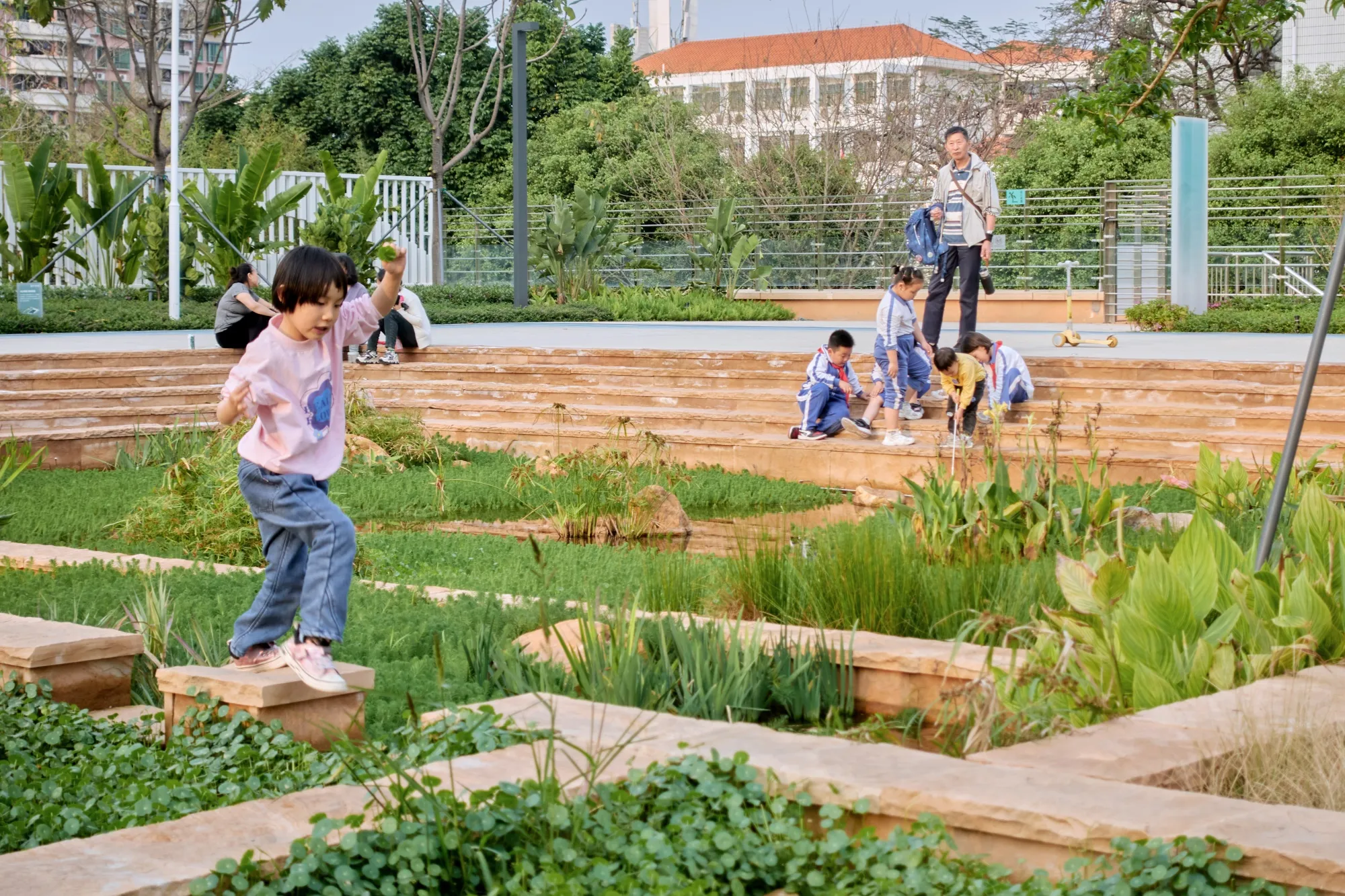
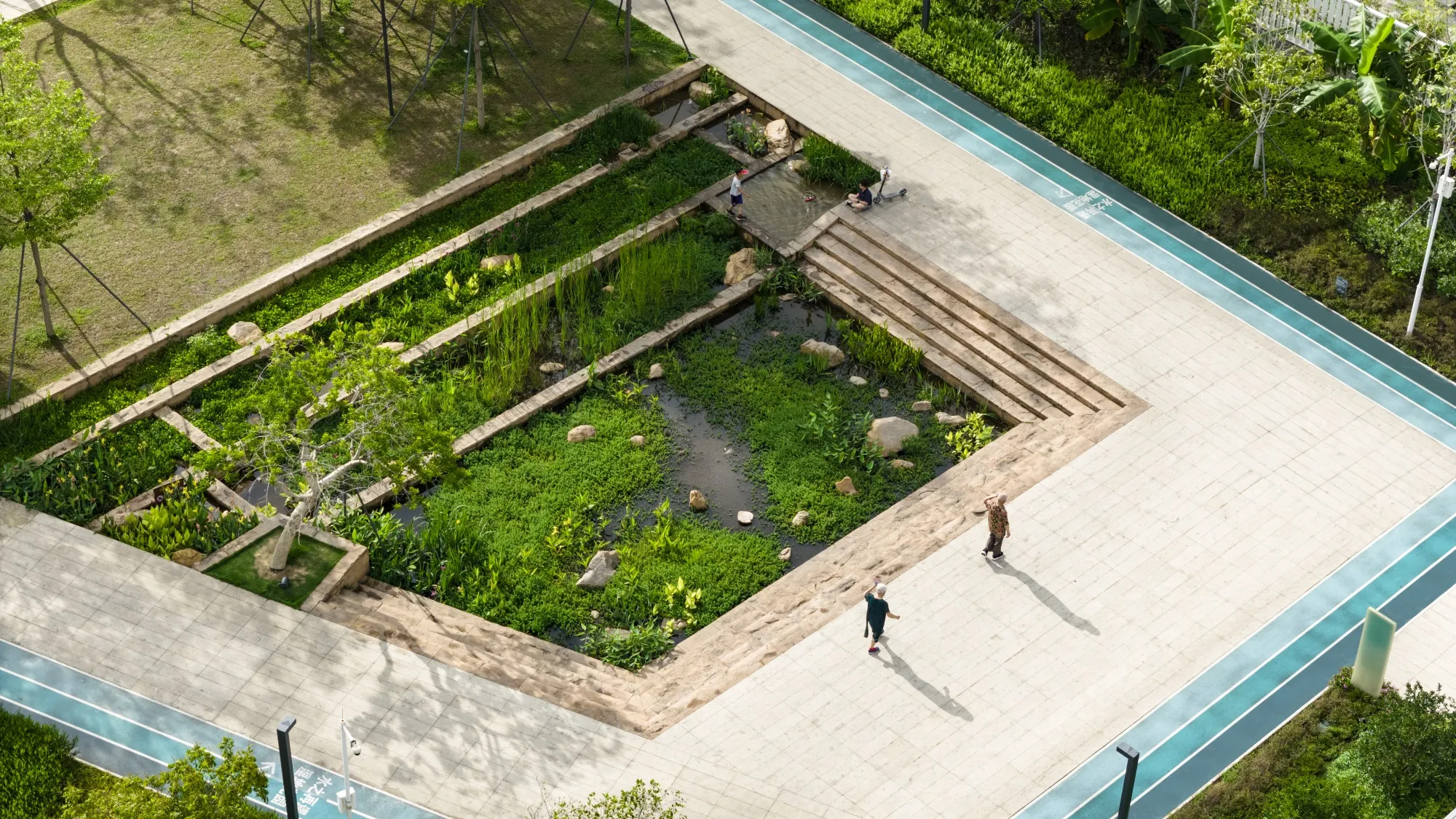
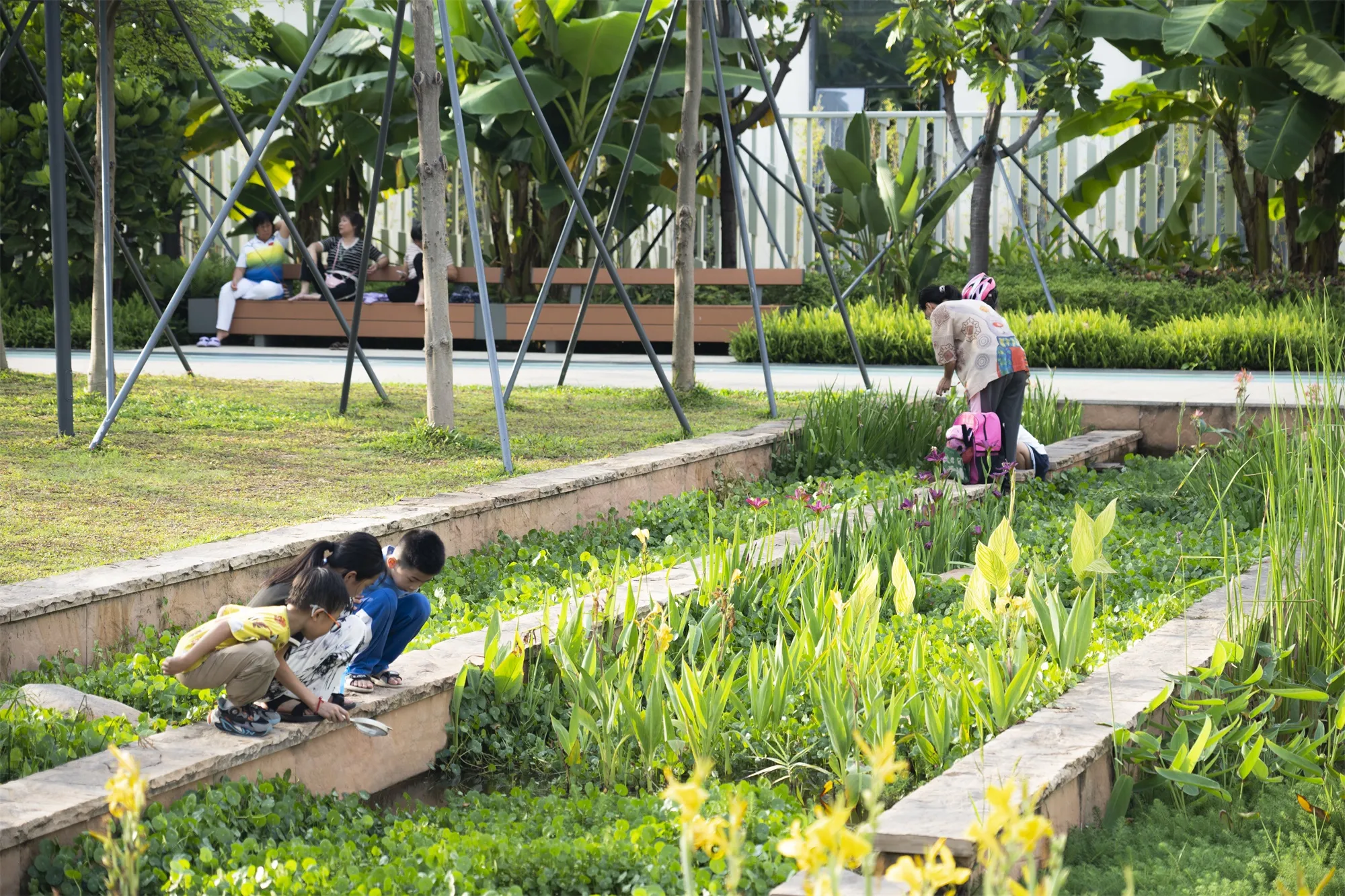
The meandering artificial creek creates a safe and engaging aquatic playground for children, fostering their joyful growth through discovery and interaction with the natural environment.
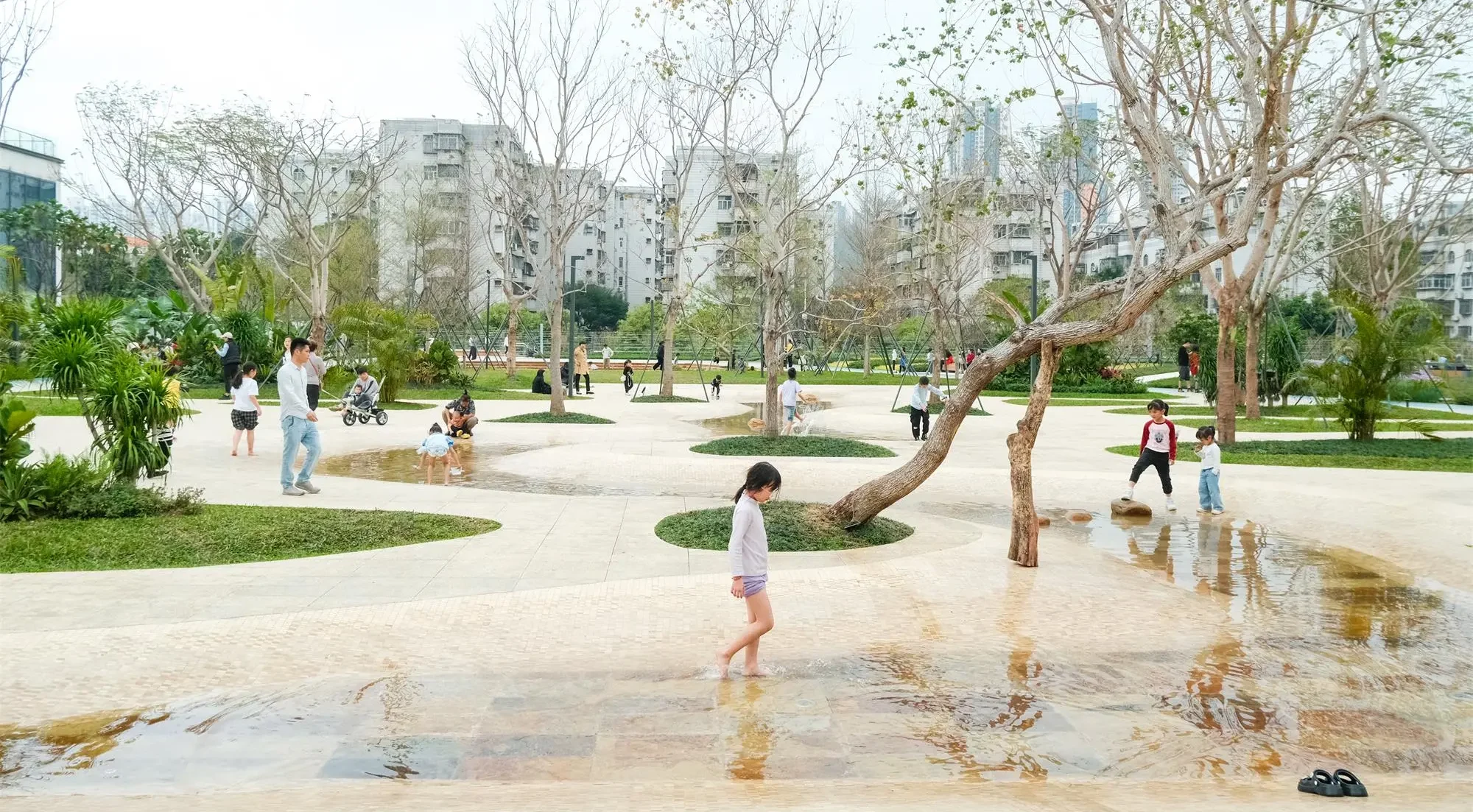
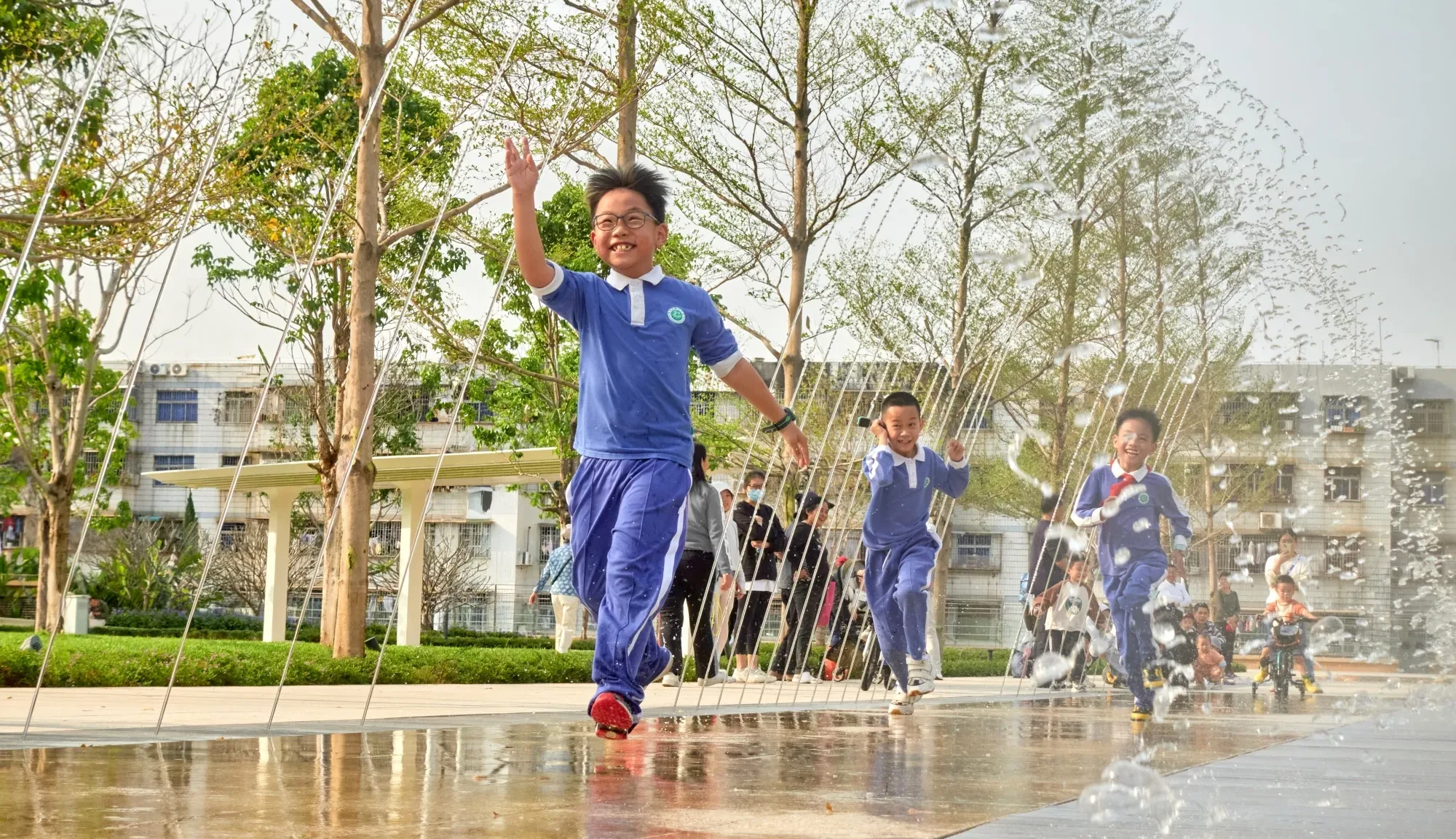
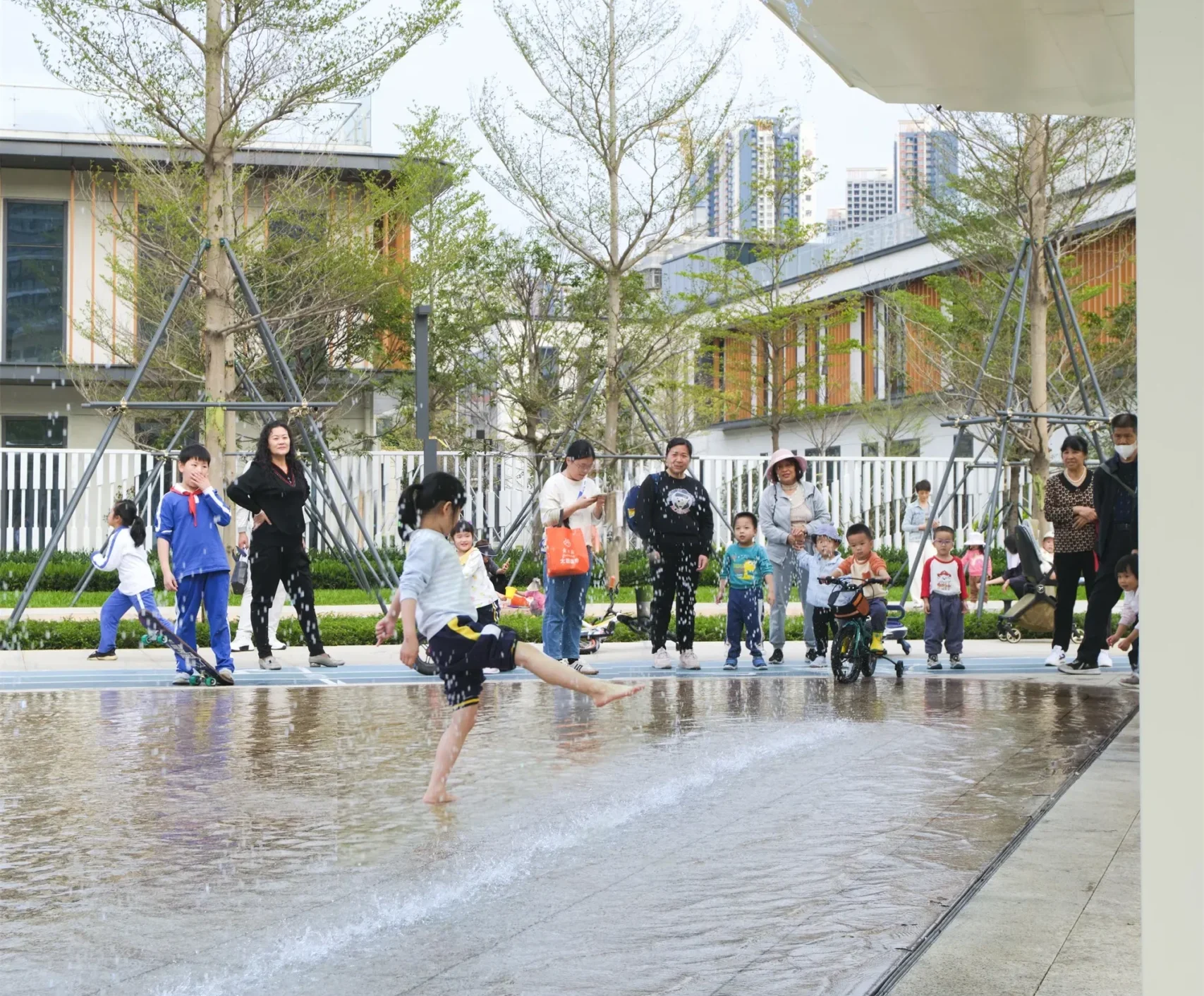
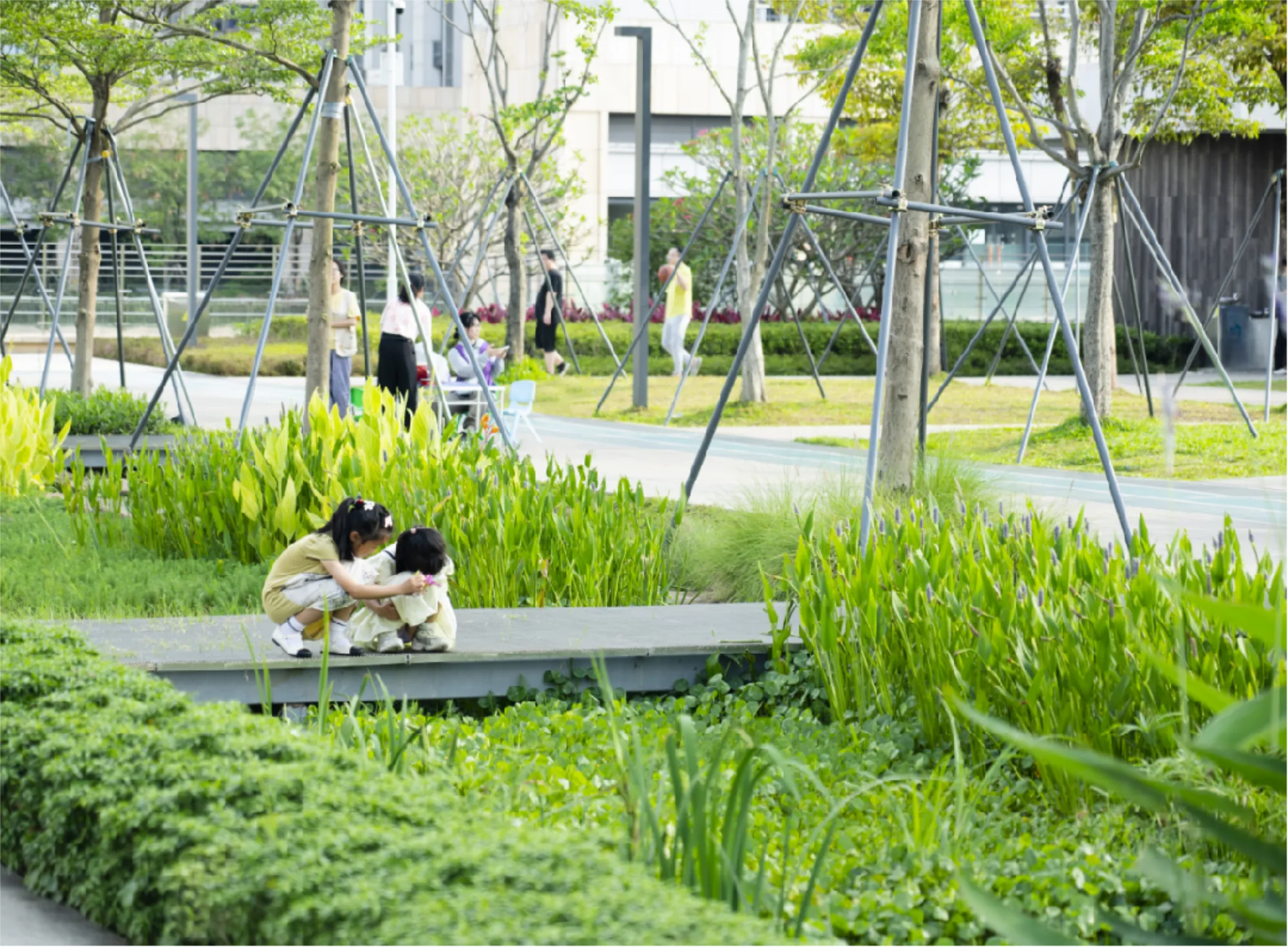
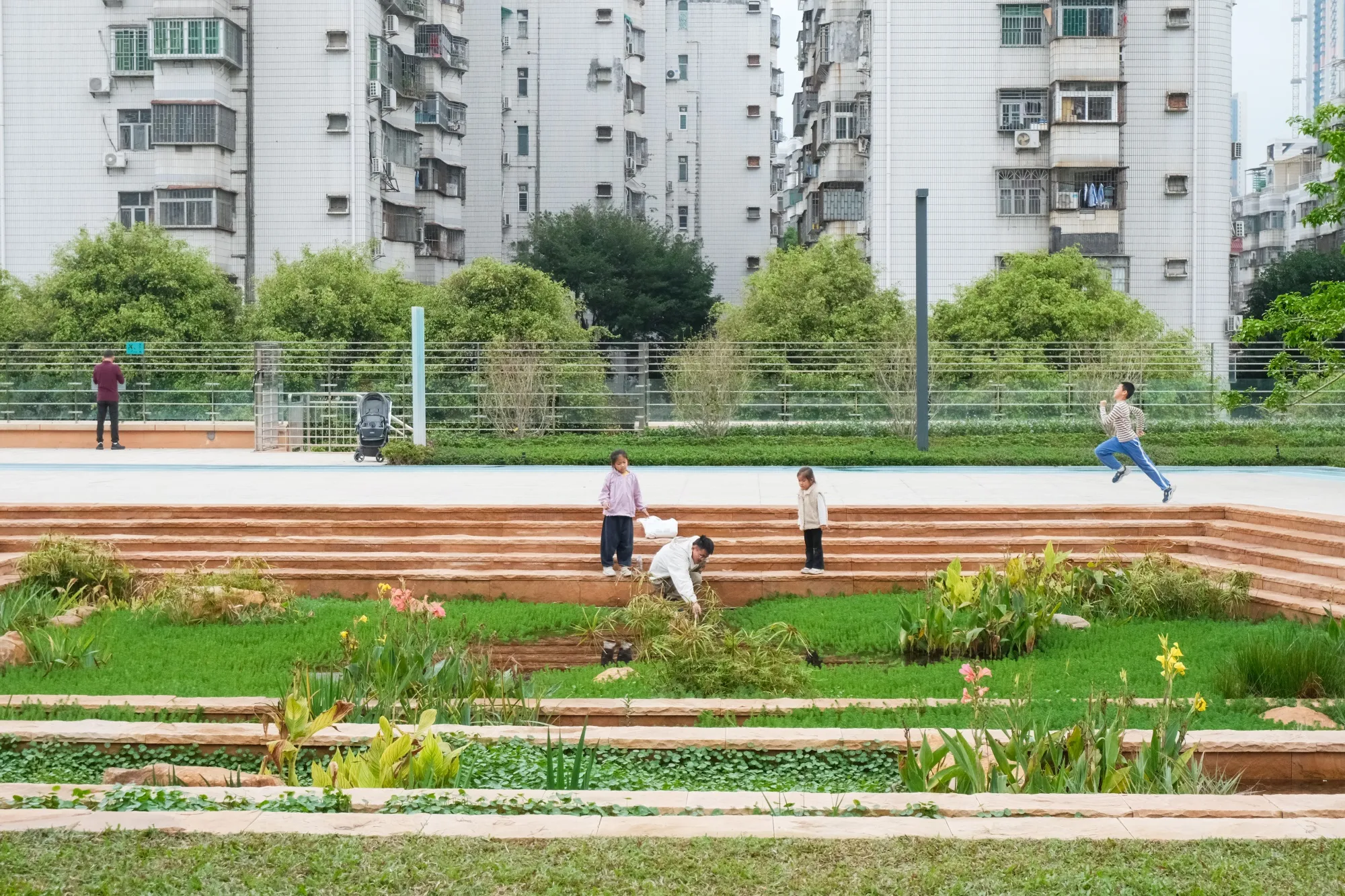
Powered by an advanced water management system, irrigation relies solely on reclaimed water from the nearby purification plant. Landscape features use tertiary-treated reclaimed water meeting scenic-use standards. After use, water flows into rain gardens and wetlands for natural secondary purification via phytoremediation and soil infiltration, creating a vertically integrated ecological loop.This 986.31 m² (0.24-acre) water recycling system harmoniously synergizes landscape and stormwater management, effectively purifying water, mitigating pollution, and regulating microclimates.It creates immersive creek and wetland habitats that enrich the experiences of urban dwellers.
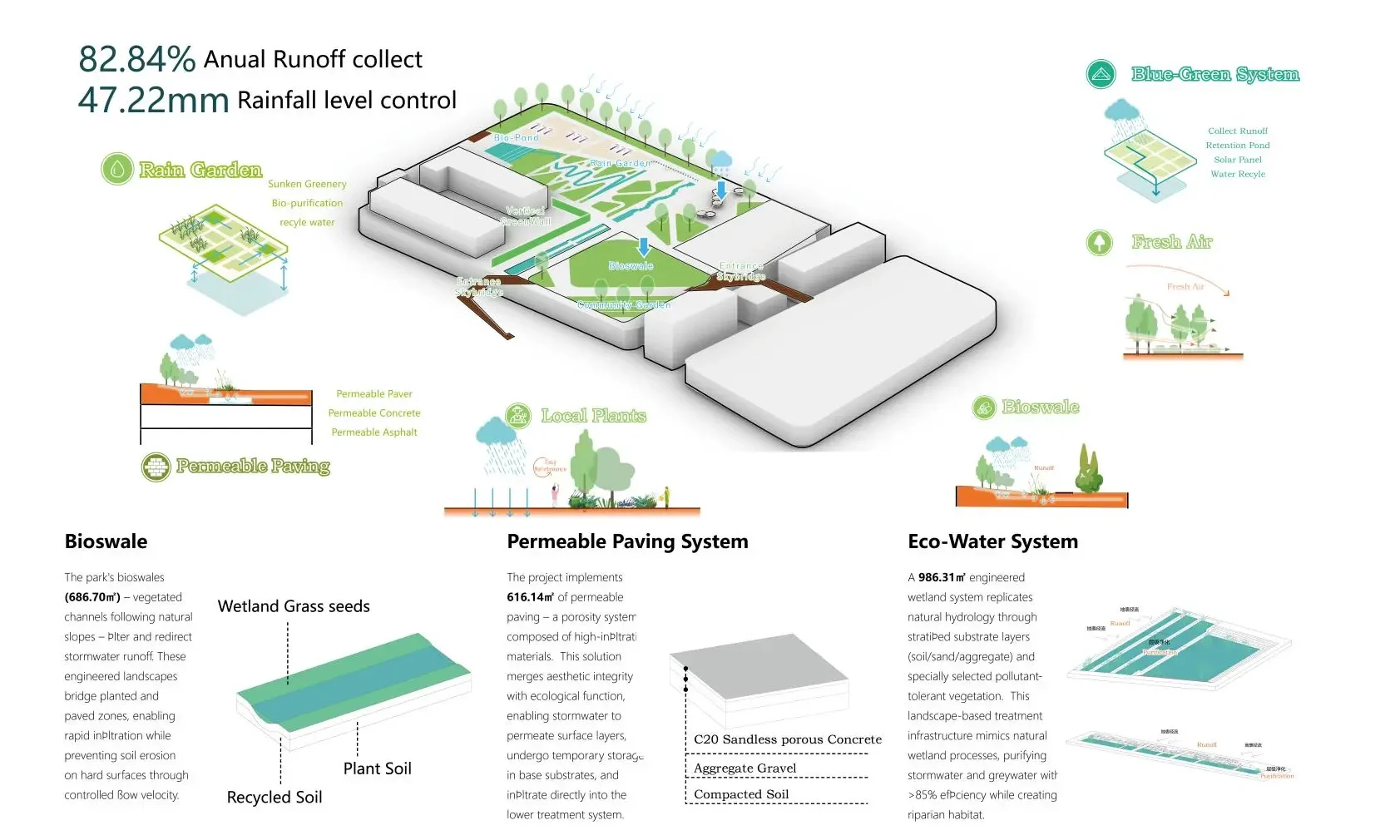
The park’s water management system captures more than 80% of surface runoff, which is then treated and recycled for reuse, enabling a circular water loop.
Nestled in Shenzhen’s subtropical maritime monsoon climate with year-round heat and rainfall, the design employs solar/ventilation simulations to strategically plant shade trees in sun-drenched zones. Engineered ventilation corridors optimize microclimates, creating comfortable outdoor retreats for citizens.
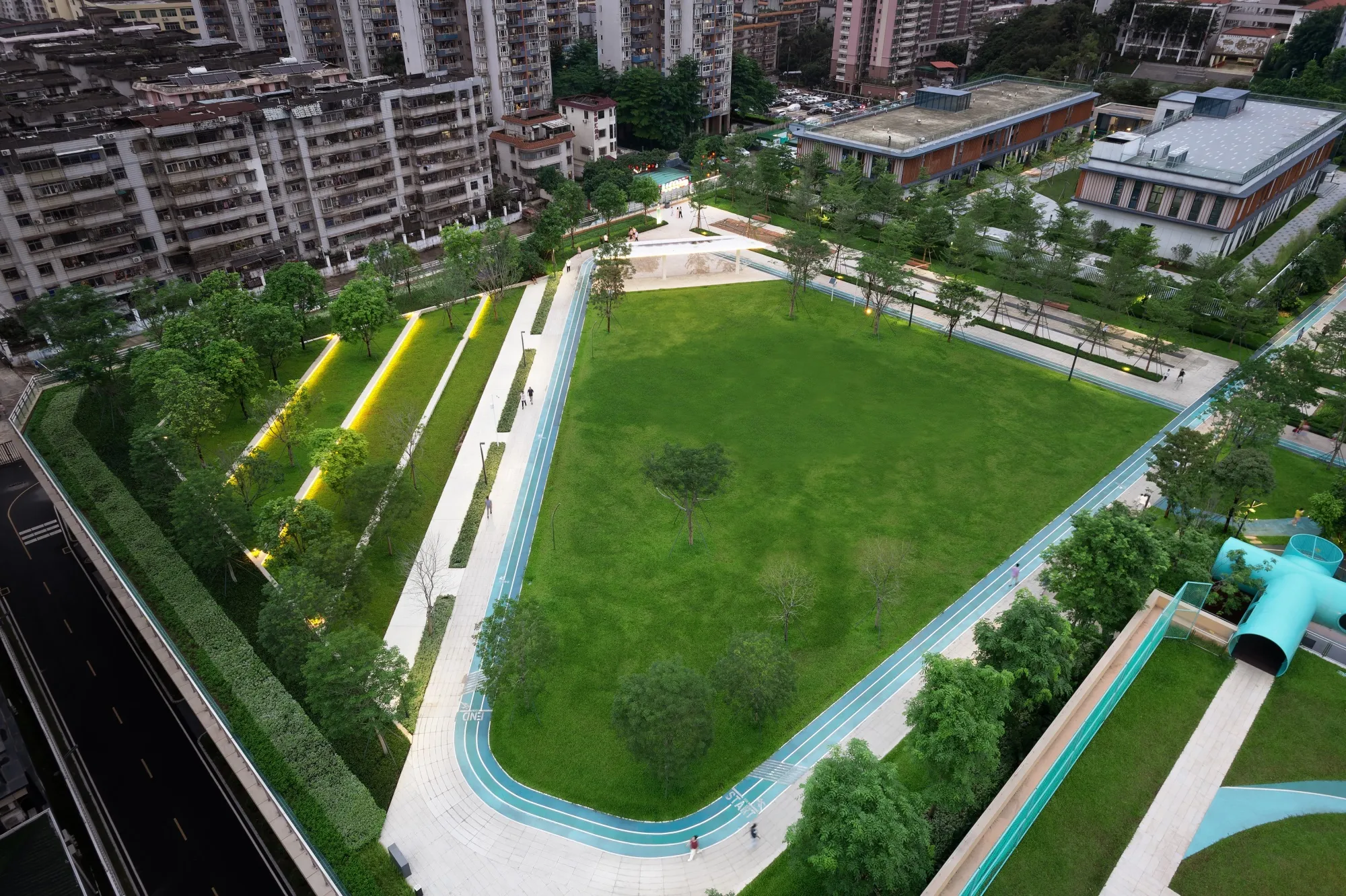
As the central anchor of the Buji Green Corridor, Yueqing Park elevates its function beyond that of a mere community recreation hub, emerging as an essential aerial habitat nexus for avian species. Through the deliberate introduction of over 100 indigenous plant varieties, we have cultivated a richly layered ecology that encompasses dense woodlands, open groves, native thickets, constructed wetlands, and meadow clearings. These diversified habitats serve dual purposes –community orchards that offering seasonal harvests, as well as biodiversity sanctuaries that provide critical feeding grounds and shelter for birds, pollinators, and insects.
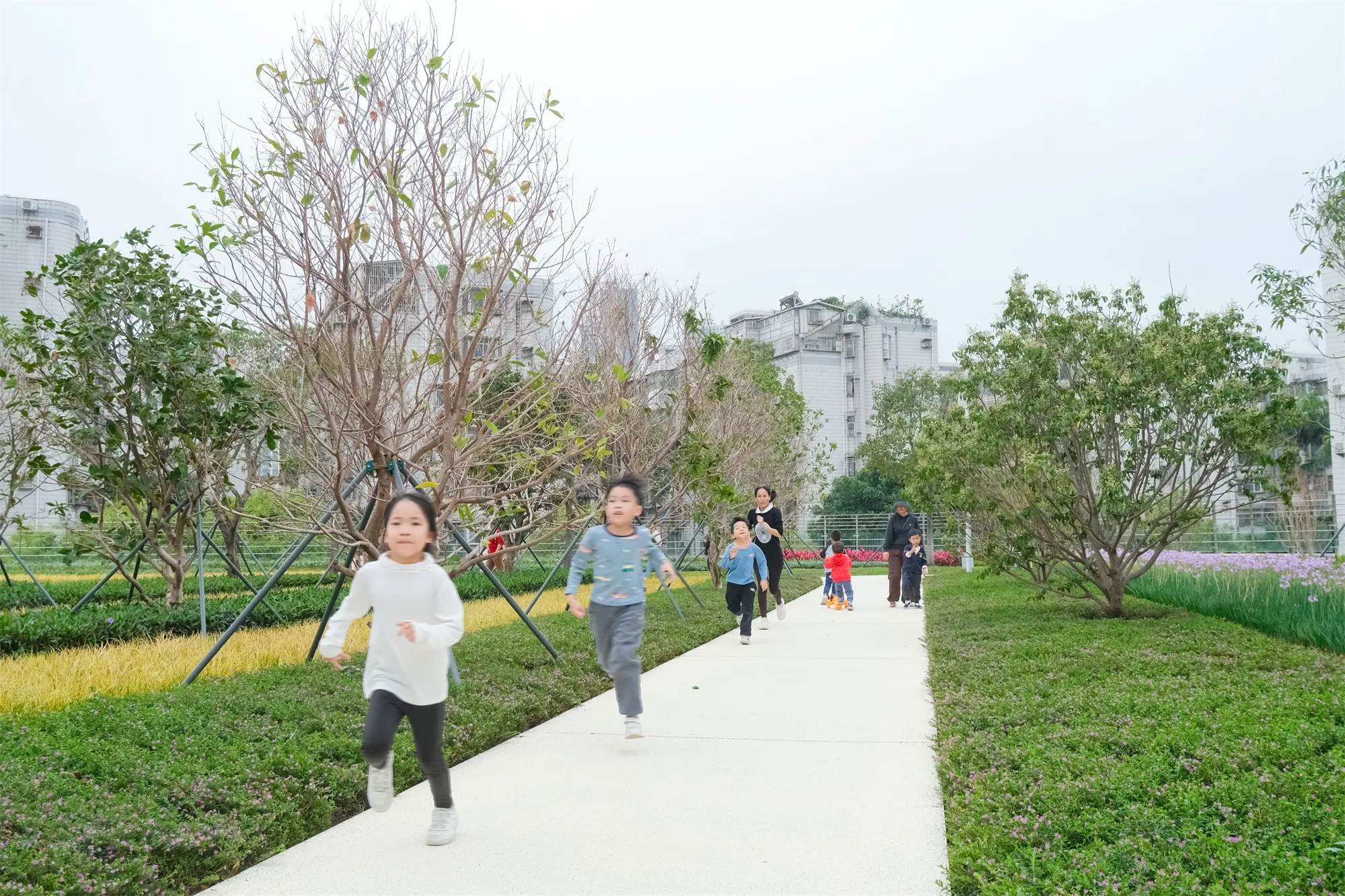
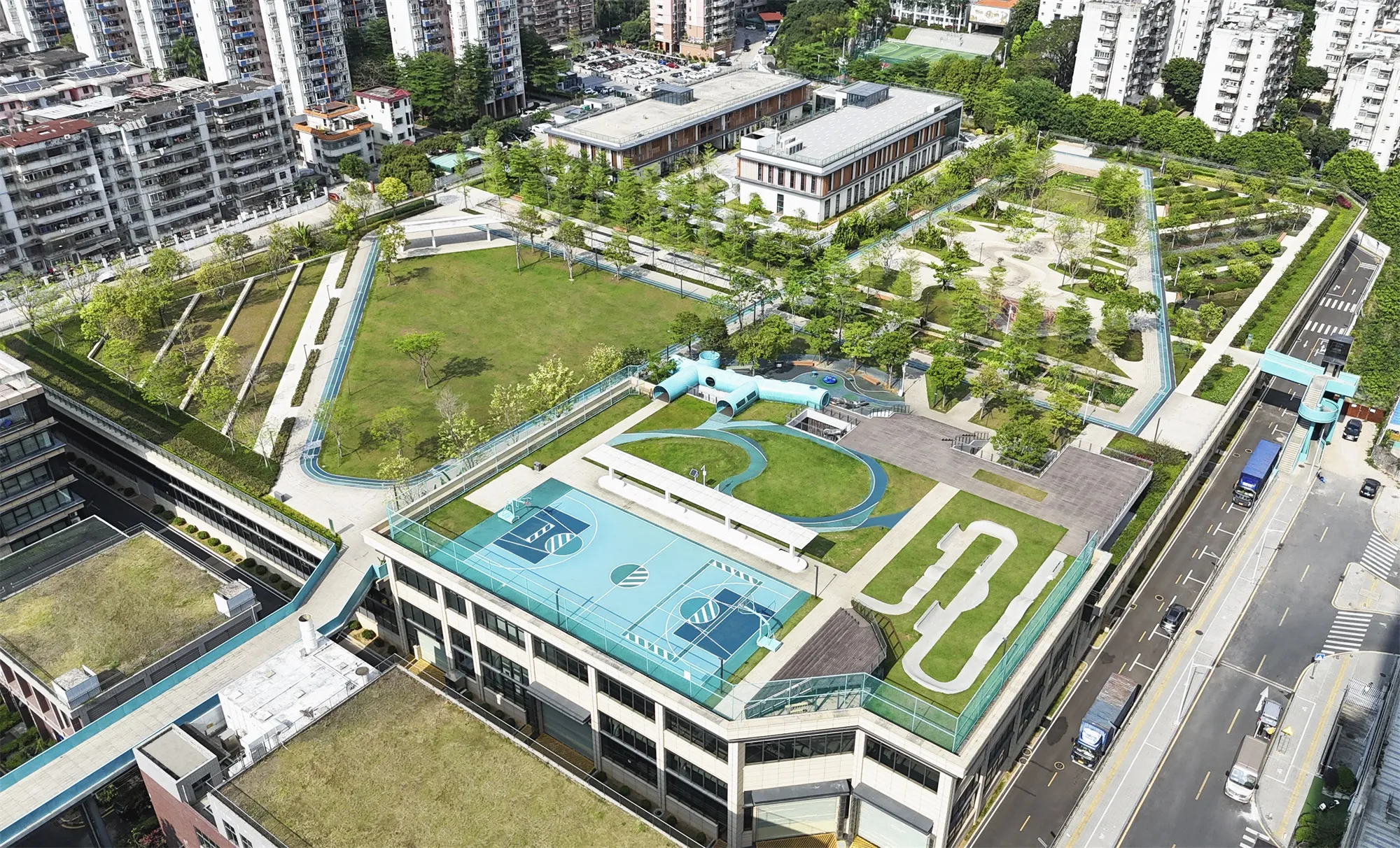
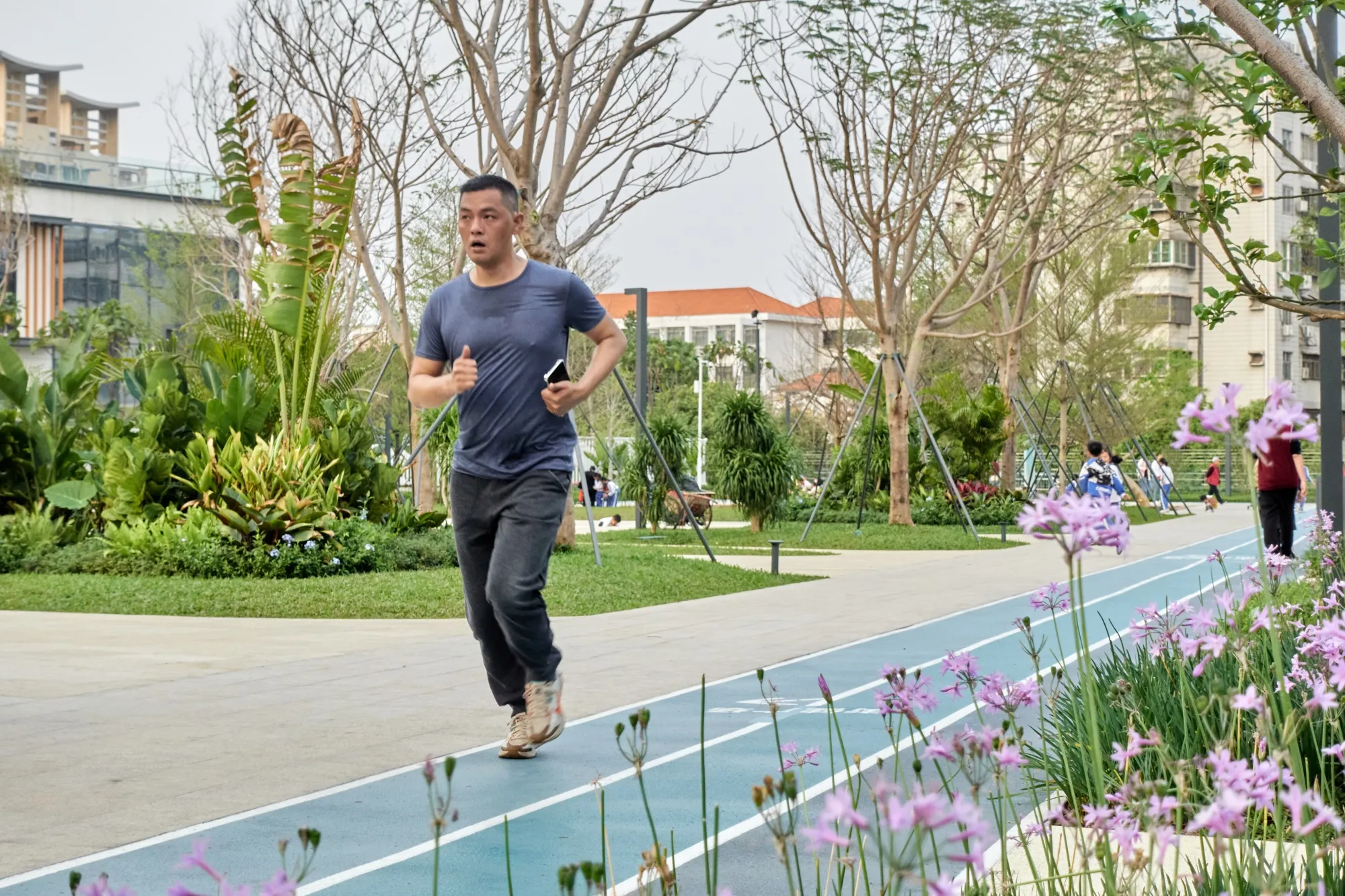
The bridges and stairs on the west and south sides integrates the park with the fabric of the city, while a 500-meter looped running track serves residents’ fitness needs and connects multifunctional zones—including community orchards, outdoor gyms, and wave-inspired activity courts—maximizing spatial value through programmatic layering to weave an efficient community network.
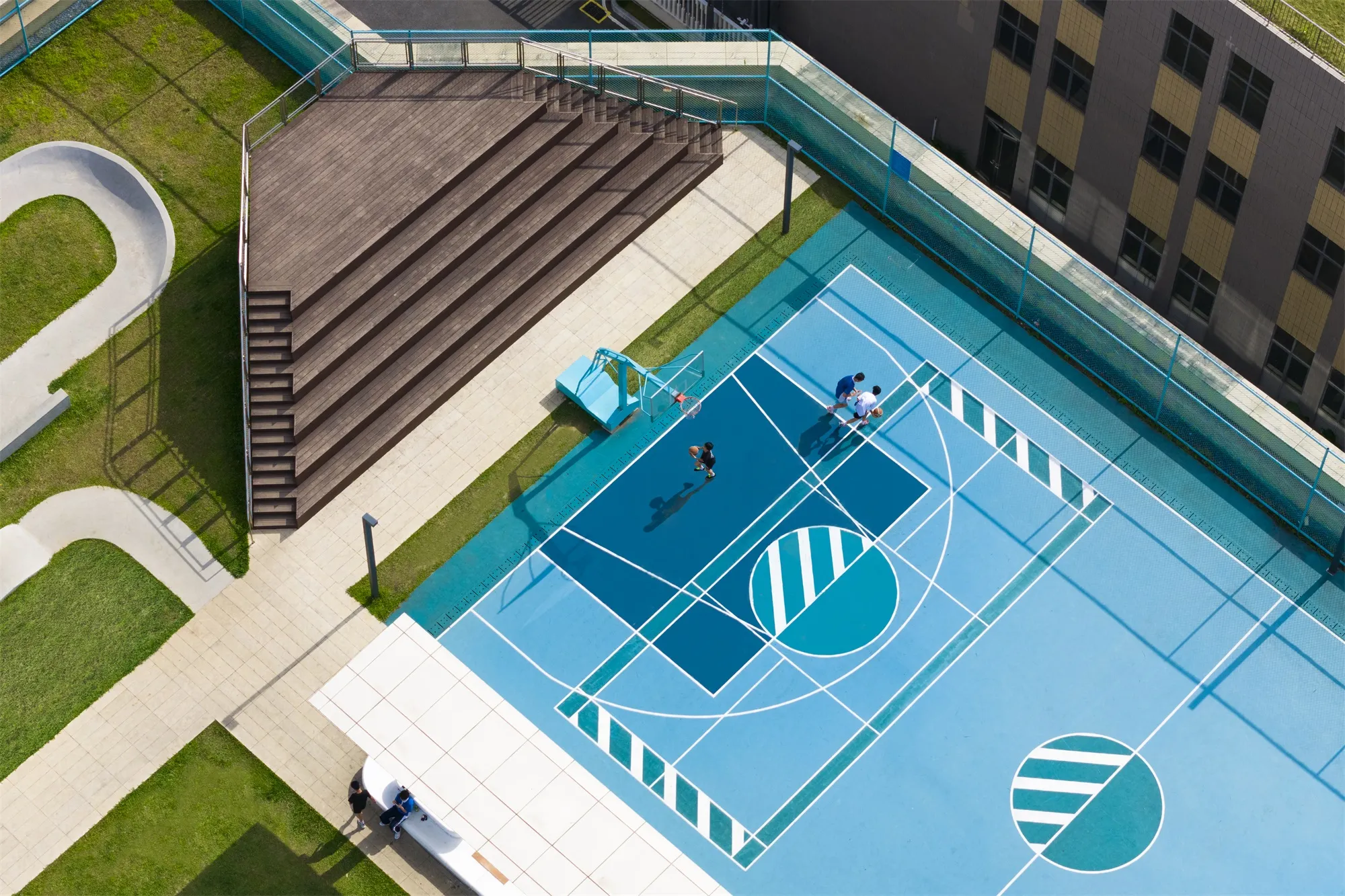
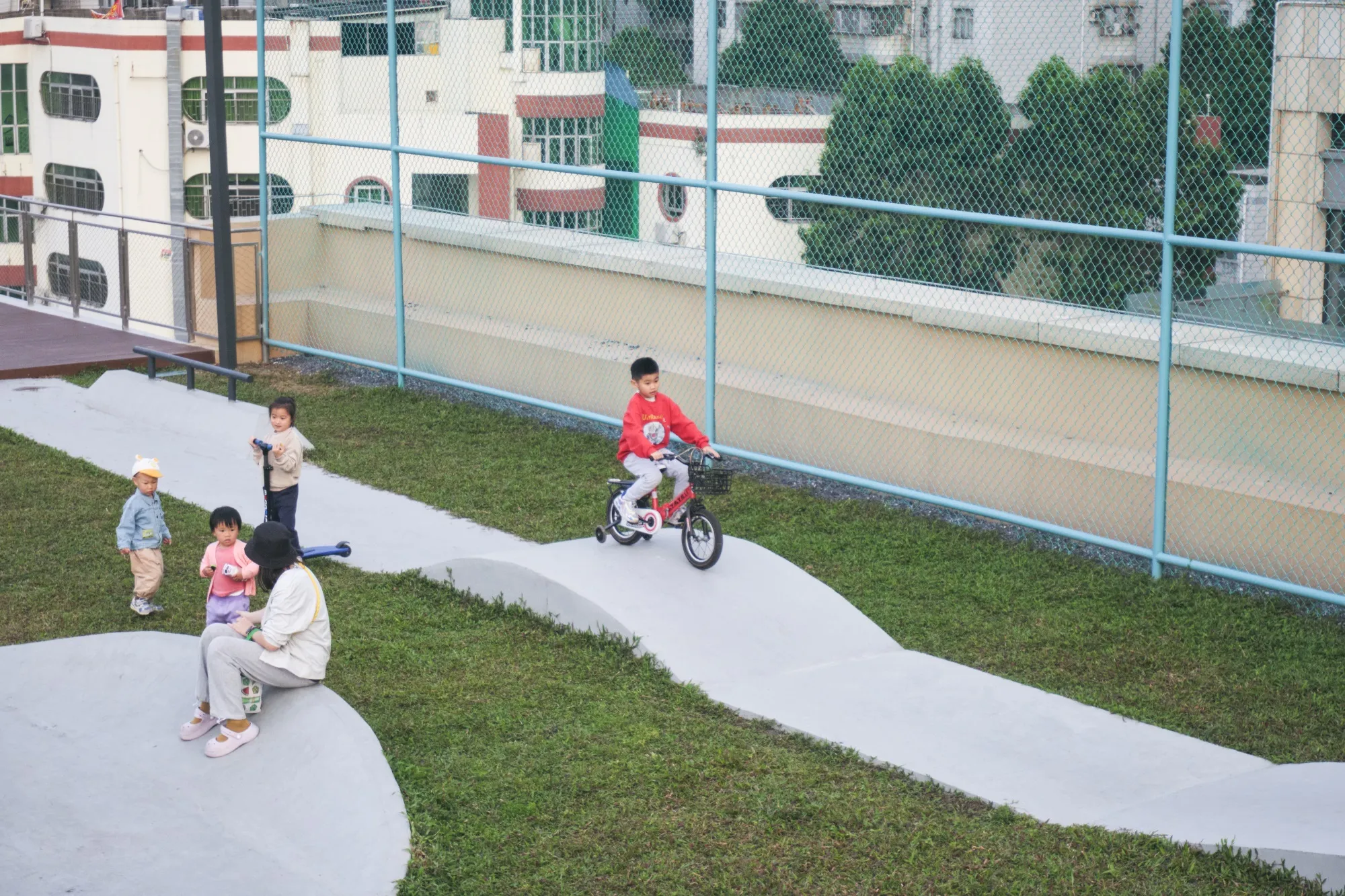
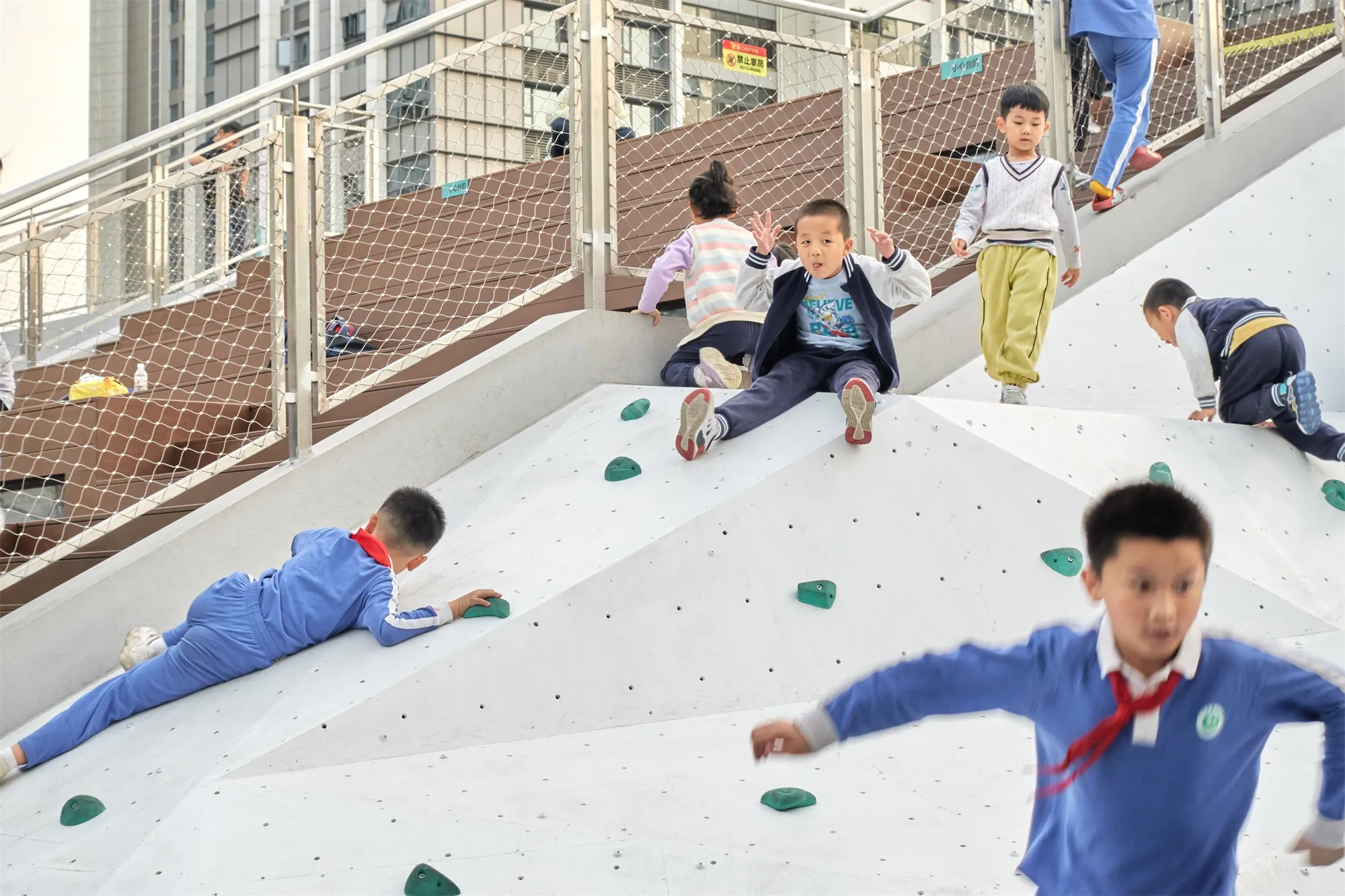
The 5-meter-high sludge dewatering facility located on the southwest side of the park evolves into a dynamic design catalyst. Its façade ingeniously incorporates children’s climbing structures, while cascading amphitheater seating flows seamlessly from the architectural gesture. An expansive interior atrium mitigates lighting constraints and facilitates vertical interactions among visitors. Beyond the requisite restrooms, versatile interior spaces stand poised for future programming opportunities.Due to load-bearing restrictions on the rooftop that preclude tree planting, the design pivots towards active recreation, giving rise to facilities such as basketball courts, beginner skate ramps, and spectator seating. This thoughtful adaptation transforms constraints into unique elevated sports experiences, enriching the overall utility and appeal of the facility.
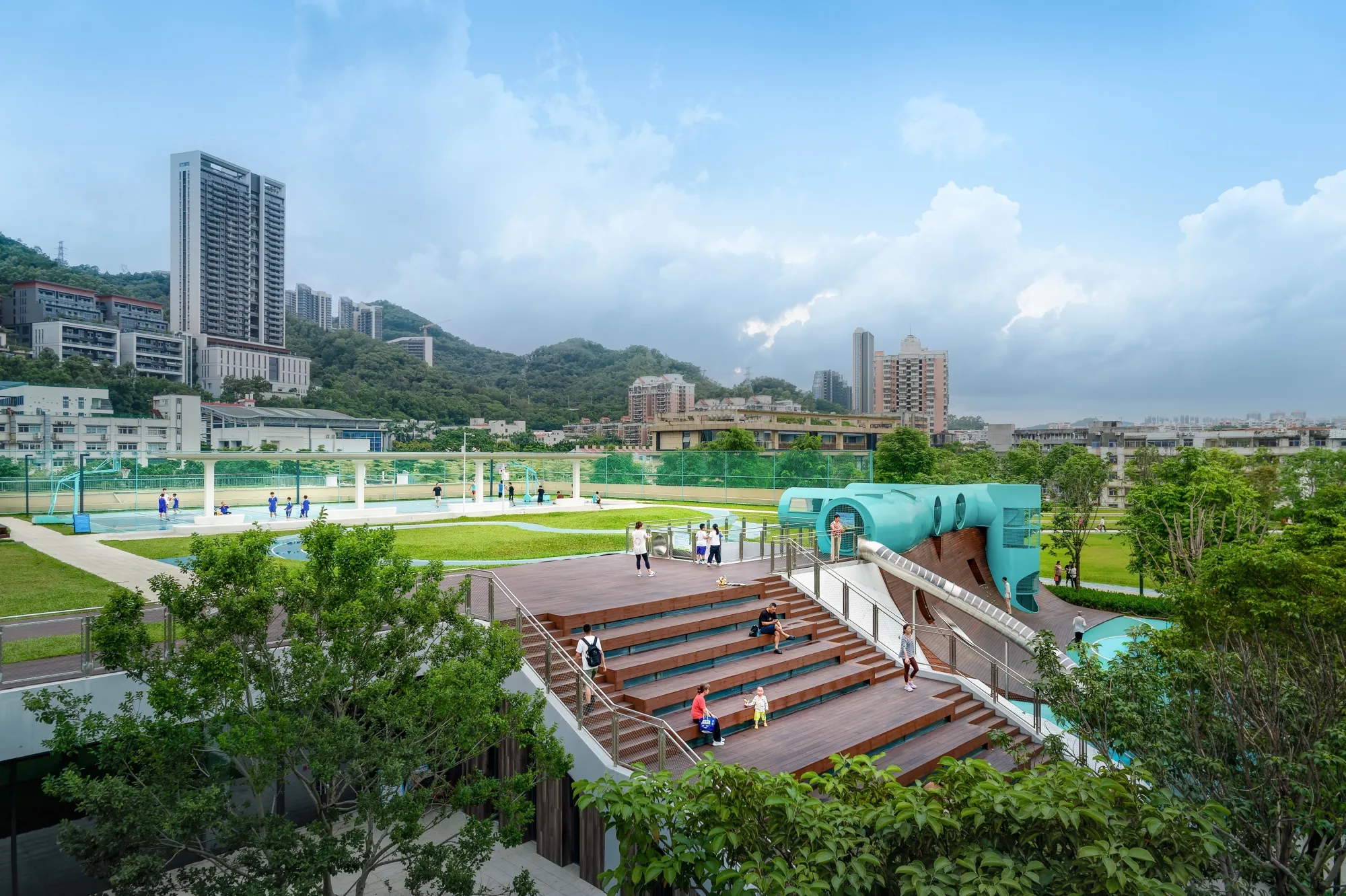
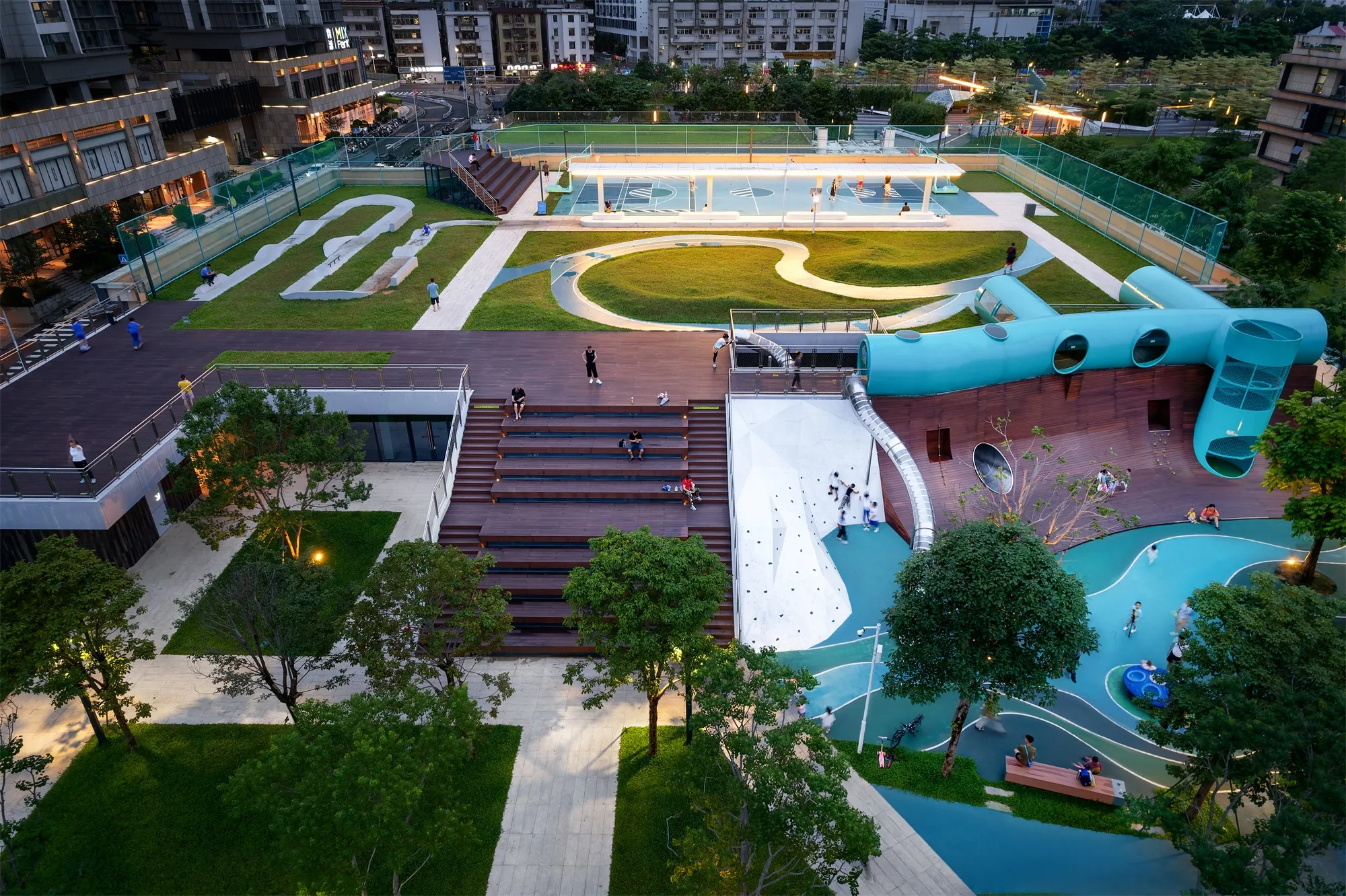
The sports complex integrates the courts and pitches required for various sports into a single, multifunctional space.
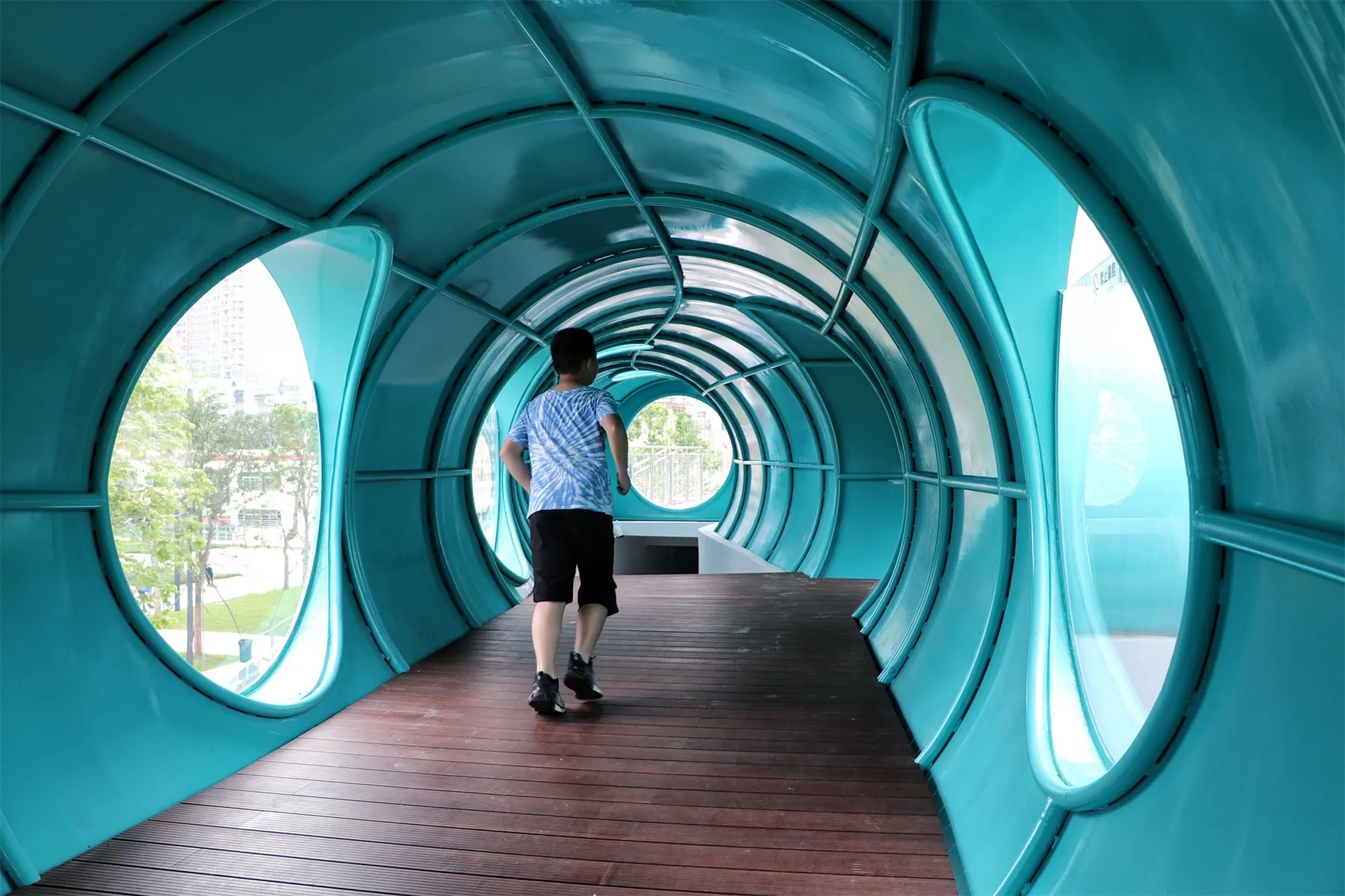
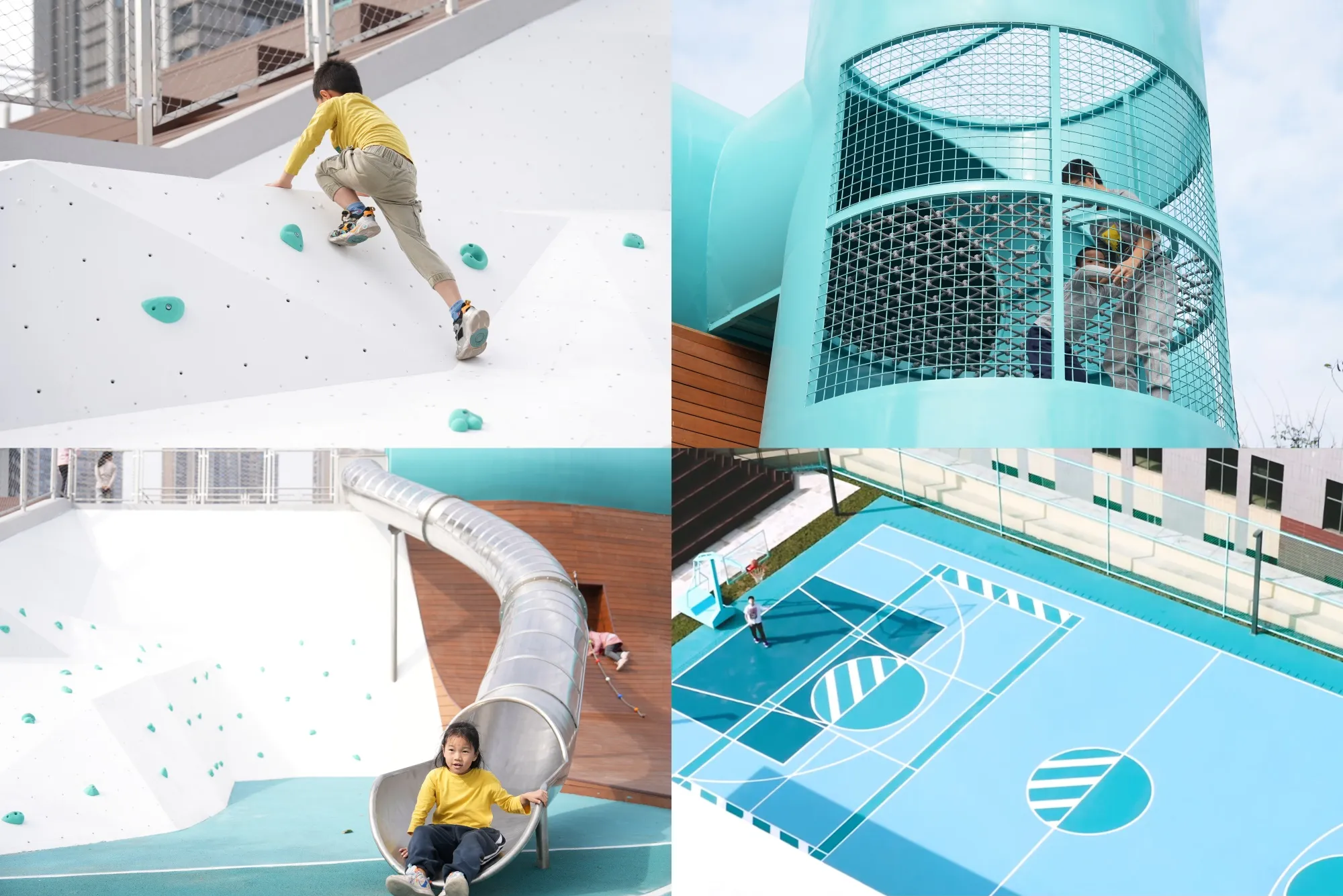
Amid high-density urban fabric, Yueqing Park employs ingenious vertical layering and smart functional integration to grow into a space brimming with laughter within a limited footprint. The rhythm of morning runs on the circular track, parent-child fruit picking in the communal orchard, the youthful energy on the elevated sports court, and even the encounter between children and butterflies by the wetland—all whisper the ultimate answer of this design: as urban space becomes increasingly constrained, true luxury lies not in expansive scale, but in enabling every inch of land to nurture human joy. In the gaps between buildings and streets, it preserves for residents the warmth of sweating during runs, the cheer of play, and the tenderness of gatherings, making the park the most touching vessel of daily life in high-density urban areas.